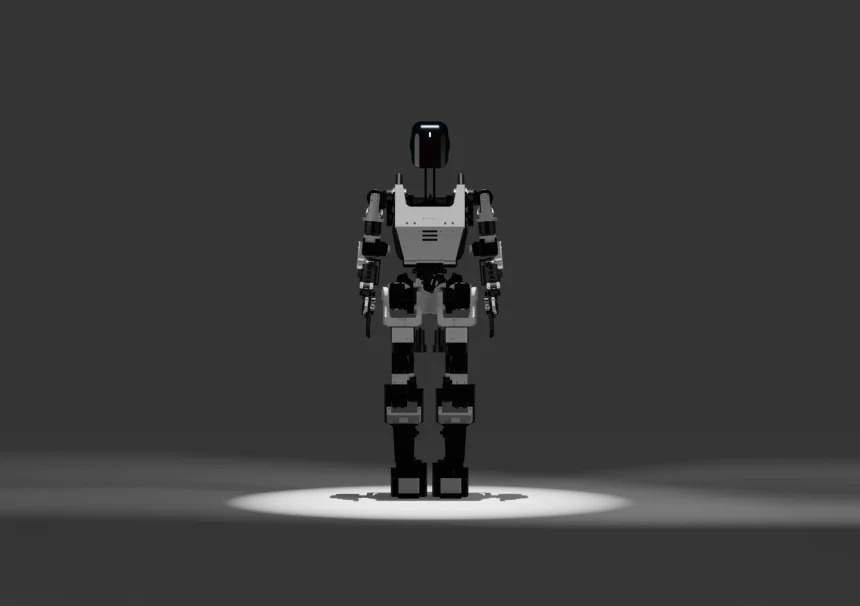
The humanoid race is usually scored in funding rounds — billions flowing to Tesla, Figure and their rivals. In Mumbai, a small robotics lab is playing the same game with a different bankroll: none. Vanar Robots, founded in 2024 by Aryan Wagh, is building the Vanar Generation 1 — a full-size humanoid robot with 38 degrees of freedom — without raising a single round of venture capital.
Vanar Robots Private Limited describes itself as building “a new species” of humanoid robots, built to multiply the world’s capacity to engineer, manufacture and construct. The Generation 1 stands 5’9″, weighs roughly 60 kg, and is designed to operate in existing human environments using existing tools and infrastructure. Its stated purpose is grand — “To Protect the Civilization” — and its slogan is simpler: “Human form. Superhuman capability.”
The Indistinguishability Plan
The company’s framing is unusually philosophical. It says people don’t naturally feel comfortable around robots — the interaction feels awkward or unsettling — and its long-term answer is what it calls the Indistinguishability Plan: making interacting with a humanoid feel as natural as talking to another person. The company describes the Generation 1 as the first step toward that goal. The endgame is stranger still: teams of Vanars that receive an objective — the company offers “Build me a spaceship” as an example — then plan their resources and work continuously with minimal human intervention, what it calls “the next evolution of labor.”
Built in-house, down to the actuators
What makes the bootstrapped story plausible is how little the company buys in. According to the company’s own engineering breakdown, the structure, actuators, manipulators and software are all built in-house — “full-stack proprietary” actuators and tendon-driven manipulators. The founder has said the team builds nearly the entire robot internally, sourcing materials locally in India — in one account, even the tendons for the robot’s hands from Mumbai’s Koli fishing community.
Bootstrapped — in the founder’s own words
Wagh has said the company has been “bootstrapped till now”, funded from his own savings plus small monthly family contributions — reportedly around ₹5,000–10,000 a month from his mother — with a team that is largely unpaid and there, in his telling, because they care about the vision. A trademark for “Vanar Robots” was filed under his name in October 2024, and the company lists a headcount of 2–10 people on startup profiles. For a field where a single actuator can cost more than a car, it is an extreme way to build.
What the Generation 1 can do so far
The robot is still a work in progress, but the company publishes build demos on its own channel: controlled arm movement, dexterous hands, and — in a recent demonstration — a 5 kg power grasp. Its manipulators are tendon-driven, and the team has also shown package-handling work on the platform. The company’s stated target is a limited industrial beta with select partners in 2027.
More Read

Key takeaway
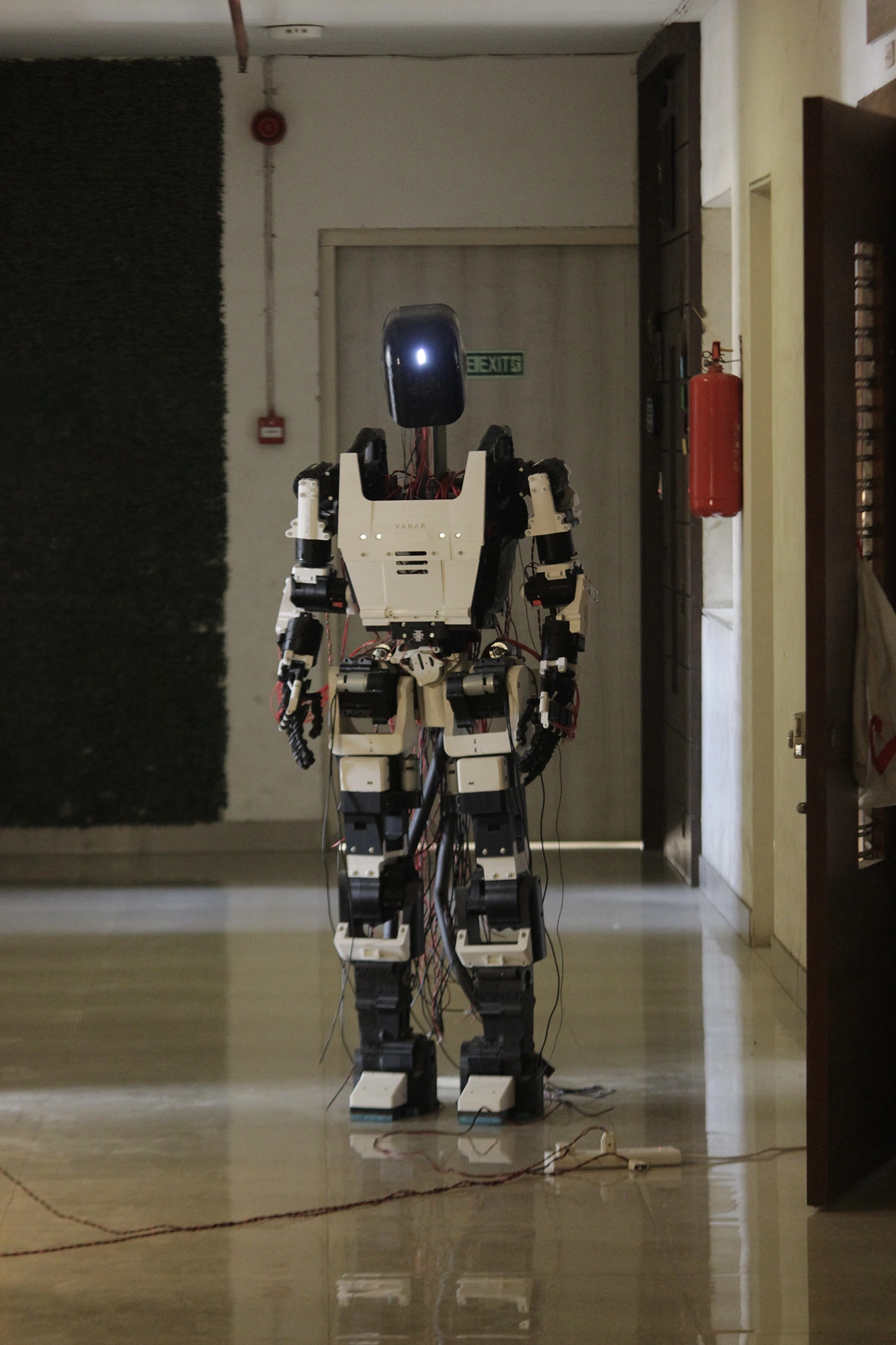
Key takeaway: Vanar isn’t competing on funding — it is competing on vertical integration. When you build your own actuators, hands and software, a humanoid stops being a fundraising story and becomes an engineering one. The Indistinguishability Plan is grand; the fact that a bootstrapped Mumbai lab already has a 38-joint humanoid standing in its corridor is the thing worth watching.