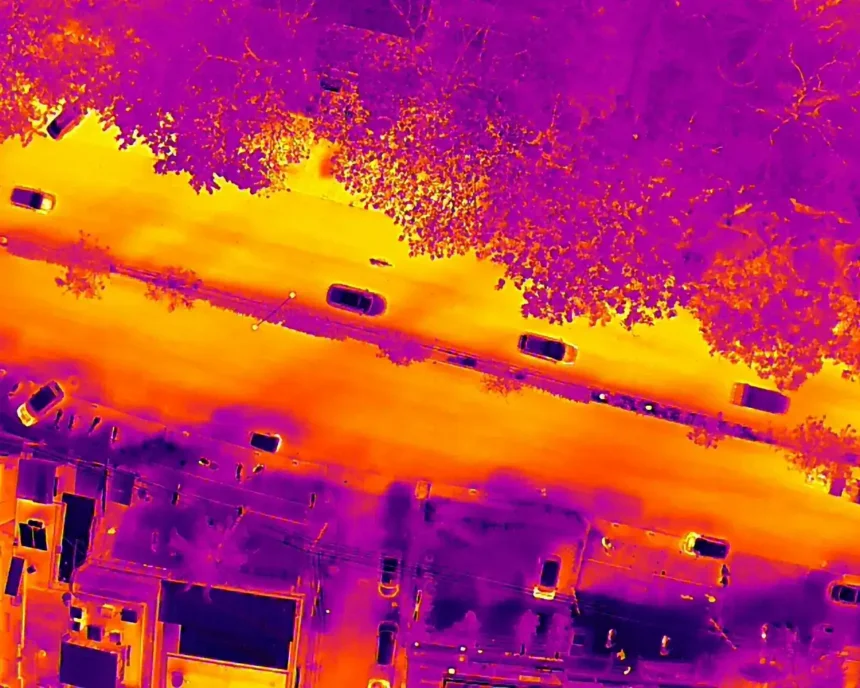
India’s Earth-observation fleet can photograph the planet in extraordinary detail — but until now it has been nearly blind to the planet’s heat. Optical and multispectral satellites see what sunlight reflects; they miss the thermal infrared signature that reveals crop stress before leaves wilt, urban heat islands before they cook a city, and wildfires before they spread. On 2 October 2026, that gap started closing. Ahmedabad-based SatLeo Labs put TAPAS-1 — a 3 kg CubeSat-category thermal-imaging payload — into orbit aboard SpaceX’s Transporter-18 rideshare mission, hosted on Dhruva Space’s LEAP-2 platform. The Falcon 9 lifted off from Vandenberg at 12:02 AM IST carrying 130 payloads; among them, according to IN-SPACe chairperson Pawan Kumar Goenka, was “India’s first commercial thermal imaging payload built by a private company.”
A thermometer for planet Earth
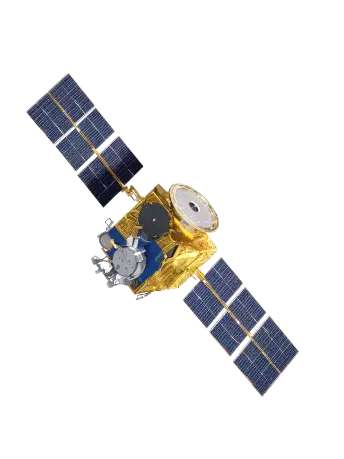
TAPAS-1 stands for Thermal Access Platform for Analytics & Solutions. It is a long-wave infrared (LWIR) payload designed to capture temperature information invisible to conventional optical imagery, flying in a sun-synchronous orbit about 500 km above Earth. According to SatLeo’s own specifications, the company’s sensors capture temperature variations within 1 degree Kelvin, imaging across MWIR, LWIR and visible bands; onboard space-edge computing analyses data on the satellite itself for low-latency insights, and AI models translate raw brightness-temperature data into predictive intelligence. TAPAS-1’s job is to demonstrate and validate that full chain — thermal-sensing technology, payload performance and data processing — under real orbital conditions. It is the first orbital step toward PYRO, SatLeo’s planned flagship thermal constellation.
Already reading cities from the ground up
What makes SatLeo worth featuring is that the company validated its thermal intelligence on the ground before going to orbit. In Tumakuru, Karnataka, satellite- and drone-based thermal monitoring helped the city corporation track methane build-up at a 40-acre landfill and map urban heat islands — replacing reactive, complaint-driven responses with data-led governance, as co-founder Urmil Bakhai described in an interview after the launch. In Ahmedabad, working with the Ahmedabad Municipal Corporation, SatLeo’s platform delivered heat forecasts accurate to within 2–3°C, issuing QR-code heat advisories to outdoor workers and giving health teams advance notice to prepare for extreme heat. The company says it has letters of intent worth about $52 million for its thermal data offering, around 60 per cent of them from companies outside India.
The road to PYRO
SatLeo Labs was founded in Ahmedabad in 2023 by Shravan Singh Bhati, Dr Ranendu Ghosh and Urmil Bakhai. Bhati, the CEO, has more than 16 years of experience in satellite-based innovation; Ghosh, the CTO, spent 27 years at ISRO working on satellite payload technologies for agriculture, hydrology and soil science; Bakhai, the chief strategy officer, brings over 22 years of corporate sales and leadership experience. The startup is incubated by IN-SPACe, raised a $3.3 million pre-seed round in May 2025, and added a $2.2 million round led by Unicorn Ventures in April 2026. The roadmap from here: TAPAS-2 is already under manufacture for a mid-2027 launch, with eight more satellites of the type planned by 2029 toward a constellation of 10–15 thermal-imaging satellites delivering near-real-time global thermal monitoring.
Two honest caveats. First, the “first” in this story belongs to its describer — the IN-SPACe chairperson, writing publicly after the launch — and what is independently verifiable is the milestone: a private Indian company’s dedicated commercial thermal-imaging payload, now in orbit on a SpaceX rideshare. Second, TAPAS-1 is a hosted payload riding Dhruva Space’s LEAP-2 platform, not a standalone SatLeo satellite; its mission is technology validation, not yet a commercial data service. But that validation is exactly what an Indian thermal-intelligence industry has to pass through first — and SatLeo is passing through it with municipal heat forecasts already protecting outdoor workers on the ground.