A satellite crosses overhead at 500 kilometres, snaps a picture, and is gone — the next usable image arrives in days. Below it, a drone buzzes for twenty minutes and lands. Between those two extremes sits a gap nobody was flying in: a camera that can loiter over a refinery, a port or a farm for a full day, at airliner altitudes, streaming imagery sharp enough to tell whether a valve on a pipeline has been turned. In Bengaluru, a 23-year-old founder and his engineers are building the aircraft to do it.
Arctus Aerospace, founded in 2024, is developing high-altitude, long-endurance unmanned aircraft and — unusually for an aerospace company — it plans to sell the data, not the aircraft. Its pitch, in the company’s own words: satellite-grade earth observation, on demand, at a fraction of the cost.
A gap between the satellite and the drone
The idea crystallised around what founder Shreepoorna S. Rao calls a persistent mismatch: customers needed persistent, high-resolution imagery, but the market offered only satellites (expensive, slow revisit rates) or drones (minutes of endurance). India, Rao noticed, relied almost entirely on foreign platforms for persistent high-altitude aerial monitoring.
Rao is an unlikely founder for an aircraft company in the best sense. A civil engineering graduate of IIT Madras (class of 2024), he started building remote-controlled aircraft in seventh grade, led the institute’s aerial robotics club, and logged nearly 2,000 flight hours before graduating — along the way building and exiting a small tech venture while still in college. In 2024, while completing his course, he spent months researching gaps in defence and commercial surveillance and then, in his own words, decided to build the whole thing from scratch.
“Satellites refresh every few days. Drones stay up for 15–20 minutes. We’re building aircraft that can fly for 24 hours and deliver the kind of data people actually want,” Rao told YourStory.
AX1: the 150-day aircraft
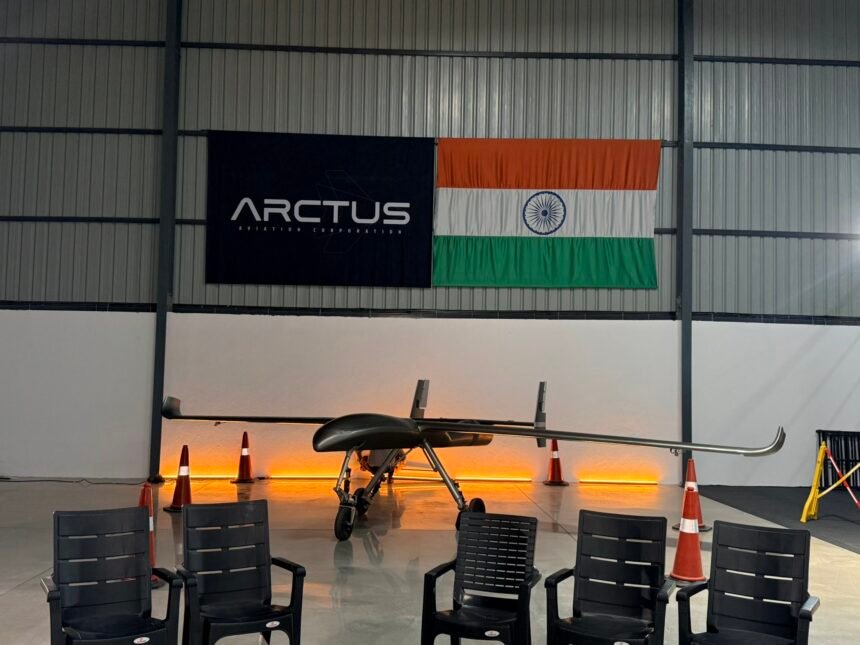
Arctus’ first answer is the AX1, a technology demonstrator unveiled on 10 April 2026 at the inauguration of the company’s Bengaluru headquarters. According to the company, a team of about ten engineers took it from a blank sheet to a flight-worthy aircraft in roughly 150 days.
More Read

The AX1 is an 8-metre-wingspan, twin-boom unmanned aircraft — the layout is visible in the company’s own hangar photographs — with a mass of around 200 kg. The company puts its cruising altitude at 20,000 feet, its maximum payload at 50 kg and its endurance at 10 hours. It was the first tangible proof that a young Indian team could design, build and fly a real aircraft from first principles.
Since then, the demonstrator fleet has done the unglamorous work that matters: more than 1,000 flights and 10,000 flight hours, per the company’s account, flown at altitudes between 10,000 and 30,000 feet, capturing over 10,000 square kilometres of video data. Many of the test flights take off from a DRDO facility in Chitradurga. The flight data — crosswinds, rain, sensor performance — became the training set for the company’s autonomy stack.
The fifty-thousand-foot machine
The AX1 is the rehearsal. The real show is the flagship platform now in development: an unmanned aircraft the company describes as weighing 1–1.2 tonnes, with a 20-metre wingspan and a payload of 250–300 kg, designed to cruise near 45,000–50,000 feet and stay airborne for 24 hours. If it flies as designed, it sits in a niche of its own — far above commercial drones, yet more flexible and far cheaper than satellites.
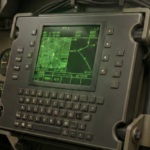
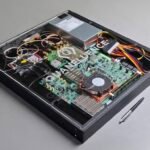
What stands out is how much of it is built in-house. Arctus says it develops its own landing gear, brakes, hydraulics, power systems, avionics, flight computer and autonomy software — with engines and semiconductors the exceptions (the engines, the company says, are sourced from countries like Australia). The work happens at a 25,000 sq ft facility in Bengaluru, where carbon-fibre fabric and blocks of titanium and aluminium arrive as raw material and leave as an aircraft: layup, machining, PCB manufacturing and assembly, firmware and sensor development under one roof. Components are designed for 100,000 take-offs and landings, and the landing gear is tested on a rig the team built itself.
Autonomy, not remote control
The aircraft’s brain is an autonomy stack the company says combines reinforcement learning with regression models, developed entirely in-house. Its claimed capabilities read like a wish list for autonomous flight: fully autonomous path planning, obstacle avoidance, air-traffic management, GPS-denied navigation and weather-agnostic flight planning.
The workflow, as the company describes it: an operator at a ground control station enters the type of image, spectrum and duration required; the software plans the route, captures the imagery, and returns and lands the aircraft. Rao says the team has logged 100+ flight hours on the autonomy stack. Arctus is also working with the DGCA, India’s aviation regulator, on approvals for its high-altitude aircraft.
Selling data, not aircraft
Arctus will operate the aircraft itself and sell the data as a service — customers receive imagery and analytics through a dashboard without ever touching hardware. Pricing, the company says, depends on whether a customer needs stills or video, live or after the flight; $5 per square kilometre is the current reference point, against the $50 per sq km satellite data providers typically charge. Rao told YourStory the goal is to undercut satellite imagery players on price while delivering sharper, fresher data. For customers nervous about data security, the company says the data stays on the aircraft and on an offline server rack at the Bengaluru facility, never on the public internet.
The early traction is real. Arctus has run two paid pilots so far — one with a publicly listed PSU and another with an arm of the Karnataka government, which also awarded the startup an Elevate grant — and plans to convert them into annual subscriptions. It is targeting oil and gas, mining and agriculture first, with insurance and port logistics to follow, and says it has inbound interest from the Middle East and Australia and is targeting North America.
The backing
In November 2025, Arctus raised a $2.6 million pre-seed round led by Version One Ventures, with participation from South Park Commons and gradCapital, alongside angel investors including Balaji Srinivasan, Srinivas Narayan and the founding teams of Ather, Boom Supersonic and Bounce Infinity. An earlier $100,000 cheque from gradCapital and Emergent Ventures brings total funding to about $2.7 million — most of it, the company says, going into R&D, manufacturing capex and pilots. This month, Arctus was named to YourStory‘s Tech30, its showcase of India’s most promising startups of 2026.
Arctus is a hardware-first Indian deep-tech bet made by people who build things: a 23-year-old founder who has been flying model planes since he was twelve, and a team that went from raw titanium to a flying aircraft in 150 days. The next milestone to watch is the production-spec aircraft — the full-size, 24-hour platform. If it flies, India will have a home-grown answer to one of the most entrenched franchises in aerospace: the view from above.
Sources: arctus.space (official company website); Arctus Aerospace’s official X profile @arctusaerospace (aircraft photograph); YourStory Tech30 profile (Oct 13, 2026) and earlier profile (Dec 2025); The Economic Times funding report (Nov 2025); Inc42; Indian Defence News; Inshorts/ThePrint. Company claims are attributed as stated by Arctus Aerospace.