Inspecting the inside of a ship’s hull, a fuel tank or a nuclear reactor is one of the most dangerous jobs in heavy industry. The standard approach means shutting the asset down, building scaffolding, and sending a person into a cramped, hazardous space where fatal accidents are a common occurrence — according to the company, 36% of industrial fatalities happen in confined spaces.
Armatrix, a Bengaluru-based deeptech startup, is building robots to do that work instead. Its machines are hyper-redundant, snake-like robotic arms: flexible enough to thread through tight, twisting spaces that a rigid industrial robot cannot reach. The company was founded in 2024 by three IIT Kanpur engineers — Vishrant Dave, Prateesh Awasthi and Ayush Ranjan — who began experimenting with flexible robotic arms as a third-year research project. It now employs around 13 people.
An arm with no motors in it
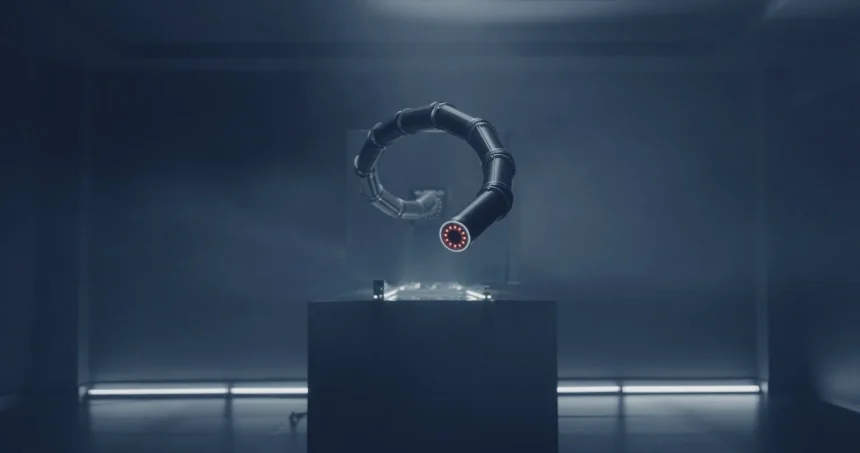
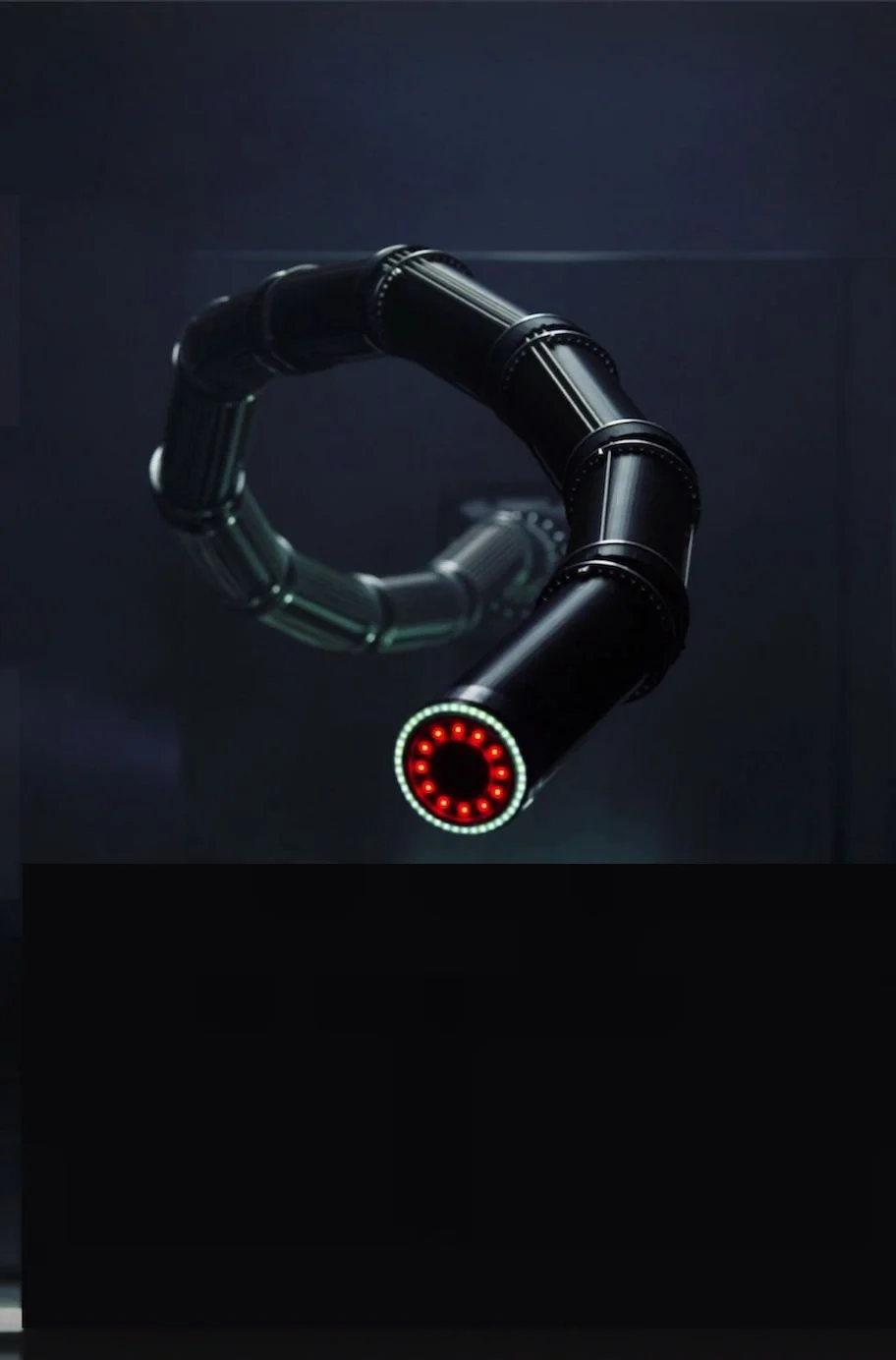
The core product is a three-to-five-metre arm, 50 to 150 millimetres across, with more than 22 degrees of movement. That flexibility lets it navigate through a series of manholes set at right angles to one another, reaching places a person or a conventional arm could not. CEO Vishrant Dave told The Economic Times the arm can enter through three different manholes at three different 90-degree angles “and still perform operations inside.”
The engineering choice that matters most: the arm itself is purely mechanical — links, joints and cables. All motors, electronics and computing sit in a separate sealed actuator box away from the hazardous zone, which the company says makes the system durable in explosive, flooded, irradiated and extreme-temperature environments. On top of the hardware sits AI-based control — real-time 24-degree-of-freedom control using reinforcement learning, so the operator specifies the goal and the arm navigates complex internal geometry adaptively — plus digital-twin simulation to adapt to unpredictable industrial layouts.
One arm, many jobs
The arm is built to act, not just look. Its tip takes modular end-effectors — tools that can be swapped for different jobs — so the same machine can inspect a surface on one run and carry out a maintenance task on another. The current generation carries cameras and depth sensors for inspection; future versions will support welding, coating and maintenance, according to the company. Armatrix plans two business models: renting the robots out as a service for most customers, and selling them outright to clients like defence, where security and intellectual-property rules make a rental arrangement impractical.
Pilots, recognition, and the road ahead
The startup is currently running paid pilots with industrial customers, initially targeting shipbuilding — it is piloting its technology in real shipyards — with plans to expand into aviation, oil and gas and nuclear. In February 2026 it raised $2.1 million (about Rs 18.4 crore) in a funding round led by pi Ventures, with participation from Inuka Capital, Boundless Ventures, Boost VC, Turbostart and gradCapital. In August 2026 it won the Best on Campus category at The Economic Times Startup Awards 2026 — an award whose previous winners include Ather Energy and Bellatrix Aerospace — with the jury citing its clearly defined use cases. Dave told ET in September 2026 that the startup is targeting 10-12 pilots over the next six months and expects to begin commercial deployments in the first half of 2028.