In early October 2026, a spacecraft built to crash into a rock between Mars and Jupiter was unveiled in Abu Dhabi — before Sheikh Hamdan bin Mohammed bin Rashid Al Maktoum, Crown Prince of Dubai. The probe is the only deployable payload of the Emirates Mission to the Asteroid Belt, and the spacecraft bus carrying it to the main belt was engineered by HEX20, the small-satellite company that runs its engineering facility out of Technopark, Thiruvananthapuram. That makes HEX20 the first private Indian company to join a deep-space mission led by a Gulf nation. The unveiling was reported by Manufacturing Today India, Aletihad and R&D World.
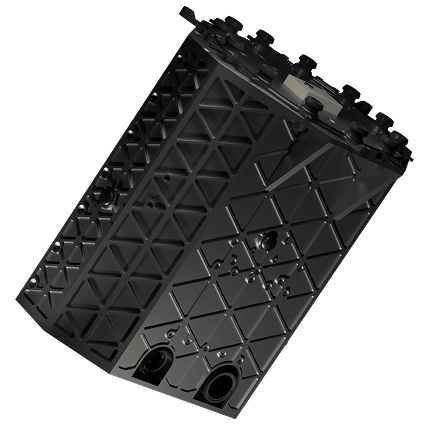
What HEX20 actually built
HEX20 was selected by the UAE Space Agency and the Technology Innovation Institute (TII) in November 2024, after a design workshop. Its contribution: the spacecraft bus — the structure that carries and operates the probe’s payload — plus mission software, an onboard computer and power systems designed to withstand deep space. The company says it delivered the systems within 15 months. The probe was then assembled in Abu Dhabi by TII’s Propulsion and Space Research Centre together with the UAE Space Agency, HEX20, Khalifa University and UAE University.
The 5-billion-kilometre journey
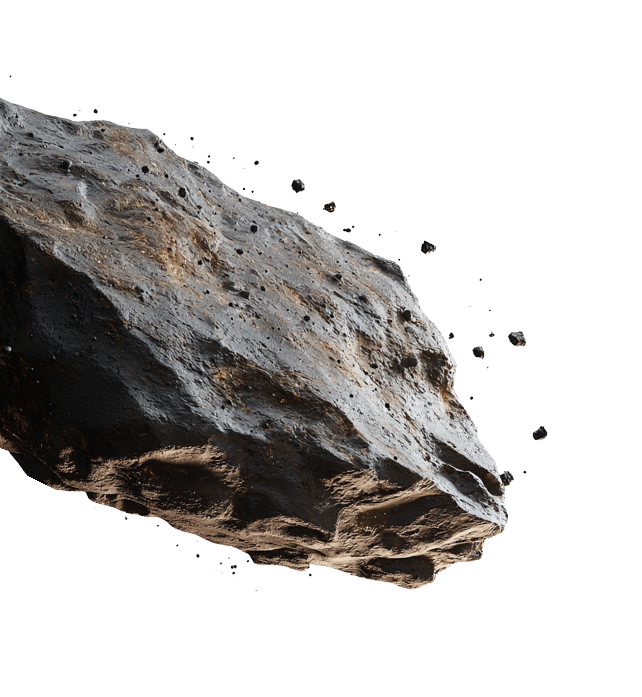
The probe rides aboard the MBR Explorer, the mission’s main spacecraft. The plan, as described by the UAE side: launch from Japan in March 2028, gravity assists at Venus, Earth and Mars, flybys of six asteroids, and arrival at 269 Justitia early 2036. After about seven months orbiting the asteroid, the Explorer will release the probe to descend alone, capturing images as it falls. TII’s engineers call it “asteroid-landing,” but they don’t expect it to survive the impact — if it does, its battery buys 20 to 50 minutes on the surface for one final picture. If it works, Justitia would be only the seventh asteroid in history touched by a probe. The target is worth the trip: a 58-km-wide rock among the reddest in the main belt, thought to have formed near or beyond Neptune before migrating inward.
From Technopark to the asteroid belt
HEX20 Labs India Private Limited describes itself as a payload-agnostic small-satellite company operating across India, the UAE and Australia. It was founded by Malayalis — Amal Chandran (CEO), Ashwin Chandran, M B Aravind, Anurag Reghu and Lloyd Jacob Lopes — and runs its engineering facility at Technopark in Thiruvananthapuram, with UAE operations in Masdar City. The company builds AX CubeSat platforms and subsystems and has real flight heritage: its first satellite, Nila, made HEX20 the first Kerala startup to fly with SpaceX, and its KOYO satellite is in orbit — with six more missions in the pipeline.
Caveats, honestly stated
This is a long game: launch is targeted for March 2028 and arrival for 2036, and deep-space timelines slip. The probe is designed to crash — survival on Justitia is a hope, not a plan. And the scope is worth stating plainly: HEX20 built the bus, onboard computer, power systems and software; the mission itself is led by the UAE Space Agency and TII, which assembled the probe in Abu Dhabi with its academic partners.
Still: an Indian-founded small-sat company supplying the bus for a probe that will fly 5 billion kilometres to touch a rock in the asteroid belt is exactly the kind of hardware-first Indian space story worth noting.