Most drones have a hard boundary: the water’s surface. An aerial drone can spot a suspect vessel or a drowning swimmer from the sky, but the moment the action moves below the surface, you need an entirely different machine — an underwater robot with different propulsion, different navigation, and a different control station. In Bengaluru, a two-year-old startup has decided that boundary shouldn’t exist.
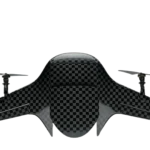
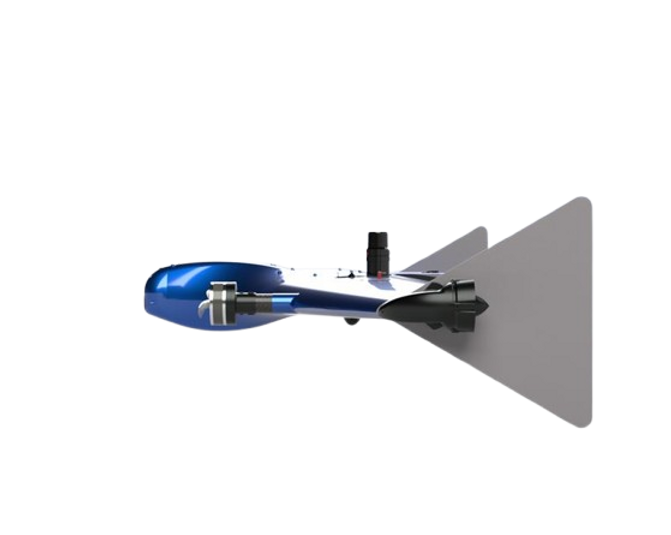
AquaAirX Autonomous Systems, founded in 2024 by Jitendra Kumar Purnmal Saini and Gouthami T S (the company’s CEO), has built AVATAAR — Amphibious Vehicle for Autonomous Tactical Aerial & Aquatic Reconnaissance — a surveillance-class drone that takes off like a quadcopter, flies to its mission area, lands on the water, and dives beneath the surface to keep working. YourStory described it as India’s first amphibious drone when it profiled the company in July 2026, and the startup has since raised Rs 12.5 crore in a seed round led by Rainmatter, Zerodha’s investment arm, with participation from Prime Venture Partners, Wyser and India Accelerator, according to Entrackr.
The hard part is the crossing
Air and water behave nothing alike, and a machine that moves between them has to survive both. The engineering problem AquaAirX set itself is the transition: staying stable and in control as the drone moves from flight into the water and back, without human intervention. The company builds the hull from rust-resistant carbon fibre and coats its sensors and electronics against salt deposits and marine debris — Zee News reported the drone is rinsed with fresh water after every mission to clear residual salt.
Underwater, the machine navigates with a sensor suite the company lists on its official AVATAAR page: a multibeam imaging sonar for seabed mapping and 3D imaging of submerged objects, an acoustic communication modem for underwater data transmission, a Doppler velocity log (DVL) and ultra-short baseline (USBL) navigation — the subsea positioning stack that replaces GPS, which doesn’t work underwater — plus LED lights for dark water.
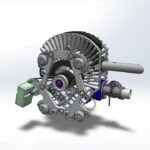
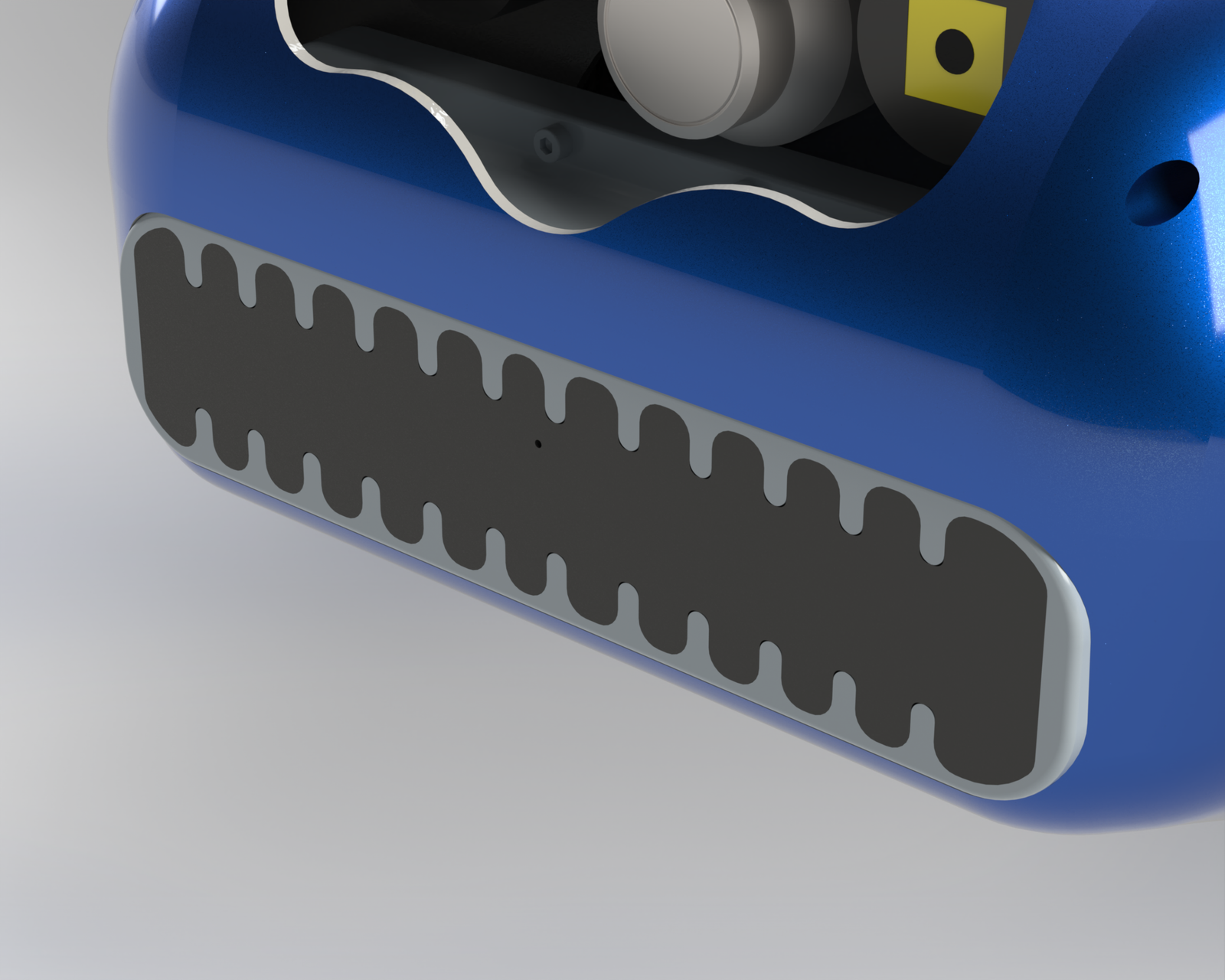
The company’s own close-up of AVATAAR’s multibeam imaging sonar, the sensor that maps the seabed while the drone is submerged:
More Read
One machine, one control station
AVATAAR doesn’t fly alone in the company’s architecture. AquaAirX pairs it with NEXOR, a dedicated underwater vehicle, and a software layer called DeepNimbus that turns camera feeds, sonar returns and telemetry into mission reports and intelligence. A single ground control station runs the whole system across air, surface and the subsea region, YourStory reported — a meaningful detail, because multi-domain missions today usually mean juggling separate consoles for the air and underwater assets.
The applications the company lists are pointed: harbour and port security, tactical ISR and coastal reconnaissance, high-fidelity inspection of offshore platforms, pipelines and cables, search and rescue, and environmental monitoring. The defence use is specific — scan a suspect stretch of coast from the air, then dive to check what’s below with sonar, hunting the small submarines and combat swimmers that exploit shallow waters where large naval assets are slow to reposition. The official page also lists loitering-munition missions among the applications, positioning AVATAAR as a dual-use military platform.
Where it stands
The company says the amphibious platform has reached technology readiness level 6 — demonstrated in a realistic operational setting, tested in real-world waters rather than just controlled tanks — which, if borne out, puts it past the lab-prototype stage and close to deployment. AquaAirX is incubated at the Nitte Meenakshi Institute of Technology and at IIM Bangalore’s N.S. Raghavan Centre for Entrepreneurial Learning (NSRCEL), and The Week noted its seed funding will go toward strengthening air-to-water transition reliability, autonomy, sensing and communications, plus expanding the engineering team.
In October 2026 the startup was also picked for the first DeepTech Enabler cohort of Karnataka’s Innoverse Foundation, a nine-month programme aimed at scaling frontier-tech companies through the valley between proven technology and commercial production.
The caveats that matter
Two calibrations are essential. First, the “India’s first amphibious drone” label is the company’s own description, repeated across media coverage — it is not an independently adjudicated record, and the post should be read as reporting the company’s claim rather than certifying it. Second, TRL 6 is a real milestone, but the company has not named a defence or commercial customer, announced trials with the armed forces, or disclosed flight endurance, depth rating or payload figures. Those numbers — and a first order — are what will prove whether the air-water crossing works as reliably in service as it does in test.
Why this one is worth watching
Maritime security keeps running into the same seam: the aircraft sees the surface, the boat patrols the surface, and what’s happening a few metres below stays invisible to both. A machine that can follow a contact across that seam — from aerial tracking to underwater inspection in a single sortie — collapses two procurement problems into one. India has no shortage of drone startups or underwater-robotics startups; AquaAirX is betting that the interesting company is the one that refuses to choose. If AVATAAR’s transition reliability holds up through its upcoming large-scale trials, that bet starts looking like foresight.