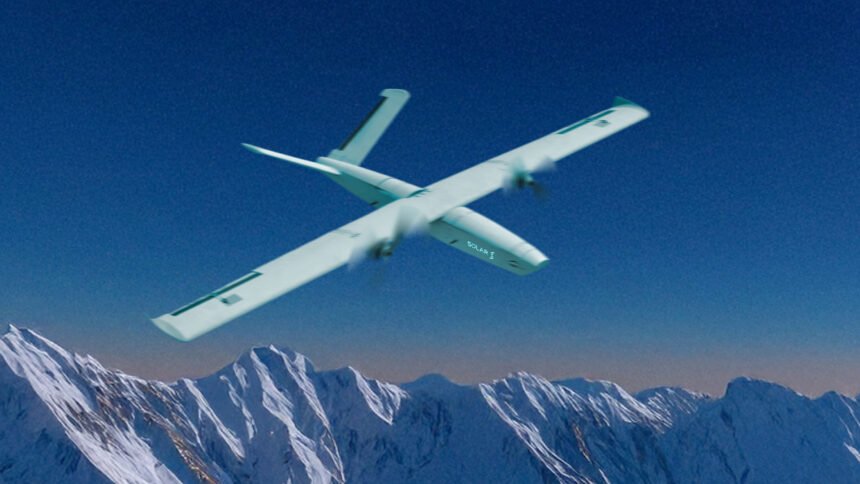
On 13 October 2026, the Indian Army’s kit changed in a way that doesn’t photograph well but fights differently: news agency ANI announced that Nagpur-based Solar Defence and Aerospace Limited (SDAL) had completed delivery of 450 Nagastra-1R loitering munitions — kamikaze drones — to the Army under a Rs 158-crore emergency-procurement contract, reported the Financial Express. The company describes it as the largest single-batch supply of loitering munitions ever made to the force.
A loitering munition is an awkward middle child of the battlefield — part drone, part missile. It circles over a target area for up to an hour, watches, waits, and then dives in. What makes the Nagastra unusual is the feature no missile has: if the target isn’t identified or the mission is aborted, the drone can be called back and parachutes down to be flown another day.
What the Nagastra-1R can do
The Nagastra-1R is a man-portable, fixed-wing electric UAV weighing around 9 kg, configured to the Army’s short-range requirements, reported the Economic Times. Published specifications cite GPS-enabled strike accuracy of about two metres, endurance of up to 60 minutes, a 15 km range under man-in-the-loop control and an autonomous operating range of 30 km — with some reports putting the autonomous envelope at up to 40 km, per the Times of India. The figures vary across reports; these are the most commonly cited numbers, not independently verified test data.
Its electric propulsion is deliberately quiet — the drone is designed to be nearly undetectable acoustically above 200 metres — and it carries day-and-night surveillance cameras, so it doubles as a tactical reconnaissance asset before it becomes a strike asset, reported BharatShakti. The complete system — munition, ground control station, communications and a pneumatic catapult launcher — packs into two soldier-carried rucksacks weighing roughly 30 kg in total.
Four companies entered. One passed.
More Read

The Rs 158-crore order was placed in June 2025 under the Army’s emergency procurement powers, after technical trials at the Special Forces Training School in Makloh, Maharashtra, in March 2025, per the Financial Express. SDAL says four companies participated in the trials — and claims it was the only firm able to demonstrate all the prescribed operational parameters. That “only” is the company’s own claim, not an official Army statement, but the outcome is on record: the contract went to Nagpur.
The order works out to roughly Rs 35 lakh per unit, though the final unit cost includes spares, training and support. It is a follow-on to the Army’s earlier order for 480 Nagastra-1 loitering munitions, placed in 2024 and fully delivered by December that year — meaning the Army will now hold over 900 of these systems in inventory.
The rewind button
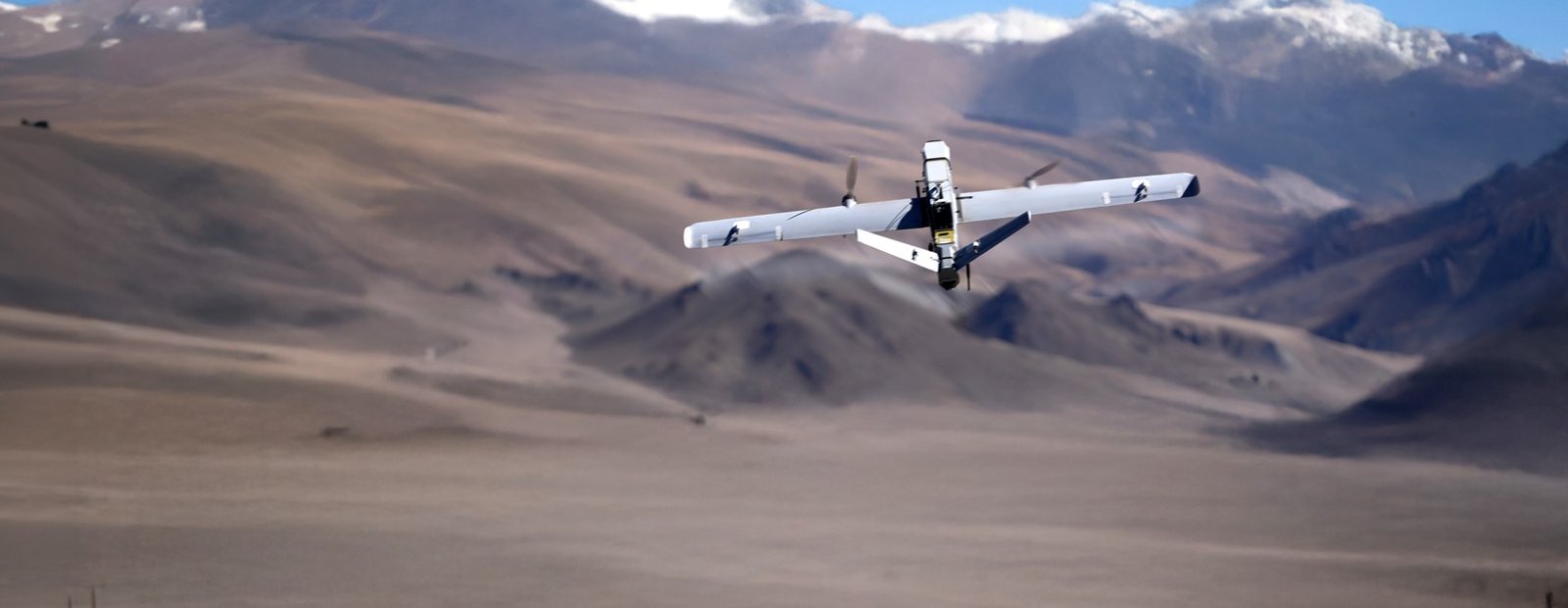
Kamikaze drones are, by design, single-use. The Nagastra’s answer to that economics problem is abort-and-recovery: under specified conditions, an operator can discontinue the attack, and the drone returns for a parachute-assisted soft landing, reported India TV, quoting SDAL’s head of R&D Rahul Dixit. It is also fitted with a 360-degree surveillance suite, including infrared and day cameras, for real-time reconnaissance.
The point is as much about training and confidence as cost: commanders can rehearse missions, and false-positive targets don’t burn a Rs 35-lakh asset. In a force that inducts equipment through emergency procurement precisely because it cannot wait for the long acquisition cycle, that flexibility is part of the pitch.
From explosives to loitering munitions
SDAL is the defence subsidiary of Solar Industries India, the Nagpur-headquartered listed company that built its name on industrial explosives and is now diversifying aggressively into defence manufacturing. The Nagastra line was developed by SDAL’s sister company Economic Explosives Ltd (EEL) in association with Bengaluru-based Z Motion Autonomous Systems, with the company citing more than 75% indigenous content on the first batch and over 80% on the 1R, per Nagpur Today. SDAL says it is now working to indigenise the propulsion motors too — one of the last key imported components.
The loitering-munition business sits inside a much larger defence push. In February 2025, EEL signed a roughly Rs 6,084-crore contract with the Ministry of Defence for Pinaka area-denial and high-explosive rockets, per the Financial Express. In January 2026, Defence Minister Rajnath Singh visited SDAL’s Nagpur facilities and inaugurated a state-of-the-art medium-calibre ammunition plant, per the company’s exchange filings.
The two-sided bet
SDAL is building capabilities on both sides of drone warfare. On the other end of the spectrum is Bhargavastra, its indigenous counter-drone system. SDAL chairman Satyanarayan Nuwal has said the system’s radar can detect aerial threats up to 10 km away while its electro-optical tracking system reaches six km — beyond the Army’s current operational requirement of 2.5 km — reported the Financial Express. Nuwal has positioned the technology as feeding into an ambitious “Sudarshan Chakra” air-defence system by 2030.
And the Nagastra line itself is growing. The company is developing the Kalsastra series of long-range drones designed to carry warheads of up to 50 kg, and is preparing winter trials of CANISTER Launched Anti-Armour Loitering Munitions (CALM) — a tube-launched system meant for infantry fighting vehicles, per Nagpur Today. Those are company-stated development plans, not delivered systems.
What this means
Loitering munitions have become central to modern warfare — surveillance, precision strikes and saturation attacks rolled into one airframe. With 450 units delivered in a single batch, two consecutive emergency-procurement wins, and a recoverable design that bends the single-use economics of kamikaze drones, a Nagpur explosives company has quietly become one of the Indian Army’s most important drone suppliers. The “largest single-batch” tag is the company’s claim — but the inventory numbers are now the Army’s.