Every jet-powered unmanned aircraft India builds has carried an imported heart. The design of a small turbojet is textbook knowledge; the hard part is the metallurgy, the micron tolerances and the manufacturing craft that take decades to build. That is why Indian drone makers have queued for export licences, waited months for foreign suppliers and accepted a supplier who knows exactly how dependent they are. DG Propulsion was founded in 2019 to end that dependency.
The Delhi company’s engines are named after their thrust: the DG J20, J40 and J60 produce 20, 40 and 60 kilogram-force respectively, all designed and tested in-house for unmanned aircraft and defence applications. Founder Prateek Dhawan began with micro gas turbines as a college project and tested his first aero engine in 2018 while working at John Deere; co-founder Chirag Gupta, a former Indian Navy officer, joined to turn the engineering into a company. Their milestone moment came on endurance: the J40 completed a one-hour continuous run — for a micro turbojet, the company notes, the test that separates a working prototype from something that can fly a mission. In late 2024, the company test-ran a larger engine of about 100 kilograms — a kilonewton — of thrust.
Behind the hardware is a supply-chain story. The company says the J40 currently runs at 30–35% Indian content and is working to push that past 90%, supported by a Ministry of Defence grant — one of the clearest illustrations anywhere of how much of the jet-engine supply chain India still lacks, and how deliberately DG Propulsion is building it. The company has also built its own engine control system, DG AEMS, and says it is moving from turbojets towards turbofans, which are more efficient at the speeds larger platforms fly at. In June 2026, it announced plans for a 10-kilonewton engine — an order of magnitude above anything it has tested.
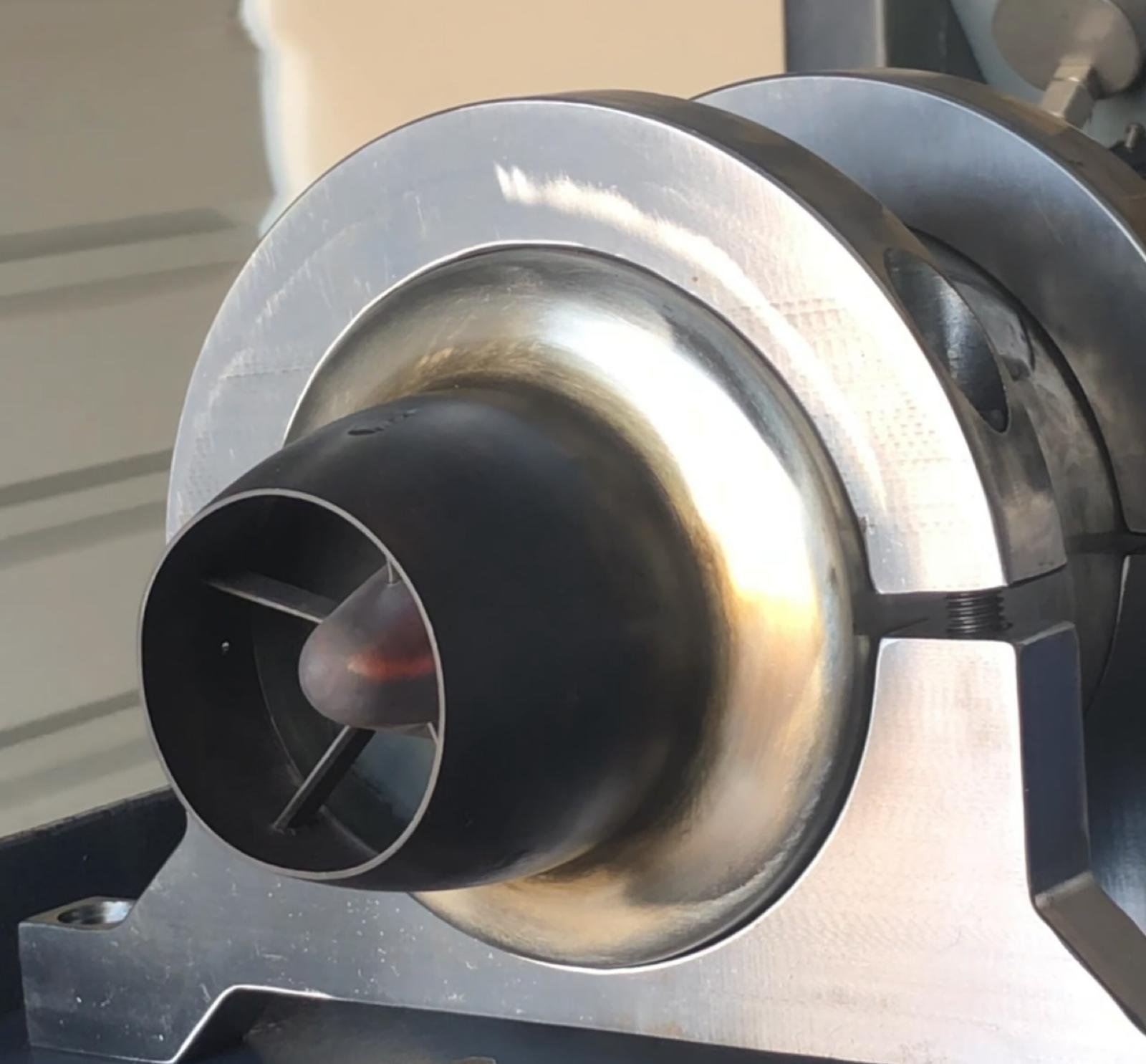
Image: DG Propulsion (the DG J40 micro turbojet, rated at 40 kilogram-force of thrust).
The clearest validation came in the sky. On 11 August 2026, Kawa UAV — the Lucknow company trading as HoverIt — flew its Divyastra Mk3 loitering munition for the first time, powered by a DG Propulsion turbojet. The companies describe it as the first Indian jet-powered loitering munition to fly on an Indian engine, and it was the first public instance of a DG Propulsion engine integrated into a customer’s platform and taken into the air. HoverIt says the Divyastra Mk3 programme went from inception to maiden flight in one calendar year, with no imported jet engine and no foreign critical subsystem, and that the engine met all pre-defined operational parameters during the trial.
More Read
The institutional backing is building alongside the flight record. The company exhibited at Aero India 2025 and signed an agreement there with a government defence agency, and has had support through iDEX, the Ministry of Defence’s innovation programme, alongside grant funding for indigenisation. Looking ahead, the company describes ambitions that run wider than drones — jetpacks, jet speeders and air taxis — but the engine that matters most is the one already in the air, proving that a compact Indian turbojet can carry an Indian airframe on an Indian mission.
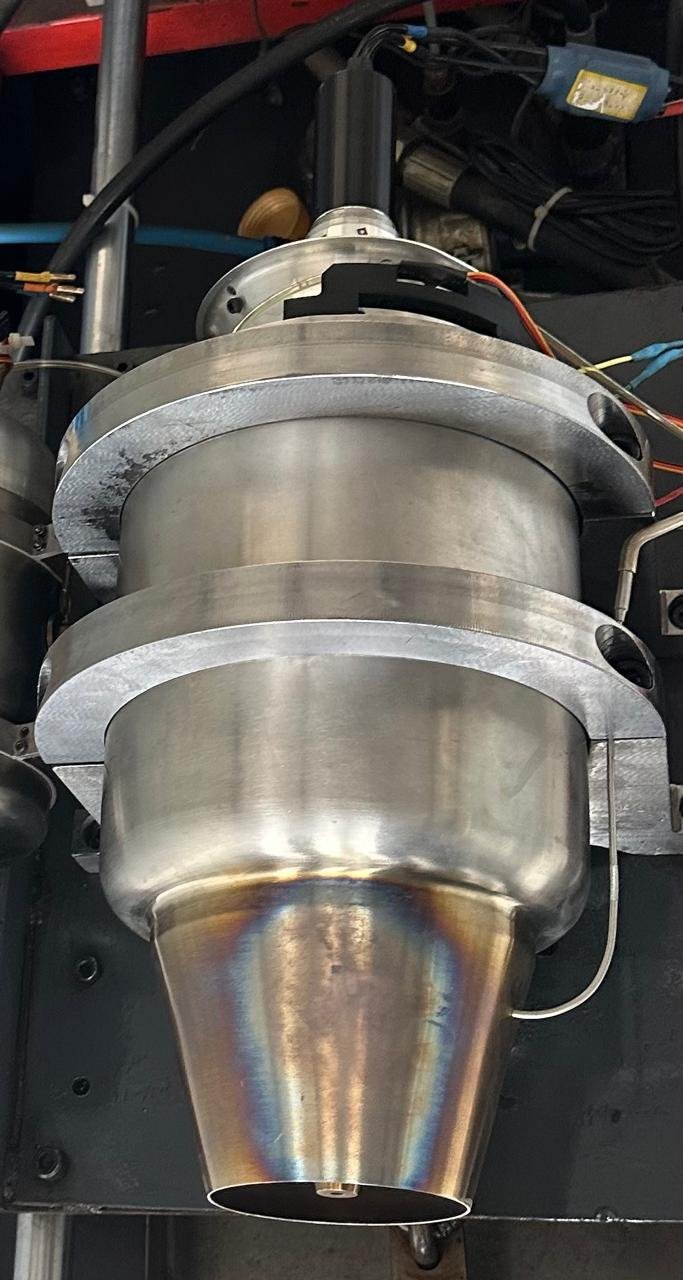
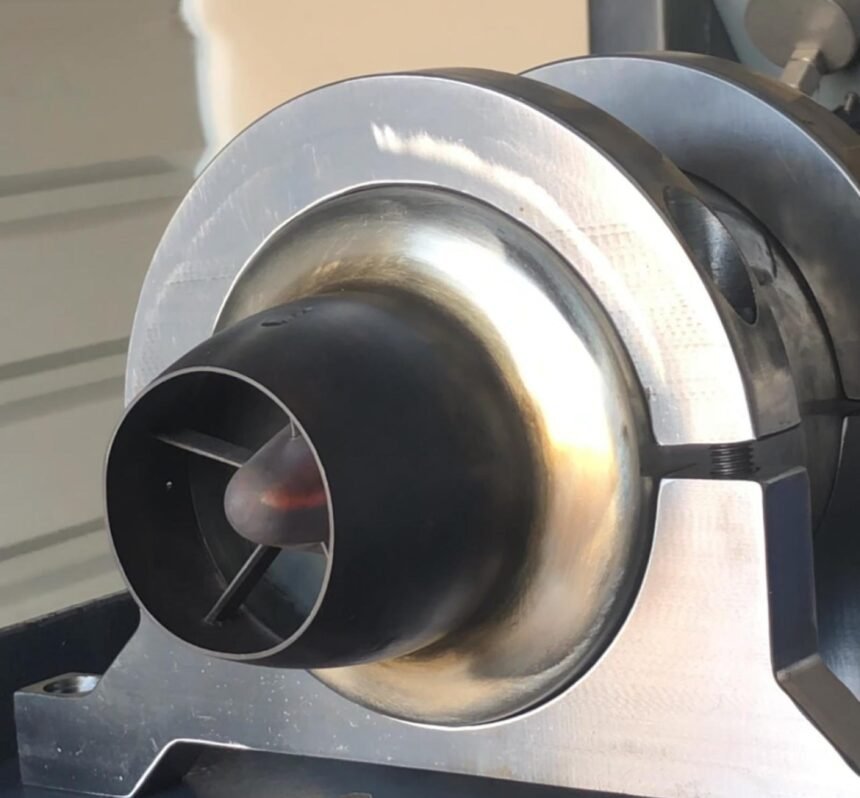
Image: DG Propulsion (the DG J100 turbojet engine on the test stand).