Every voice system forces the same trade-off: fast, or accurate. For Indian languages, the trade-off has been even harsher — ten major languages, accents that change every few hundred kilometres, and speakers who mix Hindi and English in the same sentence. On 22 October, a Delhi research lab announced that it has ended that trade-off, with a speech recognition model it says beats every system it tested — including ones that get to hear the whole recording first.
The lab is Chariot, a frontier AI research lab headquartered in Delhi and one of four teams selected under the IndiaAI Mission to build the country’s foundation models. It is led by co-founders Parth Sarthi and Suvrat Bhooshan, whose team brings experience from Google DeepMind and Meta’s FAIR lab, alongside Stanford, Georgia Tech, IIT Delhi and IIT Bombay. Before returning to India, Parth Sarthi led the Applied Evals team at OpenAI; his earlier RAPTOR retrieval technique, published at ICLR 2024, now lives inside frameworks like LangChain and LlamaIndex.
Chariot’s thesis is that audio is a modality, not a domain. Just as text models learned to plan, verify and revise before answering, Chariot is building what it calls “speech reasoning” — models that work with the full spoken interaction: words, timing, rhythm, emphasis, uncertainty, interruption, and the delivery of the response. Its Chariot-1 model learns speech the way large language models learn text: broadly and once, then specialises for specific tasks. Speech recognition is one of them.
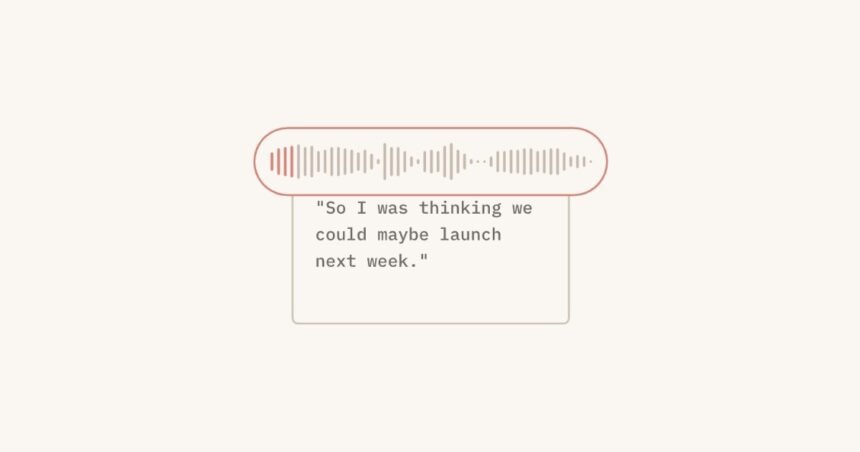
Chariot-1-ASR Realtime illustration. Image: Chariot
The new model is Chariot-1-ASR Realtime, a live transcription system for 10 of India’s most widely spoken languages, now available on the company’s platform alongside its text-to-speech capability. In the company’s published evaluation across 79 public test sets, it made 9% fewer errors than the strongest batch system it compared against, Sarvam’s Saaras v4, and 26% fewer than Google’s Gemini 3.5 Transcribe. Against real-time services from Sarvam, ElevenLabs and Deepgram, it recorded the lowest error rate in all ten languages — and in Hindi, 23% fewer errors than the next best. It also ranks first, per the company, on real Hindi and Indian-English phone calls (the Monsoon benchmark), Hindi accents from districts across India (Vaani), and noisy recordings (Kathbath-Hard). Crucially, it handles regional accents and code-mixing without being told the language, and can write English words in Latin script or Devanagari for Hindi.
For businesses, the live transcript becomes the accurate one. The same model can power voice agents in real time and produce the transcripts compliance and analytics teams rely on — for banks, insurers, telecom operators, contact centres and public helplines serving customers across ten languages with a single model. Pricing is reported at around ₹15 to ₹20 per hour.
More Read
Chariot’s voice technology is already woven into Indian public life. Its team dubbed Mann Ki Baat for Doordarshan’s regional channels, preserving the Prime Minister’s voice; built the Shah Rukh Khan World Cup bot that answered cricket fans from twenty minutes of recording; sang 600,000 personalised birthday songs for Cadbury; created a cloned celebrity voice to teach people what scams sound like for HDFC Bank — a campaign that won a Silver Lion at Cannes and the Grand Prix at Goafest; and powered over one lakh retailer-generated ads on HUL’s Shikhar platform. Its first public model, Chariot-1 TTS, is live in beta across English, Hindi, Tamil, Bengali and more, with the company’s evaluation showing 94% accuracy on hard spoken-form examples like dates, currencies and URLs, and a median latency of 75 milliseconds.
From Doordarshan dubbing rooms to call centres serving ten languages, Chariot is building frontier AI around how India actually speaks. If this launch is the measure, India’s foundation-model bet is already speaking for itself.
Keep reading: Hands That Feel: Inside Perceptyne, the Hyderabad Startup Teaching Humanoids to Work on Assembly Lines · Five Chips Deep: Inside Vervesemi, the Greater Noida Startup Turning India’s Analog Designs Into Silicon · More Industrial Automation & Technology stories
Like stories like this? Add Exceptional Technology as a preferred source on Google to see more of our reporting in your search results and Discover feed.