Every rocket launch you watch is a triumph of thrust. The engine roars, the vehicle climbs, and the crowd cheers the power. But power alone never put anything in orbit. Somewhere between the launch pad and the payload’s destination, the rocket has to be steered — its nozzle nudged by fractions of a degree, thousands of times, with absolute precision. Get that steering wrong and the most powerful rocket in the world is just an expensive firework. Get it right, and a launch vehicle goes exactly where it is supposed to go. That invisible job — the hands that steer the rocket — is what a Bengaluru company has spent a decade perfecting.
The company is AADYAH Aerospace. Founded in Bengaluru in April 2016 by six colleagues with decades of aerospace and defence experience between them, AADYAH does not build rockets and does not operate satellites. It builds the mission-critical subsystems inside them — the actuators, control electronics and avionics that let a launch vehicle steer and a satellite hold its gaze. It is the company the rocket builders call when the part has to work the first time, every time.
The parts that steer a rocket
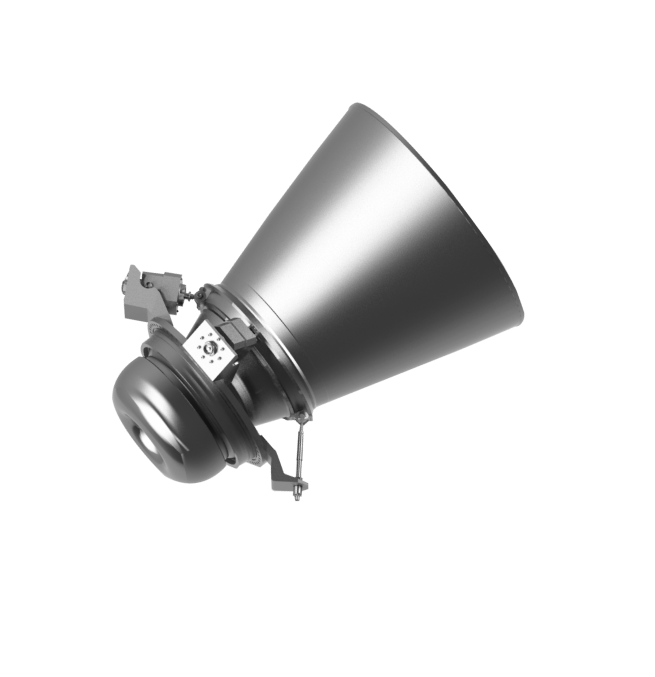
A rocket steers by moving its engine nozzle, and AADYAH builds everything that makes that movement happen. Its thrust vector control systems combine the actuators that physically swivel the nozzle with the sensors that read its position and the control electronics box that commands it. Around that flagship line, the company builds flex nozzle and flow control systems and complete flight avionics for launch vehicles — the nervous system that tells the vehicle where it is pointing and keeps it on course.
The work is done in-house, from design through prototyping to manufacturing, at the company’s Bengaluru facility. That facility runs its own system-level testing lab, with no-load and load test rigs built specifically for thrust vector control mechanisms, control electronics and avionics. The company says every subsystem is designed, prototyped, tested and integrated into launch-ready platforms by its own engineers — a full-stack capability that lets it take responsibility for the whole steering chain rather than a single component.
The satellite side of the business
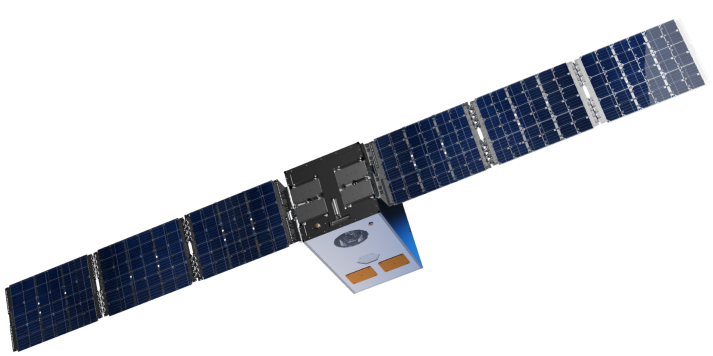
Once a satellite reaches orbit, the steering problem changes but never goes away. A satellite has to point its antennas at Earth, its cameras at their targets and its solar panels at the Sun, year after year, without a mechanic in sight. AADYAH builds the subsystems that make that possible: onboard computers and electronics control units, reaction wheels that spin a satellite into the right attitude, sun sensors and star trackers that tell it exactly where it is looking.
More Read
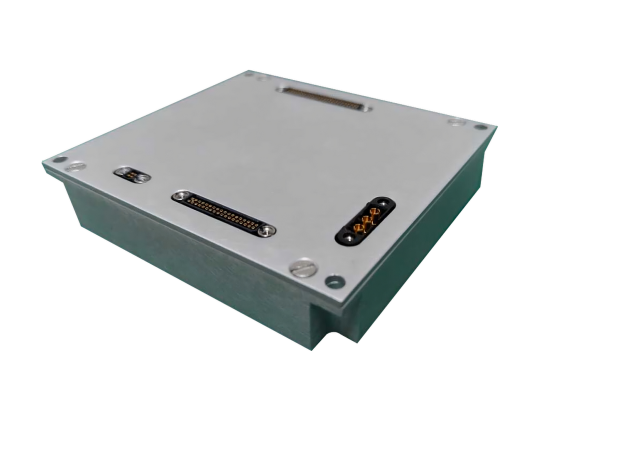
Alongside those, the company does composite and precision manufacturing, including carbon-fibre propellant tanks and structural mechanisms for satellites, and it has built hardware as specialised as a cubesat dispenser — the mechanism that holds a small satellite in place inside the launch vehicle and pushes it out cleanly once it reaches orbit. Its engineers have even developed a contactless laser-based charger for lunar rovers, and a prototype scramjet combustor under a DRDO contract, showing a range that runs from the practical to the genuinely futuristic.
Built on ISRO experience
AADYAH’s founding team reads like a cross-section of India’s space establishment. Chairman and managing director Shaju Stephen previously ran the Indian subsidiary of Spanish engineering major SENER. Chief executive Sunderarajan Varadan served as a Lieutenant Commander in the Indian Navy before his own SENER career. Chief technology officer Dr Pradeep Kumar retired as a Group Director at ISRO’s Vikram Sarabhai Space Centre after more than four decades in propulsion. The six founders held 75 percent of the company and set aside 25 percent for an employee stock ownership plan — a structure the company says made it the first in India’s space sector to offer stock options to its people.
That experience shows up in the customer list. The company says it counts ISRO among its clients, and has supplied hardware used in astronaut training simulations for India’s Gaganyaan human spaceflight programme. Beyond India, it serves customers across the United States, United Kingdom, France, Spain, Germany, Austria, Israel, Singapore and Australia, and it opened a North American subsidiary in 2021, landing its first international customer in Germany the same year. It is AS9100D certified, the quality standard the aerospace world demands of its suppliers.
A decade of quiet deliveries
AADYAH started generating revenue in August 2018 and shipped its first product in September 2019, under a design, prototyping and production contract for a launch vehicle thrust vectoring system. In 2018 it won a National Award for Technology Innovation for its work on spacecraft separation systems. The company turned profitable in March 2025, reporting a profit of Rs 1.47 crore for the year, and in June 2026 it raised Rs 31.5 crore in a Series A round led by Helios Holdings, which the company says will fund a United States acquisition alongside working capital and manufacturing expansion.
Nearly a decade after its founding, AADYAH employs close to ninety people in Bengaluru, many of them former ISRO and industry engineers. As India’s private launch companies scale up their rockets and its satellite builders aim higher, the demand for the subsystems AADYAH makes only grows. Rockets will keep getting bigger and more powerful. Somebody still has to steer them — and in India’s fast-growing space economy, that somebody is increasingly AADYAH Aerospace.
Keep reading: See the Unseen, Stop the Unwanted: Inside Unistring Tech Solutions, the Hyderabad Company Building India’s Shield Against Drone Swarms · Detect, Decide, Destroy: Inside TRIYAM-3D, India’s AI Guardian Against Drone Swarms · More Aerospace & Defense stories
Like stories like this? Add Exceptional Technology as a preferred source on Google to see more of our reporting in your search results and Discover feed.