


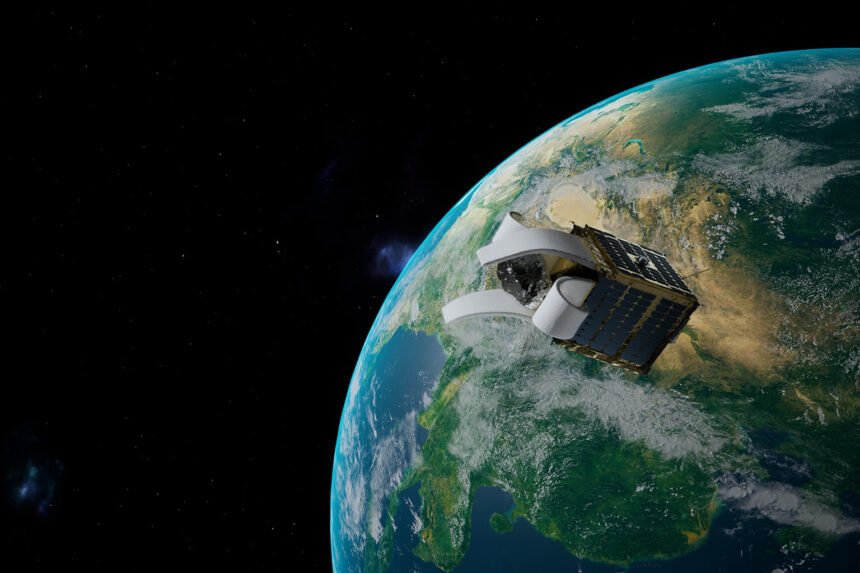
Look up on a clear night and the sky seems empty and infinite. It is neither. Above us, thousands of dead satellites, spent rocket stages and fragments from old collisions are circling the planet at roughly 27,000 kilometres an hour, and every new constellation adds to the traffic. At those speeds, even a fragment the size of a bullet can end a working satellite. Sooner or later, somebody has to start cleaning up. A Hyderabad startup called Cosmoserve Space has decided that somebody should be India — and that the cleanup tool should be gentle, not violent.
Cosmoserve’s answer is a spacecraft that does not grab space junk with a rigid arm, a harpoon or a net. It hugs it. Soft robotic petals, inspired by the Venus flytrap, fold around a dead satellite and hold it securely, whatever its shape, so it can be pulled down to burn up safely in the atmosphere. The company says the petals can capture objects from 10 centimetres to two metres across — and, crucially, they need nothing pre-installed on the target. No magnetic plate, no docking point, no cooperation from a satellite that stopped working years ago.
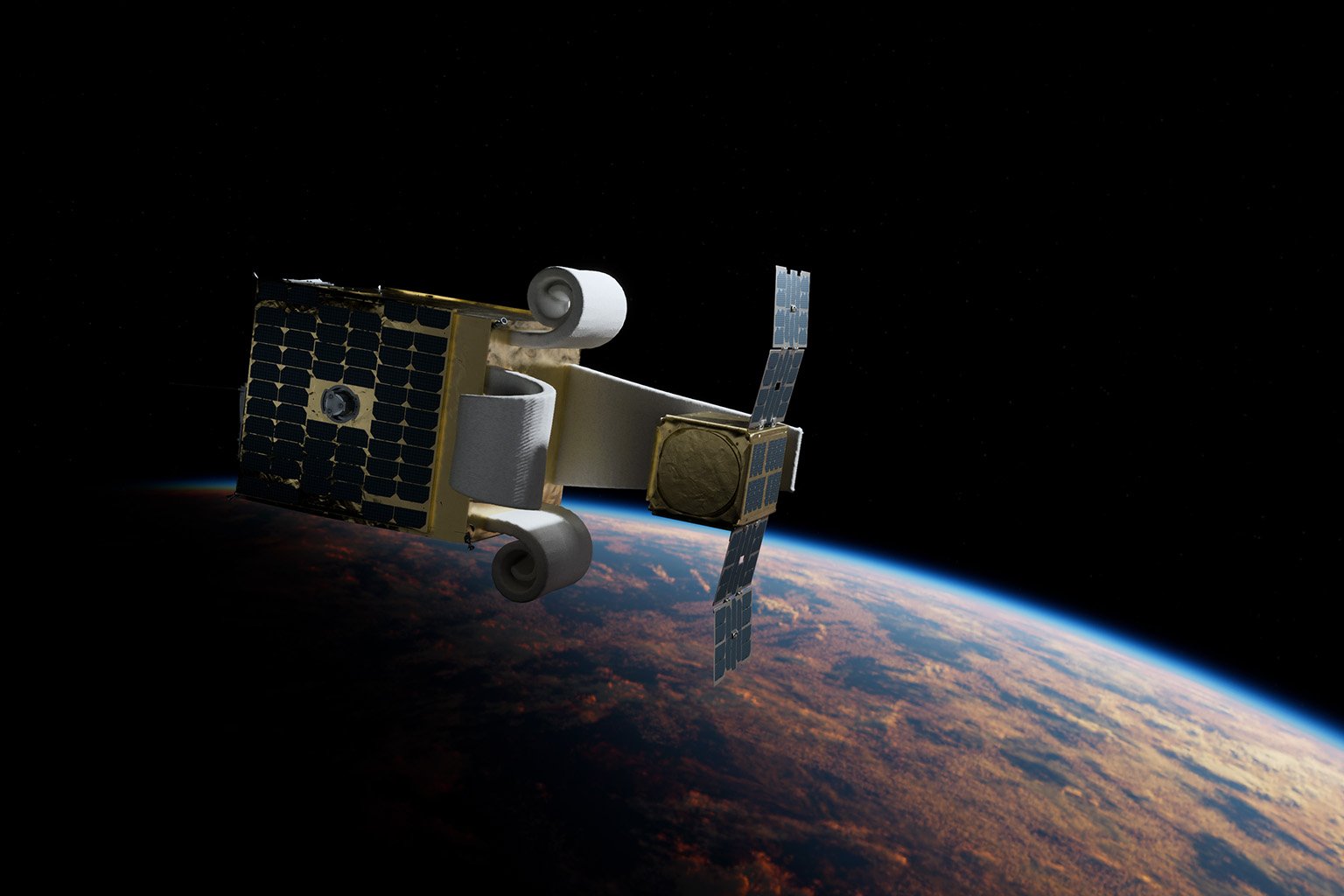
Cosmoserve’s soft robotic petals closing around a target satellite, in the company’s official render.
A flytrap for dead satellites
Most debris-removal concepts start from the same limitation: they only work on targets that were designed to be caught. Rigid robotic arms have limited freedom of movement, harpoons risk shattering a fragile target and creating more debris, and nets need a cooperative shape. Cosmoserve’s founder, Dr Chiranjeevi Phanindra B, spent fifteen years at ISRO — at the Vikram Sarabhai Space Centre and then as Deputy Project Director for the Gaganyaan human spaceflight programme — and, representing India at the Inter-Agency Space Debris Coordination Committee, watched the debris problem move from a theoretical worry to an imminent one. That experience shaped the company’s bet: build a capture system for the unprepared, tumbling, uncooperative objects that actually fill orbit.
The result is a two-spacecraft architecture. A smaller servicer, called Reviver, rendezvouses with the target, matches its motion and wraps its soft petals around it. A larger Mothercraft acts as the depot and service vehicle, supporting Reviver across multiple missions. Once secured, the debris is brought down to a lower orbit and deorbited, burning up harmlessly in the atmosphere. The company says the system works at roughly one-tenth the cost of comparable solutions — a figure that matters, because debris removal only works as a business if it is cheap enough to do again and again. Cosmoserve works in two markets at once: end-of-life services, helping operators dispose of their own spacecraft when a mission ends, and active debris removal for governments and space agencies clearing orbit’s worst offenders.
More Read
From concept to orbit in four months
Cosmoserve’s first flight test, Mission Embrace, showed how fast India’s private space ecosystem can now move. The company says it took its soft robotic capture technology from initial concept to flight-qualified hardware in just four months, passing system concept, preliminary design, critical design and flight readiness reviews under a committee of former ISRO scientists and aerospace professionals. Then, on 18 July 2026, Embrace rode into orbit aboard Skyroot Aerospace’s Vikram-1 on Mission Aagaman — India’s first privately developed orbital launch — from the Satish Dhawan Space Centre at Sriharikota.
The flight put the hardware through the one test no laboratory can replicate: a real launch, and real conditions in orbit. The company says the payload withstood all launch conditions, and that its actuation system and algorithms performed as expected. The telemetry from that flight is now feeding directly into the next version of the system — flight data, gathered in days, that would have taken years of ground testing to approximate. For a company incorporated less than a year before its first launch, reaching orbit at all was a statement of intent.
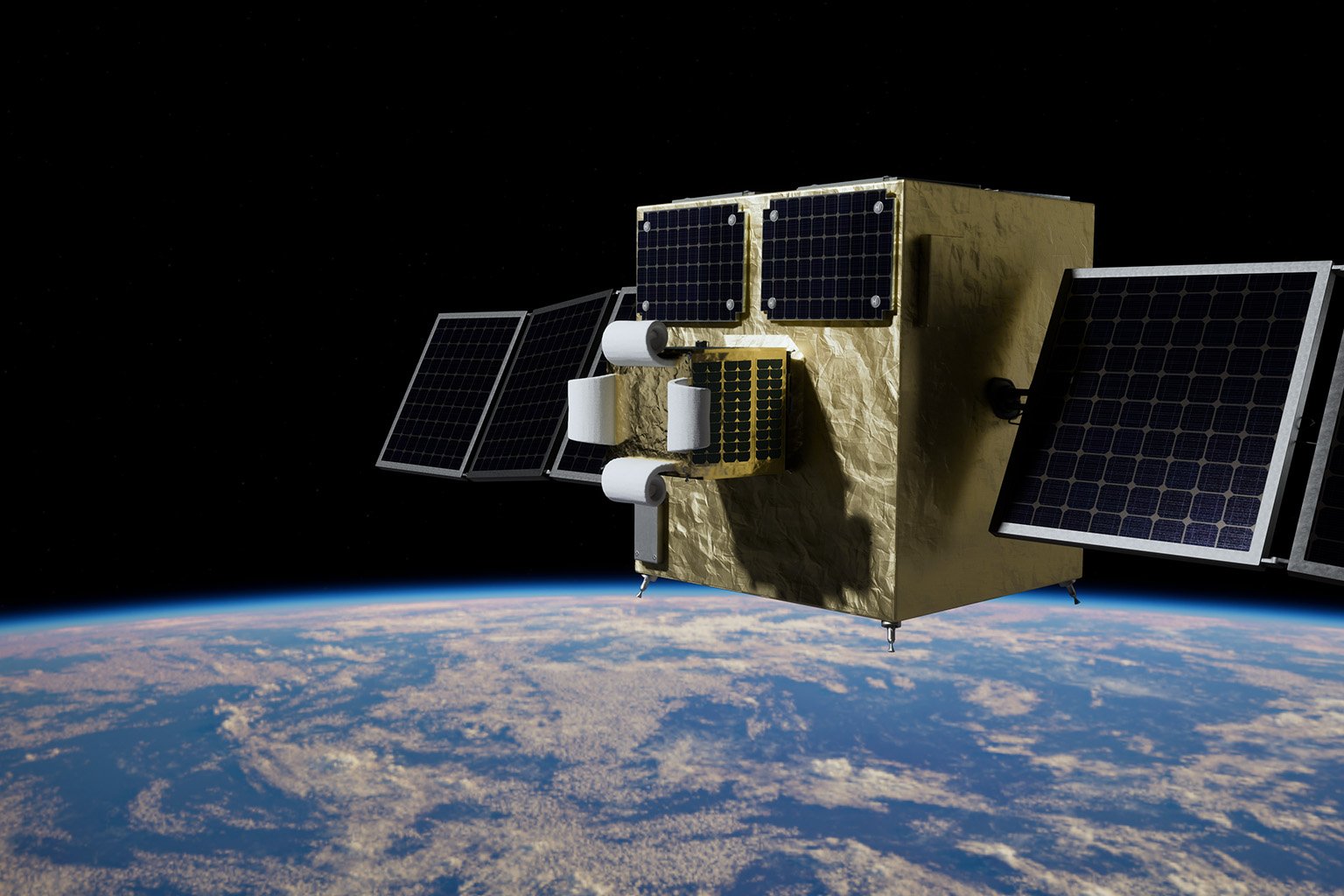
Cosmoserve’s Mothercraft spacecraft, the depot vehicle at the heart of its debris-removal architecture.
The next demonstration, on a proven Indian bus
Cosmoserve is not stopping at one flight test. In March 2026 the company partnered with Pixxel, the Bengaluru company already operating six Firefly hyperspectral satellites, which will provide the satellite bus for Cosmoserve’s upcoming technology demonstration mission. The demonstration, expected in early 2027, is designed to validate the full debris-removal architecture in orbit before the company scales to operational missions — a proven Indian platform carrying a new Indian capture system.
The backing behind that roadmap is already in place. Cosmoserve has raised $3.17 million in a pre-seed round, works from T-Hub in Hyderabad, and was named the winner of KPMG’s Global Tech Innovator Competition India finale in 2026, earning a place on the global stage. The company plans to begin client missions by 2028, serving commercial satellite operators and government agencies. Its long-term ambition, in the founder’s words, is a fleet that clears hundreds of dead objects — turning the busiest, most dangerous orbits back into safe working space.
Every satellite India launches, and every constellation the world puts up, makes this work more urgent. Rockets and satellites get the headlines; the unglamorous job of keeping orbit usable falls to companies like Cosmoserve. Its petals close gently, around whatever is there, and that gentle hug may be what keeps the sky open for everything India still plans to build above it.
Keep reading: The Hands That Steer the Rocket: Inside AADYAH Aerospace, the Bengaluru Company Building the Parts That Point India’s Rockets · See the Unseen, Stop the Unwanted: Inside Unistring Tech Solutions, the Hyderabad Company Building India’s Shield Against Drone Swarms · More Aerospace & Defense stories
Like stories like this? Add Exceptional Technology as a preferred source on Google to see more of our reporting in your search results and Discover feed.








