Walk through almost any factory, warehouse or hospital basement in India and you will see the same thing: perfectly good machines, bought for lakhs, doing the same repetitive run day after day with a human being walking alongside them. The forklift that ferries pallets, the cleaning machine that circles the mall floor, the trolley that shuttles parts between lines. The machines work. The driving does not need a person. A Hyderabad startup called Tensrai has built its whole company around that observation: instead of asking businesses to buy brand-new robots, give the machines they already own the ability to drive themselves.
Tensrai Technologies, founded in Hyderabad in 2022, is building what it calls a unified, retrofittable autonomy platform. One common software and hardware stack, the company says, can make different kinds of machines autonomous — whether they are robots built for the job or equipment a factory or warehouse already has on its floor. The pitch is simple and, for cost-conscious Indian industry, powerful: autonomy as an upgrade, not a replacement.
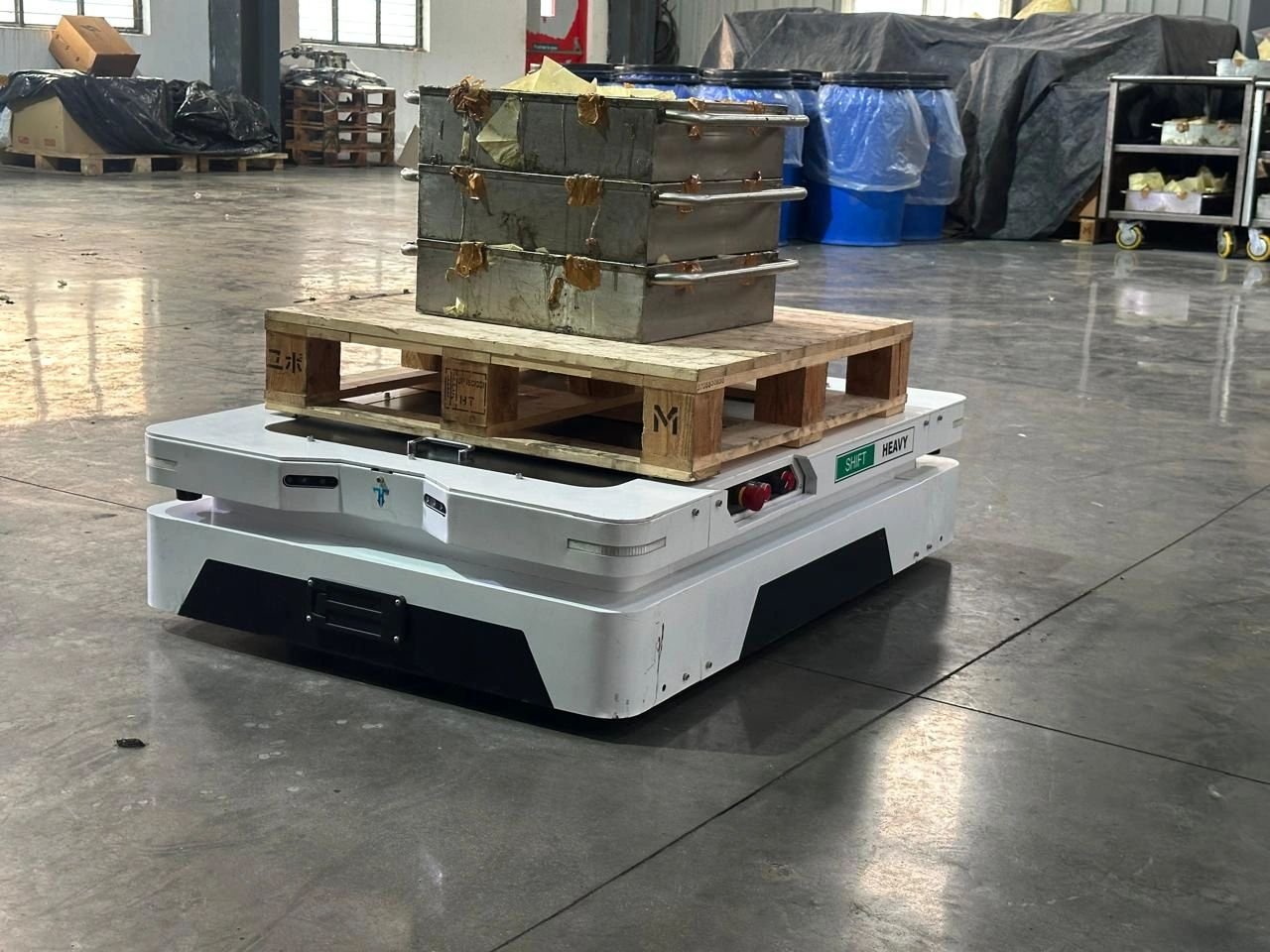
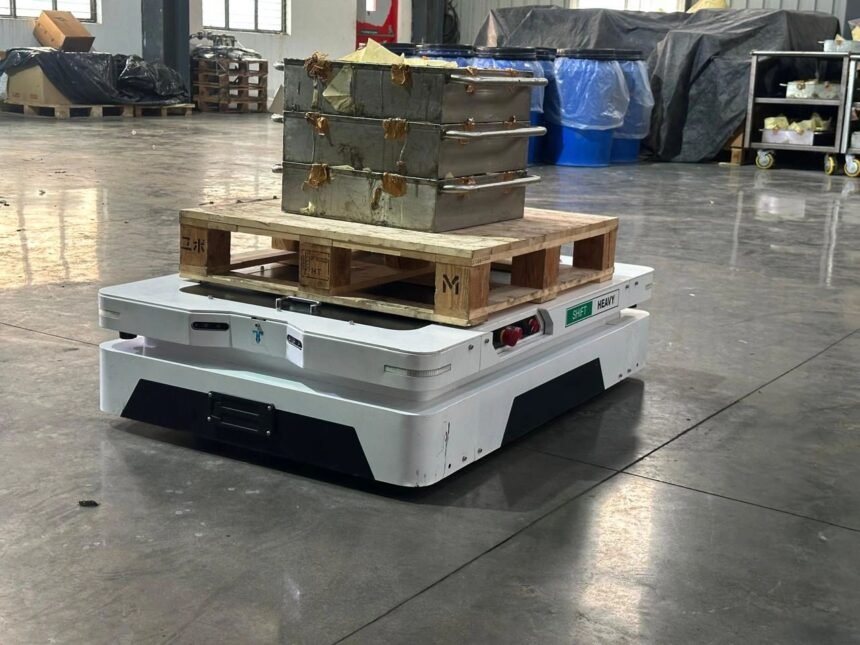
Tensrai’s autonomous mobile robot carrying a pallet through a warehouse, in the company’s official photo.
One brain for every machine
Most automation fails the same way: a system that works beautifully on one machine falls apart on the next, because every machine has different sensors, different movement and a different idea of safety. Tensrai’s answer is to build one platform that travels across machine types. The stack combines vision-first navigation, so a machine understands where it is from cameras rather than expensive added sensors; AI-based localisation, so it keeps track of itself across large, changing floors; and reasoning powered by vision-language models, so it can interpret an instruction rather than follow a fixed script.
On top of that sit autonomous mobility and robotic arm manipulation — the moving and the doing, in one system. The company is also developing a general-purpose mobile manipulator, a robot that combines autonomous movement with arms, for tasks across material handling, cleaning, manufacturing and construction. For a factory, that means one autonomy supplier for the trolley, the cleaner and the manipulator, instead of three separate automation projects.
More Read

Teach it once, and it remembers
The most human part of Tensrai’s platform is how a machine learns a job. Its vision-language-action, or VLA, teach-and-deploy feature lets a person demonstrate a task and the machine learn to repeat it in a real environment. Show it the route, show it the pickup and the drop, and the system turns camera input and plain instruction into physical action. The company says the technology is designed to help machines perceive their surroundings, reason through tasks, learn skills and carry out operations with limited human intervention.
That teach-and-deploy idea is what makes retrofitting practical. A warehouse does not need to re-engineer its floor for robots; it teaches the machines it already has. And because the platform is built to fit onto existing industrial vehicles, including machines that handle tough outdoor terrain in factory yards, autonomy can reach the dusty, uneven places where shiny new robots rarely go.
From Hyderabad’s factory floors outward
Tensrai is targeting the jobs that are repetitive, labour-intensive and spread across huge spaces: autonomous material handling and cleaning in factories, warehouses, airports, hospitals, shopping malls and commercial campuses. The company plans to earn through robot sales, autonomy retrofitting, Robot-as-a-Service — where a customer pays for the use of a robot rather than buying one outright — and customised solutions. It is a model built for Indian buyers: start with the machine you have, pay for the capability you need.
The company was founded by Sai Nikhil Rao Gona, who serves as chief executive, along with Venkata Sai Charan Chalamalasetty, Harshith Uppalapati and Vivek Datta. In October 2026 it raised Rs 3.4 crore in a pre-seed round from India Accelerator, Finvolve, Hyderabad Angels and other angel investors, which the company says will go towards technology development, strengthening its engineering and deployment capabilities, and expanding into domestic and international markets. With a small, focused team and a platform designed to travel from one machine to the next, Tensrai is betting that India’s automation story will not be written by the fanciest new robots, but by the familiar machines that learn to drive themselves.
Keep reading: Every Part, Checked at Line Speed: Inside Jidoka Technologies, the Chennai Company Teaching Factory Lines to See · One Tiny Chip, Every Satellite: Inside Silizium Circuits, the Kochi Company Putting NavIC and 5G on Indian Silicon · More Industrial Automation & Technology stories
Like stories like this? Add Exceptional Technology as a preferred source on Google to see more of our reporting in your search results and Discover feed.