India’s coastline runs for more than 7,500 kilometres, and beneath it lies an ocean that needs watching around the clock — for intruders, for mines, for the seabed itself. Crewed submarines can do that work, but every patrol keeps sailors at sea for weeks and costs a fortune. Now a Bengaluru startup has built a submarine that does it alone: no crew, no cabin, and no surfacing for a month and a half.
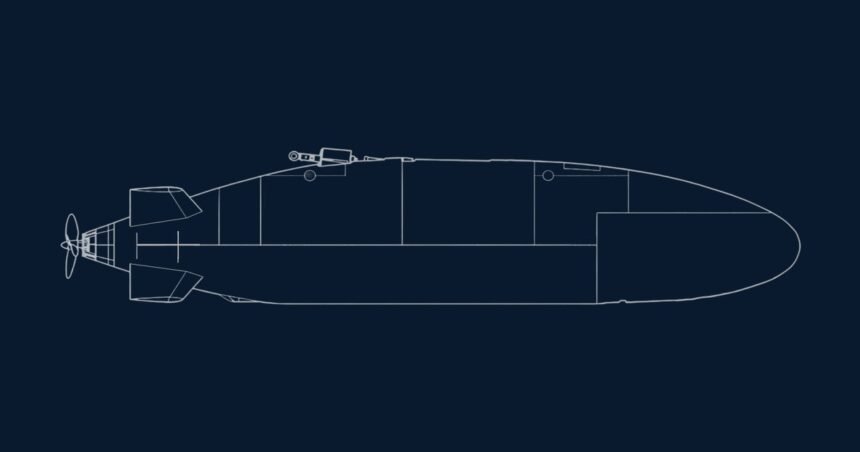
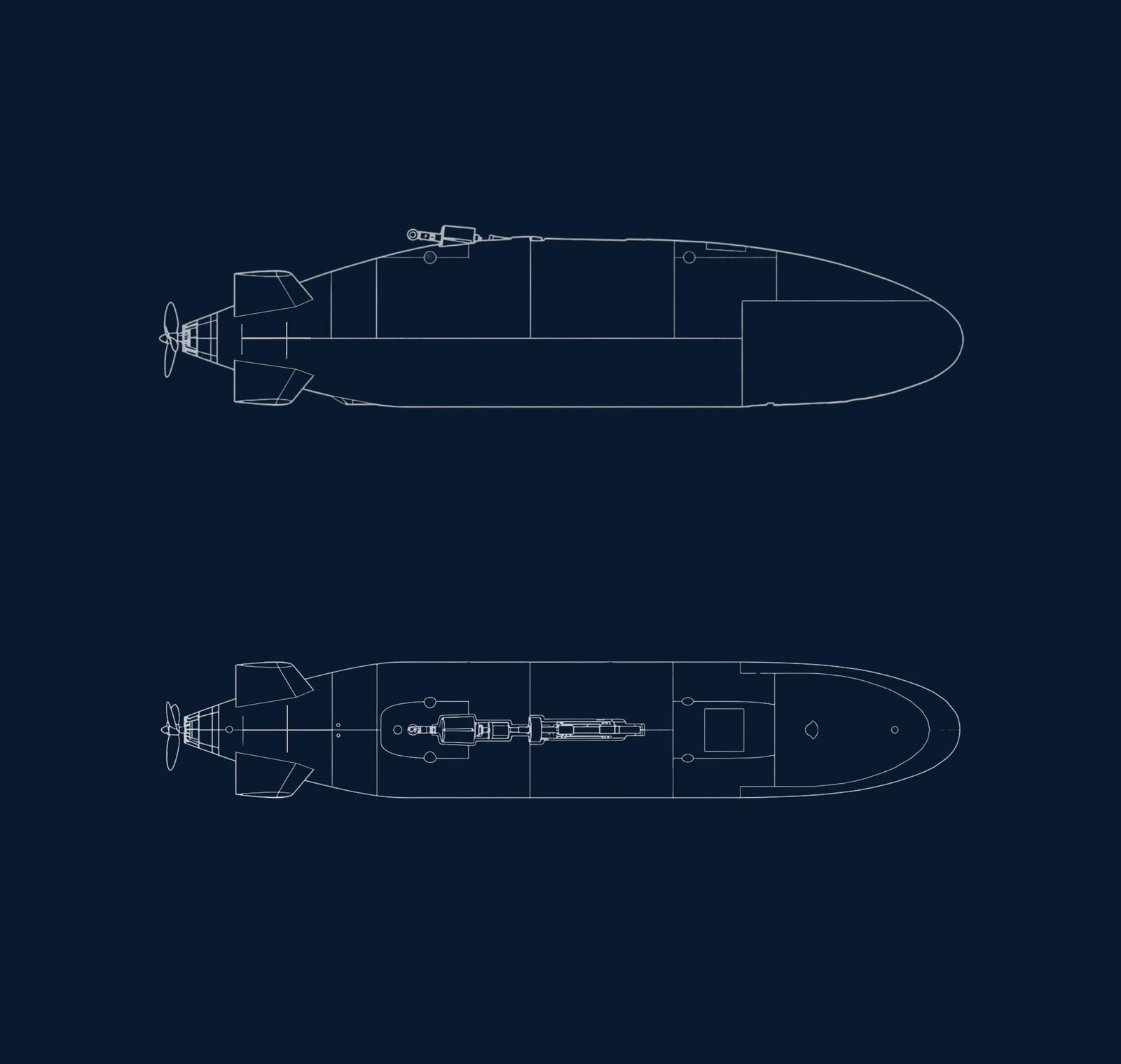
The submarine is Jalkapi, built by Rekise Marine — and the company says it is India’s first extra-large autonomous underwater vehicle (XLAUV). A diesel-electric unmanned submarine roughly 11 metres long and weighing around 20 tonnes, Jalkapi is designed to stay underwater for 30 days or more at a stretch, diving to 300 metres, carrying sonars that listen in every direction. It is being developed under the Indian Navy’s iDEX ADITI programme, and its sea trials are now under way off Goa.
A submarine with no crew on board
Jalkapi is built for the missions that keep a navy awake at night. The company says its passive bow and flank array sonars serve intelligence, surveillance and reconnaissance, anti-submarine warfare support, seabed mapping and mine countermeasures — the quiet, patient work of watching the deep, carried out for weeks without a single sailor on board.
The numbers tell the story of its scale: about 11 metres long, around 20 tonnes, a diving depth of 300 metres, and an endurance of 30 days or more at 3 knots — the company says up to 45 days. It is the largest unmanned underwater platform being built in India, and it won the Indian Navy’s iDEX ADITI 1.0 challenge, with its design based on the Navy’s own Submarine Design Group. Construction is well under way — the plate-cutting ceremony that marks the start of physical building took place in June 2025 at Krishna Defence and Allied Industries’ facility in Gujarat.
A submarine you can carry
At the other end of the scale sits the MPAUV, Rekise Marine’s man-portable autonomous underwater vehicle. Where Jalkapi is a 20-tonne submarine, the MPAUV weighs about 50 kilograms and can be launched by a single operator or a small team, with no support vessel required. It dives to 100 metres, runs for up to 10 hours at 3 knots, and carries a side-scan sonar and mission-specific sensors for inspection, environmental monitoring, mine detection and reconnaissance.
The MPAUV is being built in partnership with Goa Shipyard Limited, and in November 2026 Rekise Marine showcased it at EURONAVAL, the naval defence exhibition in France — where a senior delegation from French shipbuilder Naval Group stopped by to discuss future cooperation. It is a small vehicle with a big idea behind it: the same autonomy, scaled down to something two people can lift.
More Read

One brain for the whole fleet
What ties Jalkapi and the MPAUV together is a single piece of software. Rekise Marine has built one common autonomy stack that runs across its surface vessels and its underwater vehicles alike, and the company says it owns the source code, the firmware and the control systems outright. The software proved itself first on Swadheen, the company’s autonomous surface vessel, and it is now undergoing extensive sea trials on the underwater platforms off Goa.
That shared brain is the heart of the company’s approach: design the hull, the onboard subsystems and the autonomy software together, and test all of it at sea. Rekise Marine showcased its progress at the Indian Navy’s Swavlamban 2026 gathering, presenting its work to senior officials from the Ministry of Defence and the Navy, with support from iDEX, the Defence Innovation Organisation and India’s shipyards.
From the surface to the seabed
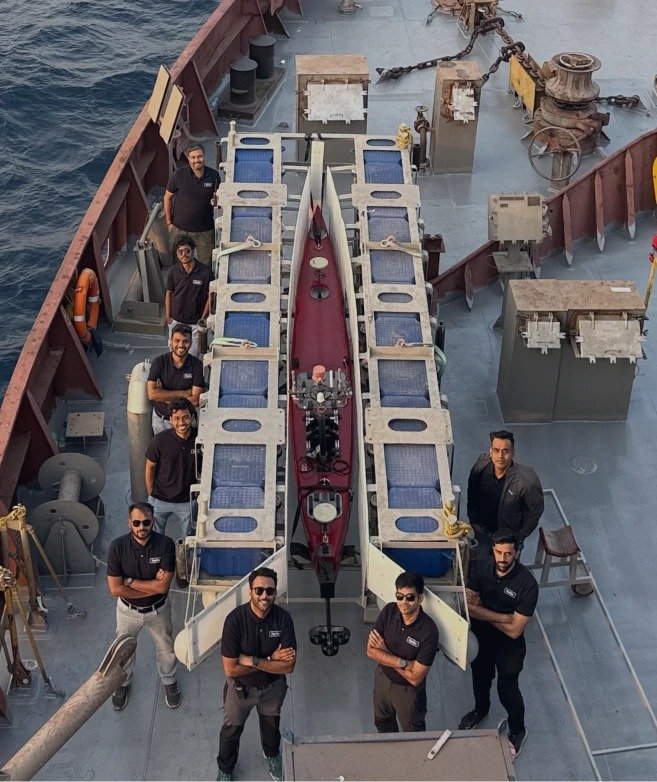
Rekise Marine’s fleet already spans the whole water column. Jaldoot, a 1.6-metre autonomous surface vessel carrying an acoustic positioning payload, has been delivered to the Defence Research and Development Organisation’s Naval Science & Technological Laboratory through Garden Reach Shipbuilders & Engineers. Swadheen, a 5-metre autonomous survey vessel carrying a multi-beam echosounder through its moonpool, has completed fully autonomous open-sea trials in the Bay of Bengal and can operate alone or as part of a coordinated swarm.
The people and the backing
Rekise Marine was founded in 2017 by naval architect Maitrai Maka and Rear Admiral Shekhar Mital (Retd), a former Chairman and Managing Director of Goa Shipyard. In June 2026 the company raised $9.7 million in a seed round co-led by Accel and NKSquared, the investment firm of Zerodha co-founder Nikhil Kamath, taking its total funding past $14 million. The money is going into completing Jalkapi’s sea trials, deepening the in-house autonomy software, and growing the engineering team across robotics, AI, embedded systems and naval architecture.
From a 50-kilogram vehicle two people can carry to a 20-tonne submarine that patrols alone for weeks, Rekise Marine is building the full range of India’s autonomous maritime future — designed, integrated and tested at home, in Indian waters, for the Indian Navy.
Keep reading: No Divers Needed: Inside CSIR-NIO’s C-BOT, the Robot Watching Over India’s Coral Reefs · No Divers, No Dry Dock: Inside Mafkin Robotics, the Chennai Startup Cleaning India’s Ship Hulls With Robots · More Shipbuilding & Maritime stories
Like stories like this? Add Exceptional Technology as a preferred source on Google to see more of our reporting in your search results and Discover feed.