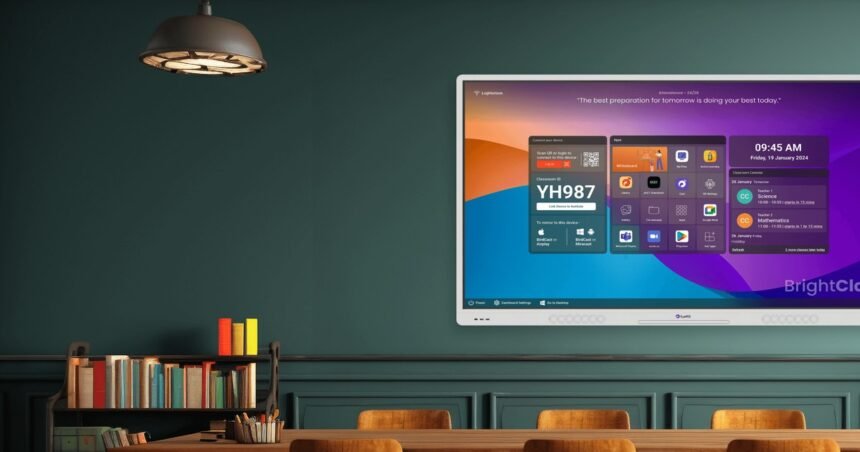
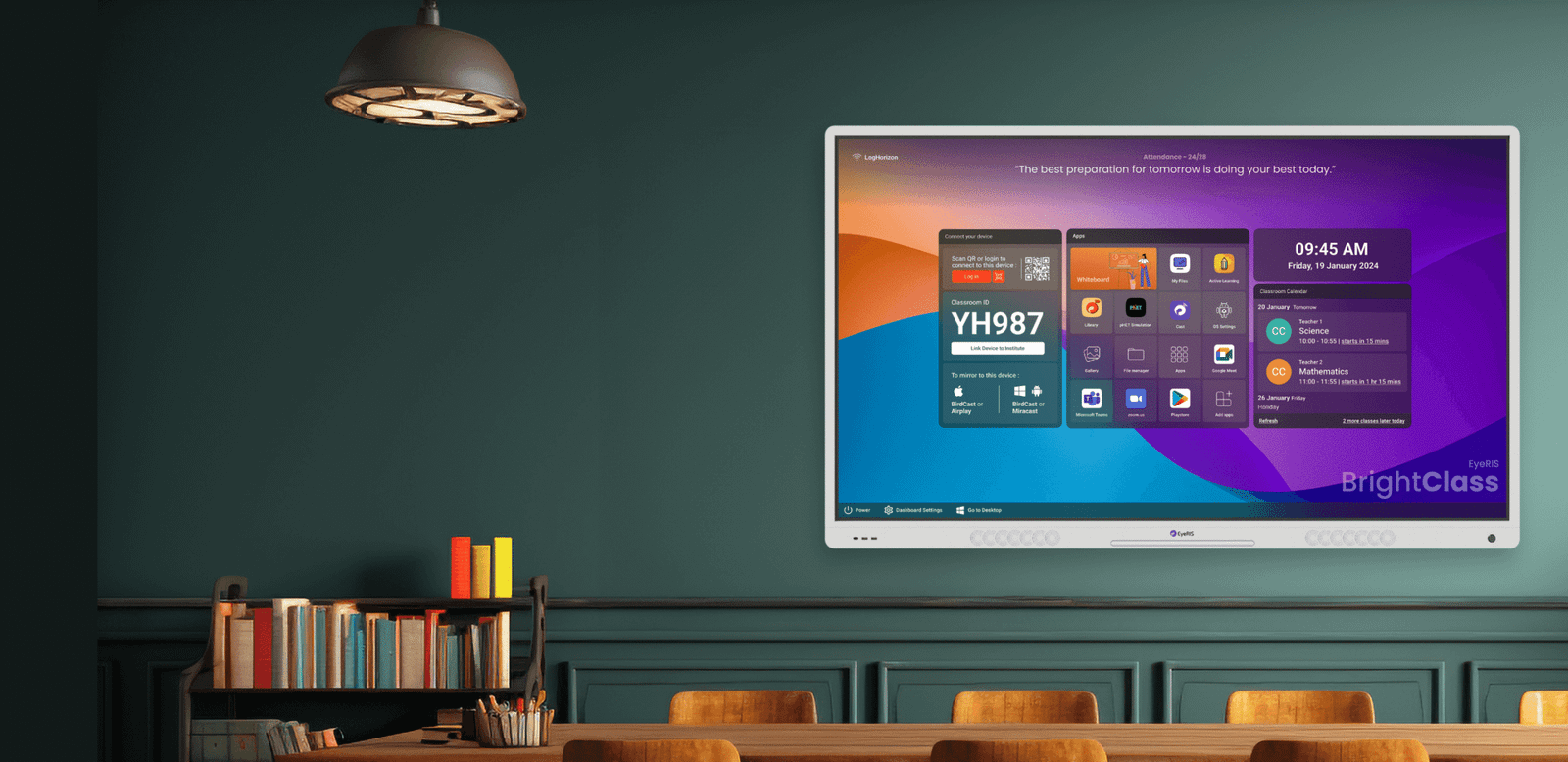
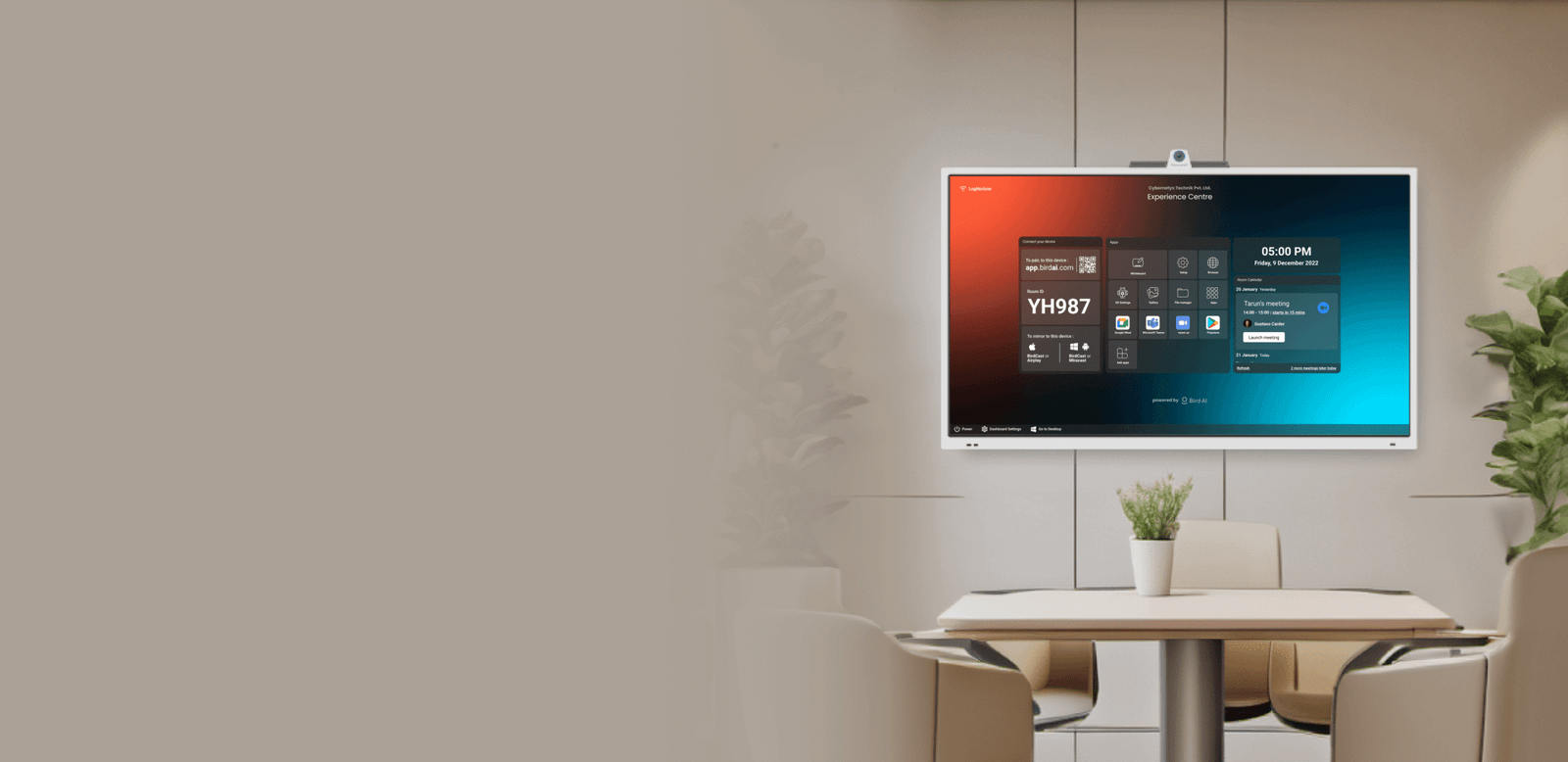
Walk into a classroom in Pune on a Monday morning and the lesson is already waiting. The big screen on the wall knows the class, the subject and the time, and when the teacher walks in, it is ready before she touches it. In a meeting room in Bengaluru, the same kind of screen wakes as people enter, starts the video call, and quietly notes when the room empties. These screens are not just displays. They watch, they understand, and they act — and the vision inside them was built in India.
A camera that taught screens to see
The company behind them is Cybernetyx, founded in 2009 by Nishant Rajawat. The idea began years earlier, when Rajawat was a research scholar at the University of Toronto working on computer vision under Prof. A. N. Venetsanopoulos. He came back to India with a single question: could a camera understand human interaction with any surface, in real time, well enough to replace physical input devices entirely?
The answer became EyeRIS, a vision AI engine that turns any flat surface into an interactive, intelligent one, using only a camera and the intelligence behind it. A small sensor unit watches the surface, tracks hands and gestures in three dimensions, and converts an ordinary display, a projection wall or even a television into a full multi-touch screen — the company says its systems can track up to 255 simultaneous touch points. Its portable EyeRIS ONE unit does the same trick for any TV, turning it into an interactive whiteboard.
The invisible intelligence inside the world’s displays
Seventeen years on, the scale of what that question built is remarkable. The company says its technology now reaches 15 million users across 80 countries, with roughly $300 million in product sales — and its name is absent from most of the boxes its technology powers. Cybernetyx works as the invisible intelligence inside displays made by global giants including NEC/Sharp, Sony, Delta and ViewSonic, powering them rather than competing with them.
In India, the brand is far more visible. The company says it has more than three lakh installations in the country, a 22 per cent share of the installed base of interactive displays, and the highest-selling AI interactive flat panel in India for three consecutive years. It holds multiple international patents and runs its own manufacturing — a deep-tech company that built world-class intellectual property and global OEM relationships from India long before the current wave of deep-tech investment arrived.
From interactive to autonomous
EyeRIS began as perception, and Cybernetyx is now turning that perception into autonomy. The company introduced the industry’s first NVIDIA-powered interactive display, embedding the compute in the panel itself so large vision AI models run locally on the device — understanding the room and processing everything on the surface in real time, with no data transmitted externally.
More Read

That shift underpins Cymbient, Cybernetyx’s universal operator agent platform and now its fastest-growing segment. Where EyeRIS gives devices perception, Cymbient gives them reasoning, contextual intelligence and autonomy: one agent architecture that can run on a display, a camera, a speaker or an appliance. The company’s definition of physical AI is deliberately different from the humanoid race — any device that can perceive its environment, reason about what is happening, and take meaningful action without a human trigger. As Rajawat puts it, that device does not need legs or arms. It needs sensors, intelligence and a platform to tie them together.
The classroom that teaches itself
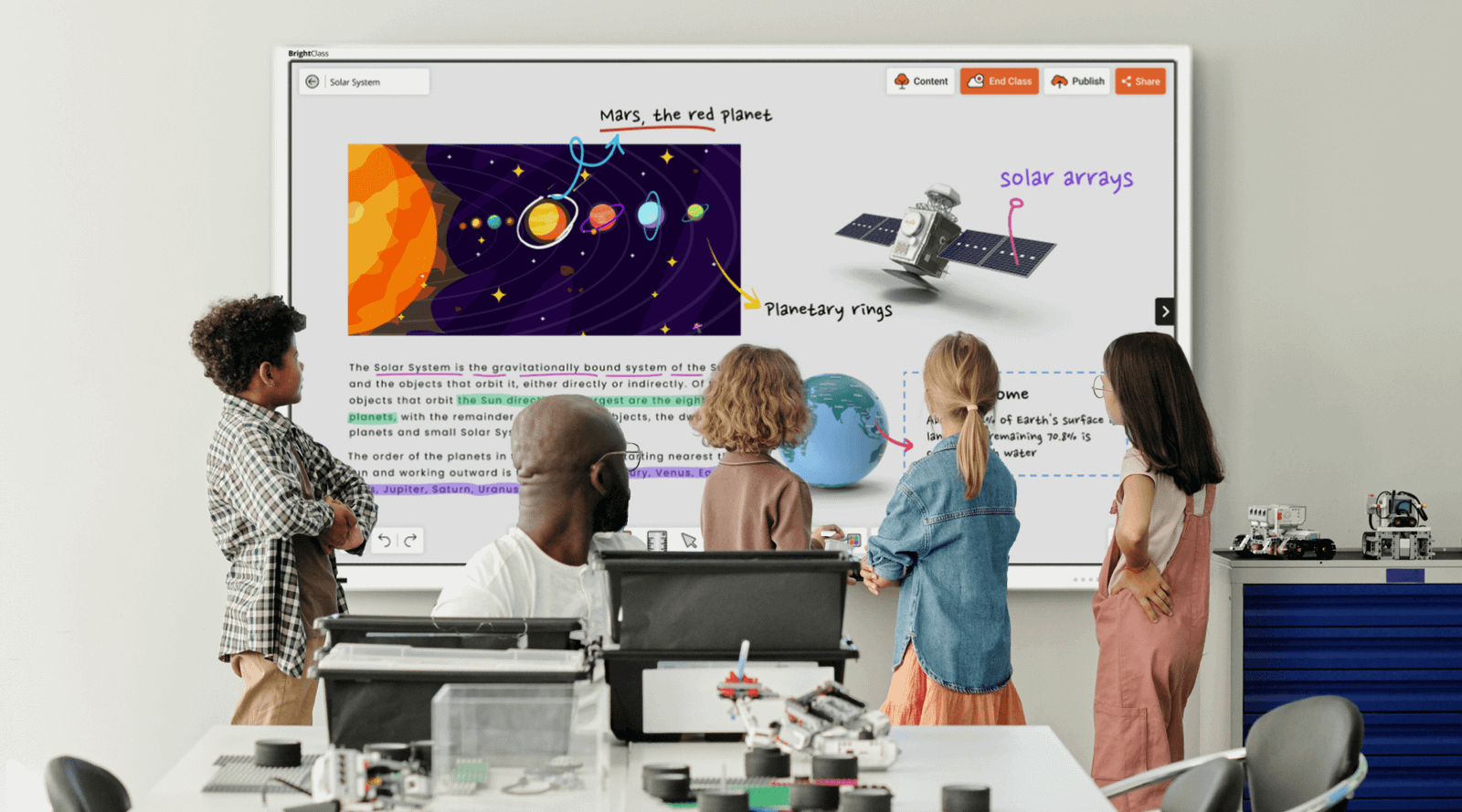
Nowhere is that idea clearer than in the classroom. The EyeRIS AI Digital Board — which the company says is the world’s first interactive flat panel with a built-in Virtual 3D Lab — works as an AI lesson planner: it generates lesson flows, slides, quizzes, mind maps and 3D visual explanations in seconds, and creates content in regional languages at the tap of a button. While the teacher teaches, the board monitors the room and offers insights into engagement and understanding, so the teacher gets a live signal rather than a post-lesson report.
The same board is at work in a Marathi-medium school in Pune, a Gujarati-medium school in Ahmedabad and a Tamil classroom in Chennai — the company’s answer to the idea that intelligent classrooms belong only to big-city schools. Teachers, the company says, lose more time preparing lessons than teaching them; the board is built to hand that time back.
Why it matters
Hundreds of millions of displays, cameras and speakers are already installed across schools, offices and hospitals around the world. Making those devices intelligent is faster, cheaper and more immediately impactful than waiting for an entirely new kind of hardware to scale — and the company building that intelligence layer did it from Bengaluru, one camera and one surface at a time, for seventeen years. By 2030, Rajawat believes every institutional space will carry a layer of ambient intelligence running through its devices: the room knowing who is in it, and responding accordingly. The screens learned to see. Now they are learning to think.
Keep reading: The Box That Lets Traffic Cameras Think for Themselves: Inside Radiantech Systems’ RTE-300-R · Every Camera, an Agent: Inside WiredLeap, the Bengaluru Startup Turning CCTV Into Real-Time Intelligence · More Industrial Automation & Technology stories
Like stories like this? Add Exceptional Technology as a preferred source on Google to see more of our reporting in your search results and Discover feed.