


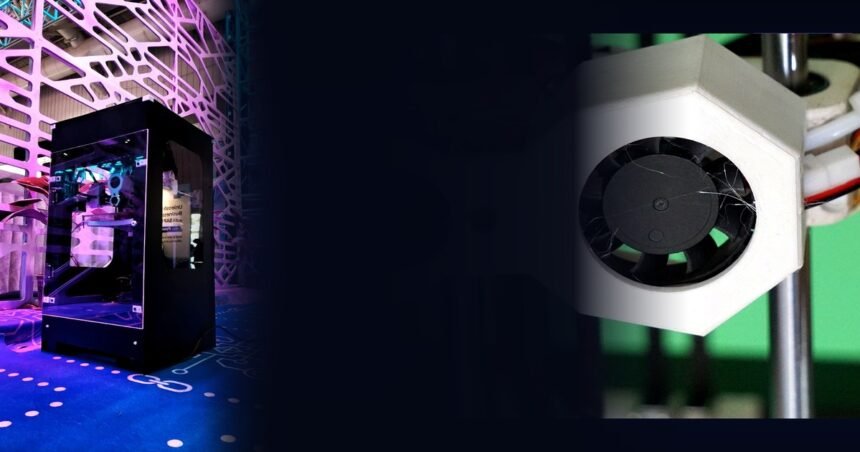
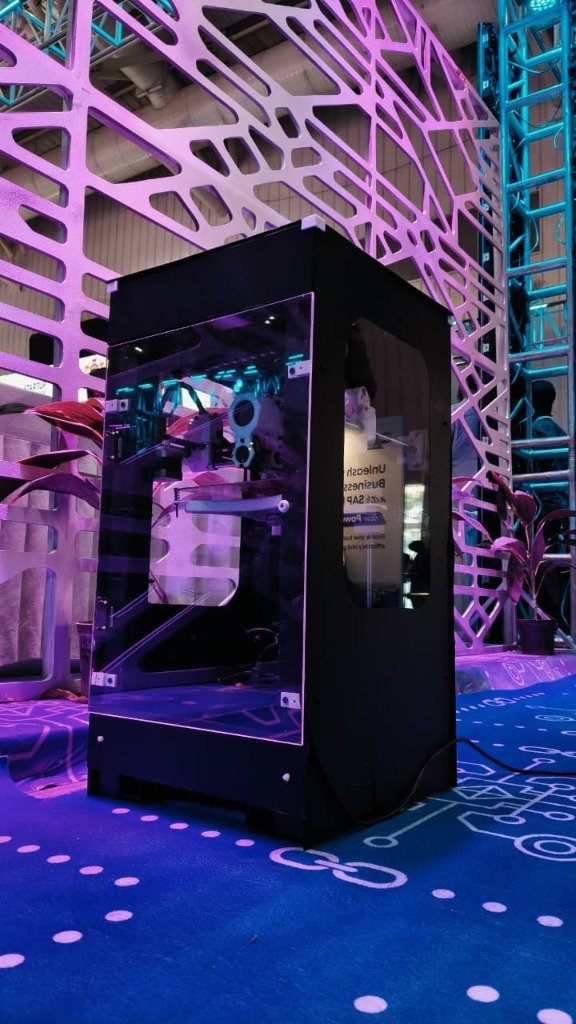
A 3D printer that lays down plastic at 600 millimetres a second, built on a welded steel frame in Bengaluru, and priced from ₹24,999. That is the MK1, the machine a young Karnataka startup unveiled live at Bengaluru Tech Summit 2026 — and it is only the first step in a plan to put factory-grade printing within reach of every college, workshop and makerspace in the country. ProBharath Technologies, founded by Pravar Hegde, is building its printers the way India builds machine tools: heavy, precise, and made at home.
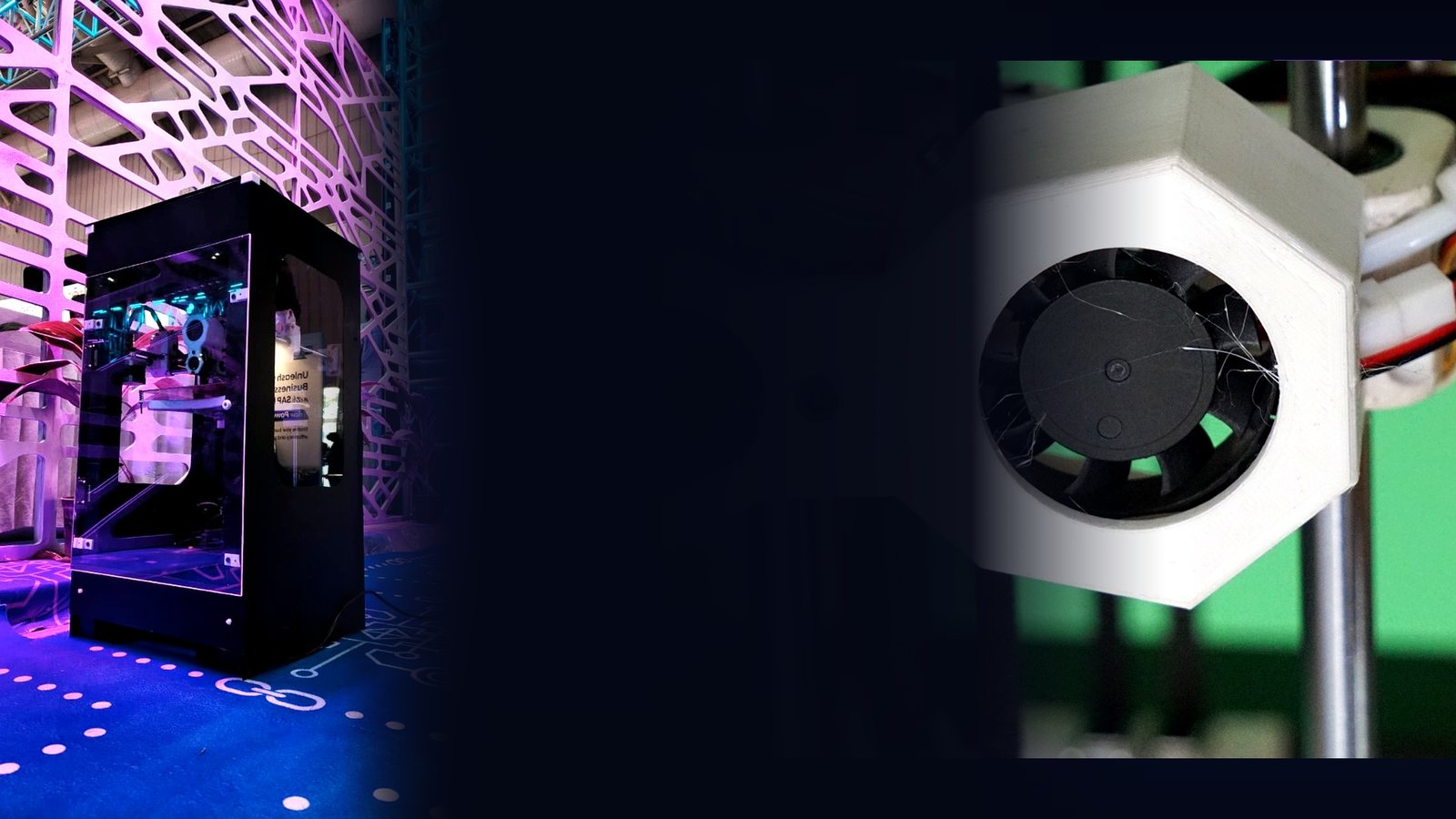
A printer built like a machine tool
At the heart of the MK1 is a CoreXY motion system — two synchronised stepper motors driving the print head on linear rails — held inside a heavy-duty structural steel and galvanised iron chassis. The company says the welded frame eliminates flex and layer shifts even during 20,000 mm/s² direction reversals, which is what lets the machine hold its line at up to 600 mm/s. The hotend is an all-metal hardened steel unit that reaches 350°C, fed by a direct-drive extruder with 9.5:1 planetary gear reduction, so the MK1 prints not just PLA and PETG but TPU, ABS, ASA, polycarbonate and carbon-fibre nylon. Klipper firmware with input shaping and pressure advance runs on a 32-bit ARM Cortex board with silent TMC2209 drivers, while auto mesh levelling and a flexible textured PEI spring steel sheet take the fiddling out of the first layer.
Five sizes, one platform
The MK1 comes in five build volumes — 200, 350, 500, 800 and 1,000 millimetres — across 12 configurations, priced from ₹24,999 for the 200 mm machine to ₹2,79,999 for the metre-class flagship. The 350 mm MK1 Pro, the model the company calls its pick for workshops and colleges, lists at ₹39,999. Every machine ships direct from the company’s Bengaluru facility in a wooden crate, with a one-year warranty, a GST invoice for institutions and businesses, and a 5–10 day factory dispatch queue. Beta machines are already running at five to six institutions, the company says, and the MK1 framework drew strong early interest from industry at INCOMEX 2026.
The next machine swaps its own tools
ProBharath is already building the follow-up, the MK2 flagship, around a kinematic toolchanger: a passive four-way magnetic auto-docking system that swaps toolheads in 1.4 seconds with under five-micron repeatability, using a Maxwell three-groove kinematic coupling. The idea is true multi-material printing with no wasteful purge towers — one head for PLA, another for carbon-fibre nylon, another for a laser engraver or a CNC milling spindle, all on the same machine. The MK2 pairs that with a 65°C actively heated build chamber and a 350°C bi-metal hotend, and the company has opened a waitlist for it.
A recycler that turns bottles into filament
The same decentralised thinking runs through ProBharath’s PET bottle-to-filament recycling kit, a compact desktop converter that strips discarded plastic drink bottles into continuous ribbons and thermofuses them into 1.75 mm filament, measured to within ±0.03 mm by a 50 Hz optical diameter micrometer. It is the other half of the company’s pitch: not just a printer, but a small, local loop where a workshop’s waste becomes its raw material.
Software, made in-house too
The hardware sits on software the team built itself. ProBharath Edge OS is a local-first Klipper interface with sub-2-millisecond telemetry, ProCAD Studio is an in-browser parametric CAD tool, and a web flasher programs STM32, RP2040 and ESP32 microcontrollers straight from the browser. A developer hub with REST APIs and Moonraker WebSockets lets workshops run whole fleets of MK1s as micro-factories from one dashboard.
More Read
Why it matters
ProBharath is a winner of the Government of Karnataka’s Elevate 2025 grant — ₹21 lakh in non-dilutive funding for indigenous manufacturing innovation, recognised at Vidhana Soudha — and its founder sits on the jury of the state’s New Age Innovation Network 2.0, mentoring the next generation of hardware startups. The MK1’s unveiling at Bengaluru Tech Summit 2026, on the biggest stage Karnataka gives its startups, put a made-in-India industrial printer in front of the country’s manufacturing establishment. The bet is simple and ambitious: if the machines that make things can be built affordably in India, then making things in India gets cheaper for everyone — one workshop, one college, one printed part at a time.
Keep reading: The Trenchers Digging India’s Future: Inside Autocracy Machinery, the Hyderabad Startup Replacing Imported Machines · The Rigs That Drill the World: Inside PRD Rigs, the Tiruchengode Company Behind 2,500 Rigs in 75 Countries · More Manufacturing & Engineering stories
Like stories like this? Add Exceptional Technology as a preferred source on Google to see more of our reporting in your search results and Discover feed.







