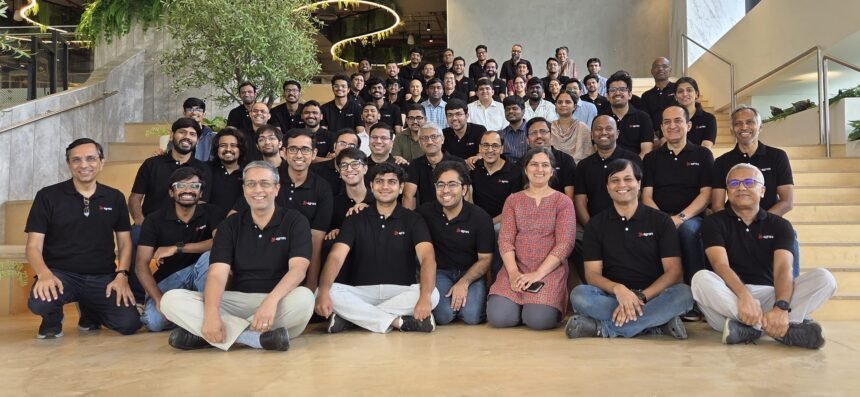
Every AI query you run — the chatbot, the image generator, the copilot — is computed on a GPU, and almost certainly on one designed by a single American company. The AI data-centre chip market was worth $207 billion in 2025 and is projected to cross $1 trillion a year by 2030. Into that Nvidia-dominated arena has stepped a team in Bengaluru building an AI GPU from scratch: silicon, compilers, libraries, the whole stack.
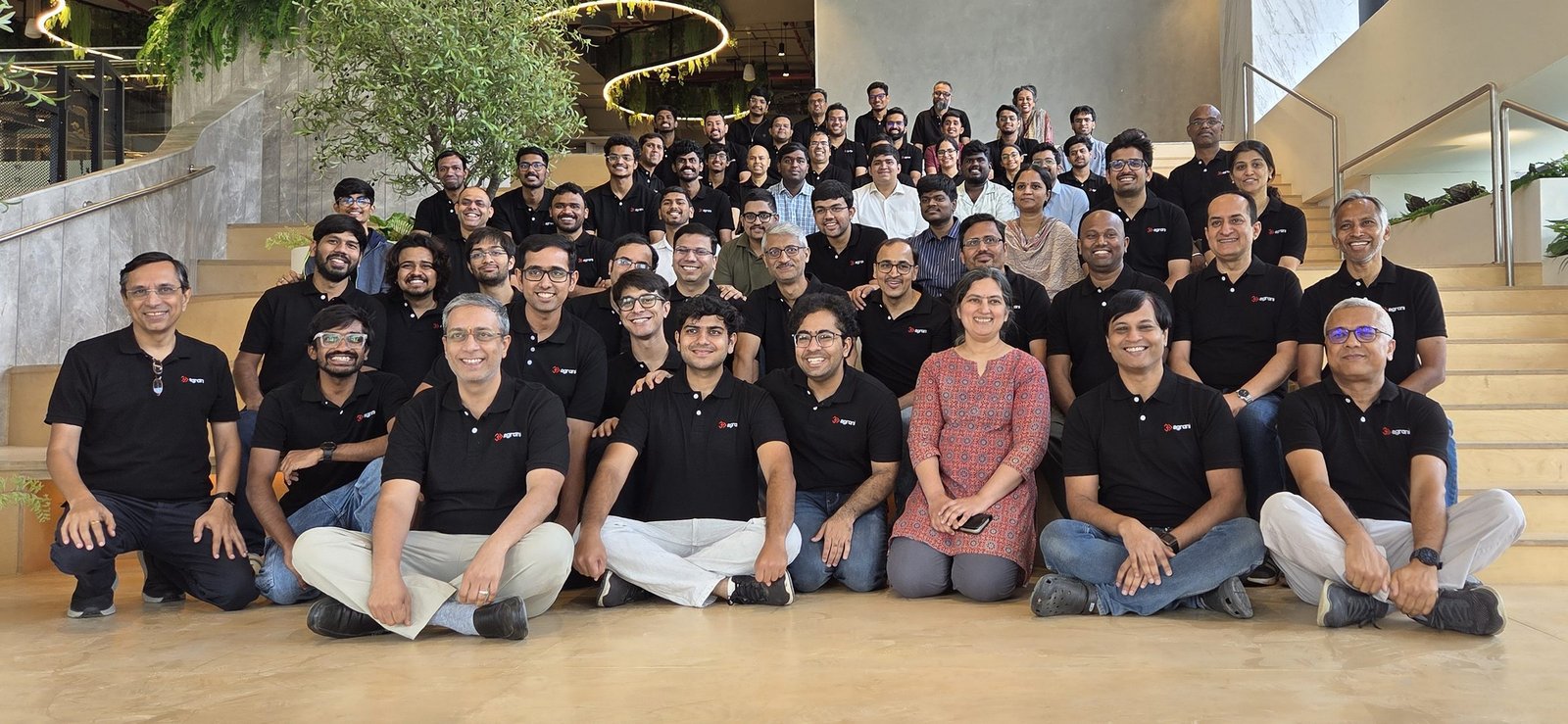
Agrani Labs was founded in December 2024 by four veterans of Intel and AMD: Dheemanth Nagaraj (CEO), Ashok Jagannathan (Chief Architect), Srikanth Nimmagadda (Chief Chip Technologist) and Rajesh Vivekanandham (Chief Performance Engineer). Between them, the founding team carries more than a hundred years of experience in processors that shipped into the world’s data centres, the company says. The “Father of the Pentium” himself — Vinod Dham, the Intel architect behind the Pentium processor — is on board as a founding advisor.
The full stack, not just the chip
Agrani’s thesis is that hardware alone doesn’t sell chips. The startup is designing a high-performance AI GPU for data-centre workloads, and alongside it a complete software stack — compilers, libraries, system software and AI frameworks. The chips are aimed at AI inference, the stage where trained models process requests and generate responses, and the company is engineering them to work within Nvidia’s CUDA software ecosystem, the industry-standard toolchain that developers use. It’s a compatibility play aimed at lowering the cost of switching for customers.
The company emerged from stealth in January 2026 with an $8 million seed round led by Peak XV Partners, saying it had already built early versions of both its hardware and software stack and made significant progress on architecture and product definition. It says it is also working with academic institutions, semiconductor partners, government research bodies and software ecosystems.
Why a chip takes three years and $300 million
At the ET Startup Awards 2026, Dheemanth Nagaraj laid out the economics with unusual candour: a ground-up AI GPU means three-year product cycles, a single tape-out costing $40–50 million, and the company needing to raise roughly $300 million before the first dollar of revenue. It is the kind of patient, capital-intensive engineering few Indian startups have attempted.
Investors appear willing to back it. In early October 2026, The Economic Times reported Agrani was in talks to raise ₹800–850 crore — with Samsung, 360 One and Peak XV named as potential participants — at a post-money valuation of around ₹2,400–2,500 crore, which would make it one of the largest early-stage fundraisings by an Indian semiconductor startup. ET also reported the company was looking to apply for around ₹120–130 crore under the government’s Research, Development and Innovation (RDI) scheme. Agrani, Peak XV and 360 One declined to comment on the report.
More Read

What it means for India
India has chip designers by the tens of thousands — most of them designing for American and European firms. Agrani is the reverse play: India’s semiconductor and software talent building a product the company says will compete on the global stage. If the silicon tapes out and the software stack delivers, India gets something it has never had: a domestic AI compute platform for the data centres that the country’s AI ambitions will run on.