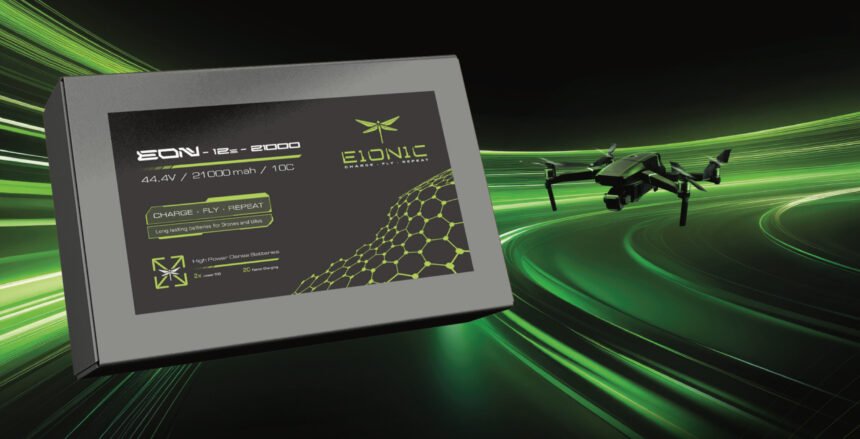
A drone is only as useful as its battery. Most Indian drones fly for 20 to 30 minutes at a stretch — and the packs they fly on are overwhelmingly imported. India has built a large drone industry without building the component supply chain underneath it.
Dreamfly Innovations, a Bengaluru startup, is trying to change that equation from the inside out. Founded in 2021 by Kajal Shah and Dr Saurabh Markandeya, the company designs and manufactures high-power-density battery packs for drones, aviation and aerospace — engineered, the company says, for the heat, dust and altitude of Indian operating conditions.
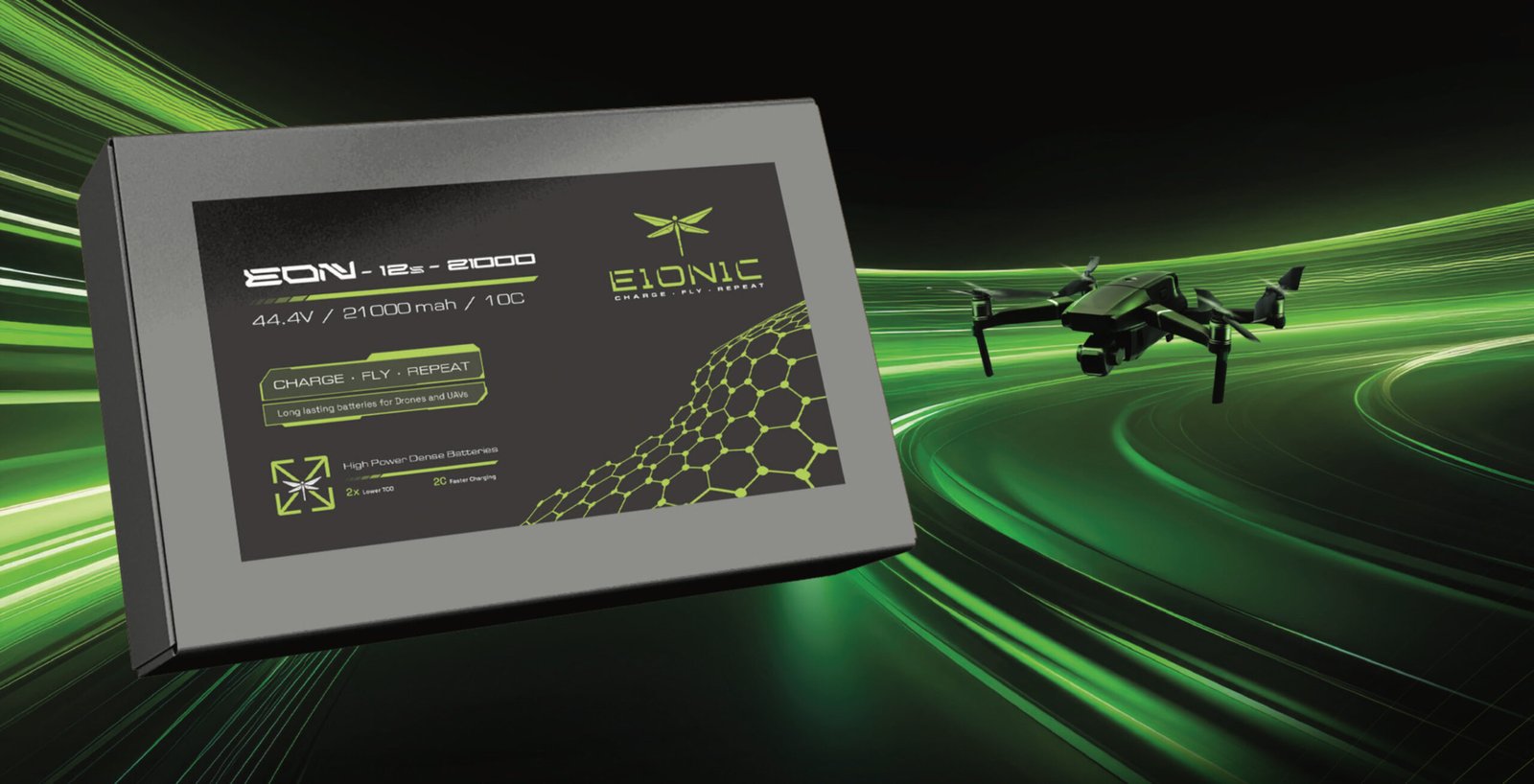
Heat is the real enemy
Dreamfly’s engineering centres on thermal management. Its thermal case design, the company says, lowers operating temperature by up to 20 degrees Celsius — significant, because a hot battery loses power faster, ages sooner and carries a higher fire risk. The company notes on its own site that unreliable drone batteries are a genuine fire hazard; its answer is specialised non-explosive battery technology.
Dreamfly works across several cell chemistries — lithium-ion, graphene and supercapacitors — and its packs span 4S-5000 (its smallest) to 12S-30000 (its most powerful), rated at up to 60C continuous discharge and 3C continuous charge, the company says. The packs are rated to operate from −40°C to +65°C, and the company says they last 500–800 charge cycles against 200–300 for conventional lithium-polymer packs.
It also builds for specific Indian use cases: one pack designed for high-altitude flying down to −30°C, and a non-explosive graphene pack aimed at agricultural drones, which spray chemicals over fields and people. The company has filed two patents on its thermal and battery work.
Selling to Tata and L&T
Dreamfly sells to drone and aerospace manufacturers rather than end users. Its customers include Tata Advanced Systems, the Tata Group’s aerospace arm, and Larsen & Toubro — buyers that test components slowly and are hard to displace once a supplier clears their standards. It also supplies General Aeronautics, which builds agricultural spraying drones, and Neosky India, a RattanIndia Enterprises subsidiary.
More Read
The founders bring relevant experience: Shah, the CEO, and Markandeya are alumni of IIT Bombay and IISc respectively, both two-time entrepreneurs with backgrounds in clean energy and mobility. Their reading of the market, Shah has said, is that the gap is not in drones — it is in the parts that go inside them.
From seed round to a 40,000 sq ft factory
The company raised Rs 4.9 crore in an angel round in 2023, followed by a Rs 12 crore seed round in February 2025 led by Avaana Capital with Sunicon Ventures. It was also named one of the “100 Desi Deeptechs”, a Startup Policy Forum initiative with MeitY Startup Hub and IIT Madras spotlighting core-technology builders.
In July 2026, Dreamfly announced it was setting up a 40,000 sq ft aviation battery manufacturing facility in North Bengaluru with an investment of Rs 40 crore. The plant will have an initial annual production capacity of 100 MWh, scalable to 200 MWh, according to the company’s statement — producing advanced aviation batteries for defence, surveillance, inspection, agricultural spraying, logistics and emerging air-mobility platforms.
The bet is straightforward: India’s drone market is expected to grow fast through the rest of the decade, and that growth will need a domestic component industry to support it. Dreamfly’s position is that batteries — the hottest, most failure-prone and most imported part of the drone — are the place to start.