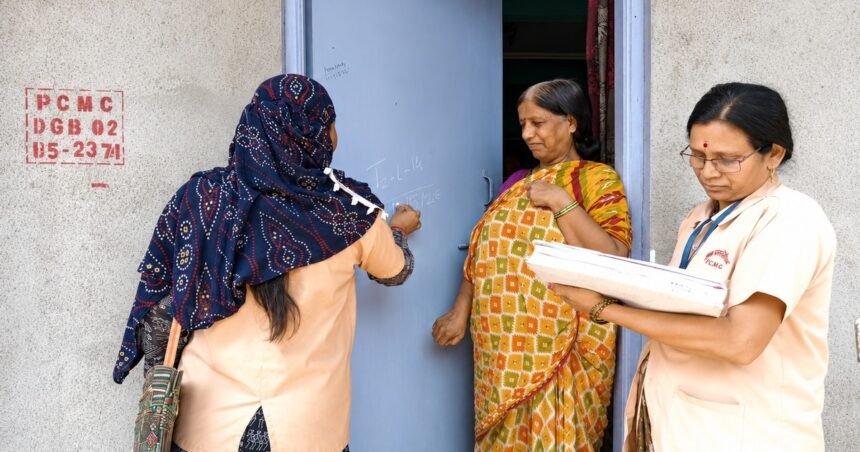
On a lane outside Pune, a health worker chalks a number on a blue door and moves on to the next house. It is the oldest ritual in tuberculosis control: knock on every door, ask every household, and hope the people who need help are behind one of them. The trouble is that in India, the country that carries roughly a quarter of the world’s tuberculosis cases, the old way means screening close to 20,000 people to confirm a single case. A Pune startup called Froncort.AI has built something that changes the arithmetic entirely — an AI platform that tells health workers which doors to knock on first.
The platform is called AI-NETRA, and it is already at work in the field. In a government-partnered pilot across four tuberculosis units in Pune district, teams guided by AI-NETRA screened 66,095 people and found 10 laboratory-confirmed pulmonary TB cases. The standard campaign running alongside them screened 1,77,322 people and found nine. That is 6,610 people screened for every confirmed case with AI guidance, against 19,702 without it — and the cost of finding each case fell from about $29,000 to about $10,000, the company says. It is the kind of result that turns a door-to-door slog into a guided hunt.
A visit list, not a heat map
AI-NETRA’s trick is that it does not hand a health worker a map and wish them luck. It turns the data a tuberculosis programme already collects — routine notification records from Nikshay, India’s national TB portal, together with population, environment and building information — into a ranked list of places to screen. Google’s Earth AI satellite models add another layer, reading settlement density, land use, rainfall and flood exposure to spot the neighbourhoods where undiagnosed disease is most likely to be hiding.
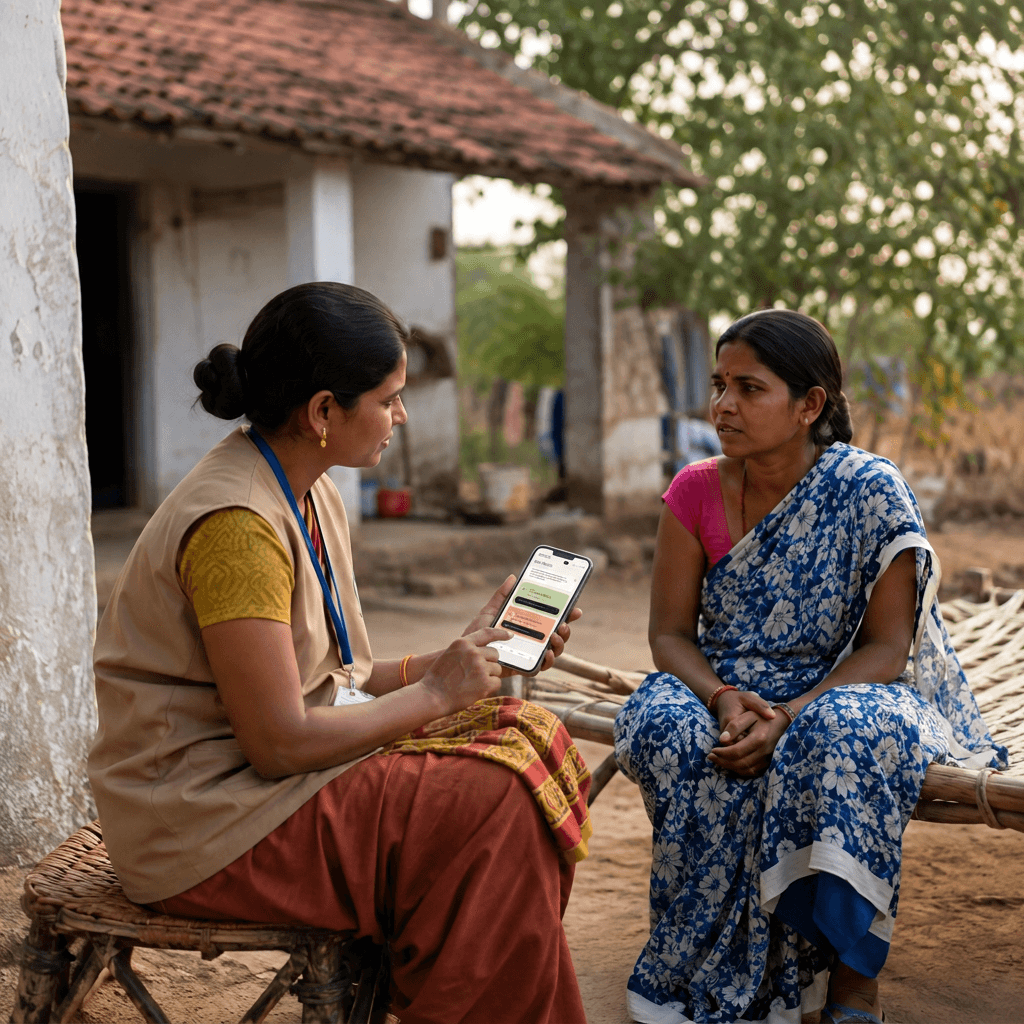
The system scores every small area of a district, ranks them by how many cases a visit is expected to find, groups the highest-priority areas into clusters a supervisor can review, and then issues a named visit list to each worker’s phone — places to visit in order, with the local language, imagery and turn-by-turn directions. The app works offline and syncs when the worker is back in range, so it keeps working in villages where the signal does not. And all government health programme data stays stored and processed in India, the company says, with the records it uses de-identified.
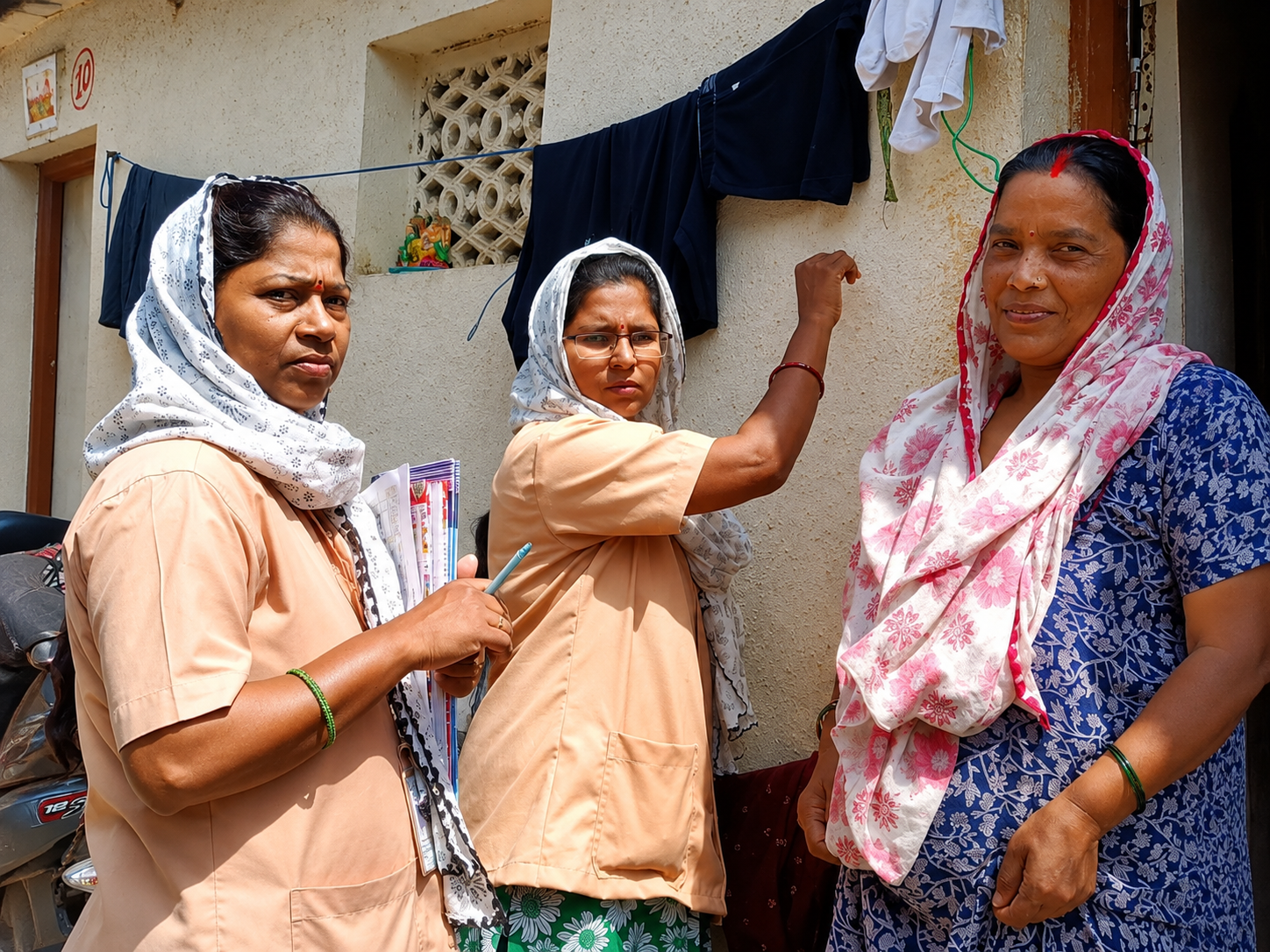
Founded in 2024 by physician-scientist and engineer Dr Ujjwal Rao, Froncort.AI built AI-NETRA with the diagnostics non-profit FIND and Maharashtra’s State TB Cell, and ASHA workers in Pune began using its AI-generated screening plans in the field in May 2026. The pilot ran across two rural units, Bhor and Shirur, and two urban ones in Haveli, and 92% of the frontline workers who used it reported a lighter workload. In a retrospective check, the company says, AI-NETRA’s targeting plan could have found about 89% of the cases while screening fewer than one-third of the people actually screened.
From Pune to eight districts
The pilot caught the eye of Google.org, Google’s philanthropic arm, which has given Froncort.AI a $2.3 million grant, $200,000 in Google Cloud credits and pro bono engineering support to build mAI-NETRA, a mobile version of the platform that puts the screening plans directly in frontline workers’ hands. Froncort.AI was one of just 15 organisations picked worldwide for Google.org’s Impact Challenge: AI for Government Innovation, a $30 million programme that drew more than 2,600 proposals. The grant builds on Google.org’s earlier support for the AI-NETRA validation study in 2025.
More Read

The new funding will take mAI-NETRA to up to eight high-burden districts across three Indian states, reaching two to three million people, the company says. Tuberculosis is the first target, and the platform is being built to cover six diseases in all — TB, leprosy, malaria, dengue, cholera and leptospirosis. The rollout will be independently monitored against five targets, including finding at least 20% more cases, cutting the number of people screened per case by more than half, and speeding up sample transport. Froncort.AI also plans to publish the app as an open-source blueprint, so other governments can adopt it without depending on a single vendor.
The same team also builds RegDoc, an AI platform that drafts submission-ready regulatory documents for life-sciences companies — the other half of a company that describes itself as domain-first AI for regulatory work and public health alike.
Why it matters
India’s fight against tuberculosis has never lacked effort — a million ASHA workers go door to door, and campaigns screen hundreds of thousands of people at a time. What it has lacked is aim. AI-NETRA is a beautifully simple idea: point the same effort at the streets where the disease is most likely to be, and let the workers spend their days finding cases instead of searching for them. A pilot that finds as many cases while screening two-thirds fewer people is not a small optimisation — it is the difference between a programme that can reach everyone and one that runs out of road. If the eight-district rollout works the way Pune did, the next million doors India knocks on will be the right ones.
Keep reading: Sewage In, Garden Water Out: Inside Tellus Habitat, the Bengaluru Startup Recycling India’s Wastewater · The AC That Cleans the Air: Inside Clairco, the Bengaluru Startup Purifying Office Air · More Chemicals, Materials & Life Sciences stories
Like stories like this? Add Exceptional Technology as a preferred source on Google to see more of our reporting in your search results and Discover feed.