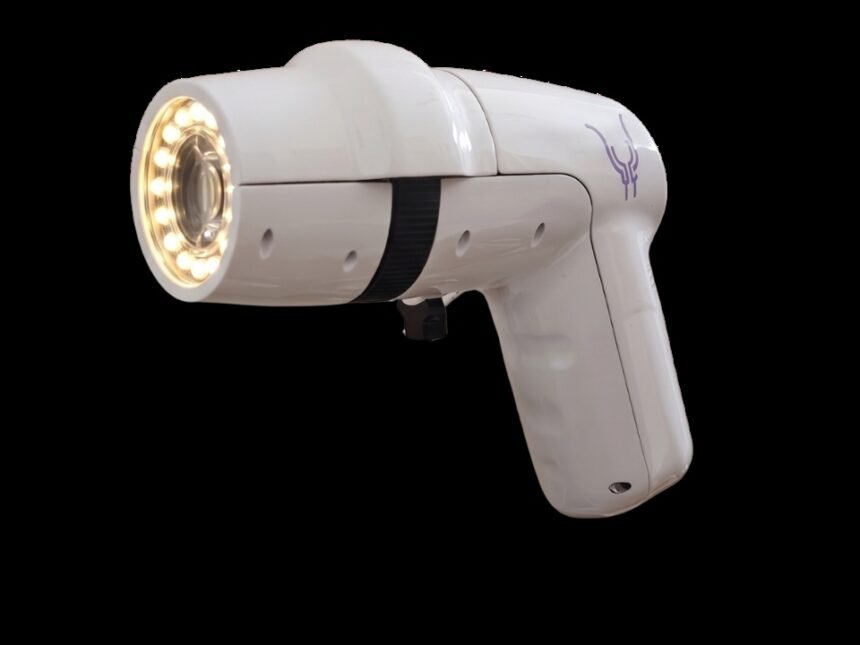
Cervical cancer is one of the few cancers where early detection can genuinely prevent the disease: find the pre-cancerous changes early and they can be treated before they ever turn malignant. But in India, that “find it early” step has historically depended on colposcopes — bulky, expensive, specialist-only instruments concentrated in tertiary hospitals. A Visakhapatnam startup incubated at the Andhra Pradesh MedTech Zone (AMTZ) says it has collapsed that entire instrument into a handheld device. Griva Healthcare’s GrivaVision is a portable digital video colposcope with AI-assisted software that helps clinicians spot pre-cancerous cervical lesions — designed to be usable at primary and community health centres, not just specialist clinics.
The company has serious government backing for that ambition. On 10 August 2026, the Technology Development Board (TDB) under the Department of Science and Technology signed an agreement with Griva Healthcare to support the manufacturing and commercialisation of GrivaVision. Under the TDB-supported project, the company will establish manufacturing capability at Kollam, Kerala, enabling commercial-scale production and wider deployment of the device.
A colposcope that fits in one hand
The engineering is compact but not compromised. GrivaVision integrates a 1/2.3″ Sony CMOS sensor with multielement optics and 3x optical zoom with auto and manual focus, capturing 2K high-resolution imaging. A bright white LED ring with anti-glare and hotspot tuning illuminates the field, and digital zoom extends magnification up to 15x with instant frame freeze. The device runs 8GB RAM with expandable storage on a 2K display, uses tactile buttons with what the company calls a zero-menu-diving design, and carries a proximity sensor for hands-free capture — all in a medical-grade housing built for both hospital and mobile screening camps.
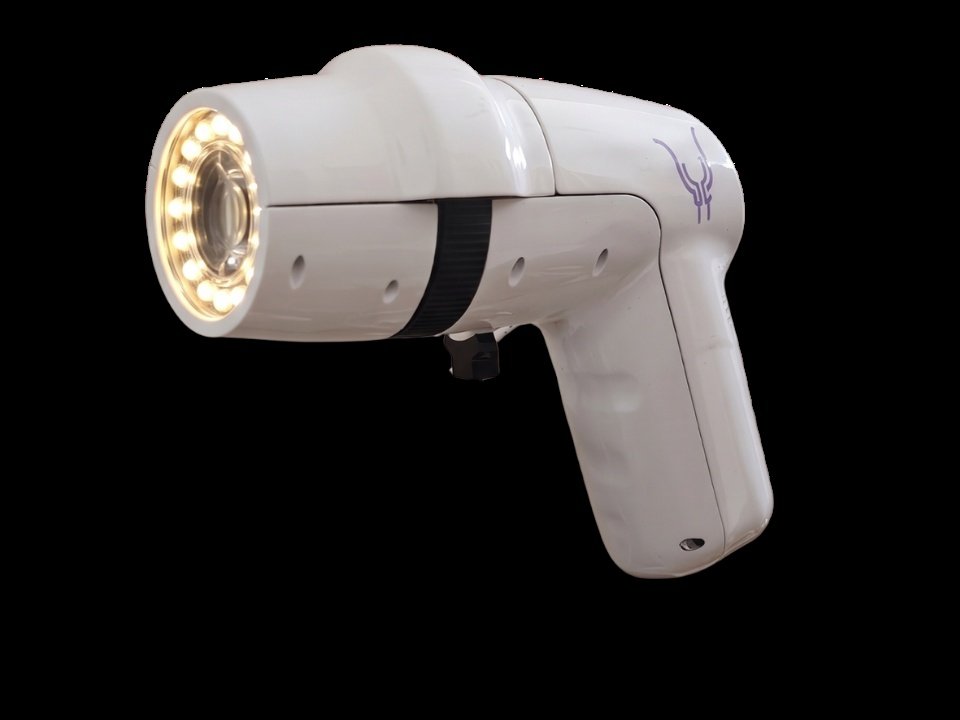
The software side is where the device earns its “smarter diagnostics” claim. It is compatible with Android and Windows through a built-in Wi-Fi hotspot, applies VIA and VILI clinical filters, uses CLAHE contrast enhancement, and provides guided Swede scoring with built-in lesion metrics — a standardised assessment framework that reduces variability between clinicians. Clinicians can capture and annotate images and video, then generate structured reports exportable to electronic medical records. The company says the software is compliant with the Ayushman Bharat Digital Mission (ABDM), allowing it to plug into India’s digital health ecosystem, and that the AI-assisted analysis — including optional CIN 1/2/3 classification with a visual heatmap overlay — is aligned with WHO-approved Automated Visual Evaluation standards.
Why this matters
The design choices map directly onto India’s screening access problem. More than half of the device’s components are sourced indigenously, aligning it with the Make in India push and reducing dependence on imported diagnostic equipment; the company says the hardware is Indian-patented. It carries ISO 13485 quality management certification for medical devices. The company also claims it already supplies cervical cancer diagnostics to 200+ institutions nationwide, operates through 15+ regional distributors, and has conducted 100+ training workshops for healthcare practitioners — a distribution footprint that, if accurate, means the device deploys into an existing ecosystem rather than starting from zero.
One honest caveat: GrivaVision is a diagnostic assist tool — it helps gynaecologists identify abnormalities, it does not replace them. And the AI-assisted analysis feature sits at a CDSCO Class C test licence stage, with clinical trials to begin shortly according to the company’s own material, so the AI claims are pre-validation rather than proven. The TDB agreement is support for manufacturing and commercialisation, not an efficacy endorsement. What makes the story worth featuring is the convergence: an indigenous, patented, handheld imaging platform with serious optics, standards-compliant software, and a government-backed path to factory scale — aimed squarely at moving cervical screening out of the specialist hospital and into the community clinic where it saves the most lives.