India has long built the missiles and the airframes, then looked abroad for the engines to power them. In July 2026, just days after Skyroot’s Vikram-1 became the first privately developed Indian rocket to reach orbit, a Hyderabad deeptech company stepped into the spotlight from a different direction: Paninian India unveiled the Yantur 4.5 kN turbofan engine programme, which the company describes as India’s first privately developed turbofan engine in its class.
What Yantur is
Yantur is a compact 4.5 kN gas-turbine engine — roughly 460 kgf of thrust, the class that powers cruise missiles and long-endurance unmanned aircraft. Unveiled in New Delhi on 20 July 2026, the programme has completed its conceptual and detailed design phases and is moving into subsystem testing, validation and full-engine certification. Paninian says the engine is a 100 per cent indigenous effort, designed entirely in India, and that the core is modular: the same architecture can be scaled into a family spanning roughly 3 kN to 12 kN, with a 12.5 kN derivative intended for its SVAYATT-M1 collaborative combat aircraft.
Why it matters: the engine gap
Compact gas turbines are one of the most import-dependent segments of Indian defence. India’s state programmes have begun to close it — DRDO’s Manik engine powered the Indigenous Technology Cruise Missile in April 2024, and in July 2026 Azad Engineering delivered a 3.4 kN-class expendable turbojet, though that design was GTRE’s. The rarest thing in this landscape is an original private-sector design rather than a build-to-print. Paninian’s bet is to be that: a small-engine design house whose product line runs from the 1.6 kN Yantur TJ1.6 turbojet — unveiled for its Svayatt-TD1 target drone — up through the 4.5 kN Yantur and on to a 12.5 kN class for combat drones.
The team behind the turbine
Paninian India was founded in 2018 by Raghu Adla, and the programme’s credibility rests heavily on its engineering bench: propulsion adviser Dr G. Gouda, a former Outstanding Scientist and Group Director (Propulsion) at CEMILAC; engine controls and sensors expert Vaman Kulkarni; and materials and advanced manufacturing specialist Dr Vikas Kumar Saxena. The company says it has filed five patent claims covering engine family architecture, combustor and diffuser-nozzle design, compressor technology, digital-twin health monitoring and advanced manufacturing — and it opened a $3 million (roughly ₹29 crore) funding round to pay for the single most capital-hungry phase of any engine programme: rig testing and certification.
Where the engine goes first
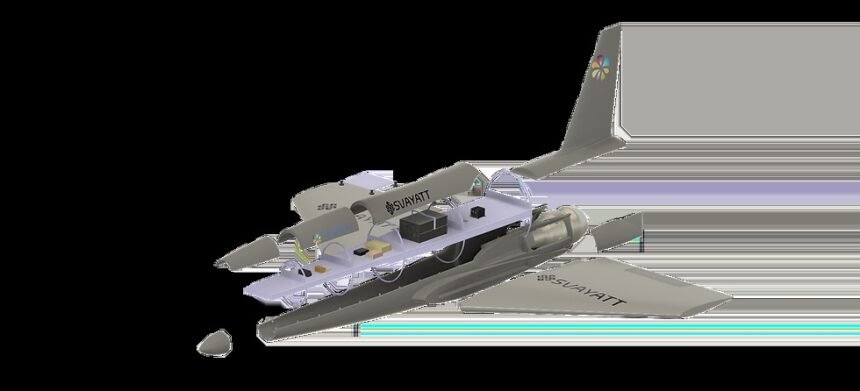
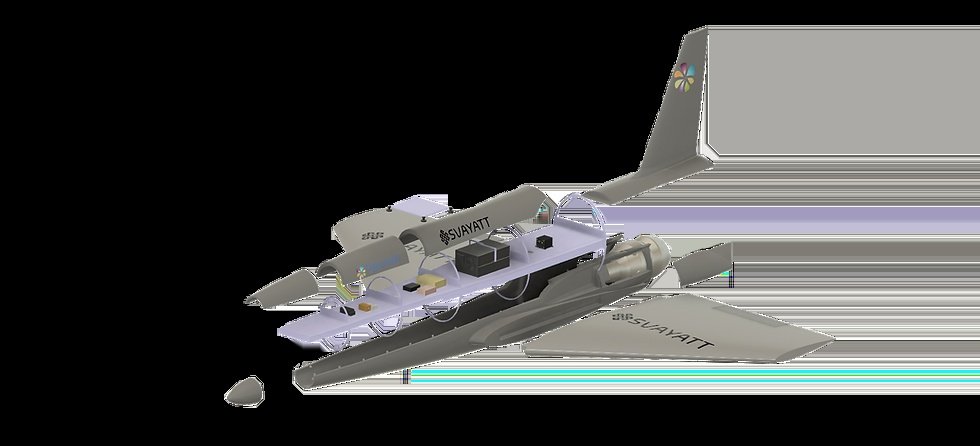
The first airframe is Paninian’s own Svayatt L1, a long-range autonomous cruise missile the company has designed to meet the operational requirements of the Ministry of Defence’s Make-I programme for the Long-Range Land Attack Cruise Missile. The platform, per the company’s Svayatt portal, pairs a low-observable airframe and terrain-hugging flight profile with Kalman Intel, Paninian’s AI-driven mission-planning software. Under the hood is the same design philosophy that produced Paninian’s earlier breakthrough: an AI-driven digital twin for aero-engine design that the company has also used for performance modelling and life-extension of legacy IAF engines.
More Read
The hard part is still ahead
Engines are proven on test rigs, not at press events — and Paninian is candid that the rigs are what it lacks. The company says it needs access to specialised test infrastructure, including multi-stage compressor and turbine test rigs and high-altitude testing facilities, and is seeking support from the government, industry and investors to get there. The tests to watch: whether the $3 million round closes, the first subsystem rig-test milestones, and whether Paninian secures test-facility access in 2027. If it does, India gets something it has never had — a private-sector turbofan lineage of its own.