Image credit: Proxgy — official company visual.
Most safety helmets just protect a worker’s head. The one a Gurugram startup took to the India Mobile Congress this month also watches the air he breathes, the ground beneath him and his own vital signs — and calls for help if something goes wrong. On 8 October 2026, Ericsson named Proxgy one of six winners of its Innovation Challenge 2026, picked from more than 800 applicants, for a portfolio of industrial wearables built for the blue-collar workforce that laptops and smartphones never reached.
The recognition: six winners from 800
The Ericsson Innovation Challenge, unveiled at IMC 2026, puts startups in front of the telecom giant’s enterprise machinery. Proxgy’s selection puts its industrial IoT wearables on that stage alongside the Okulo Aerospace solar UAVs and KissanAI’s farm models that also made the winner list. It is the latest in a run of validations: Proxgy took ≈1 crore on the debut season of Shark Tank India from Lenskart’s Peyush Bansal and BharatPe’s Ashneer Grover, won the SuperNova championship at GITEX Africa 2023, was picked for Maruti Suzuki’s fourth incubation cohort, and was named a CES 2024 Innovation Award honouree and a 2023 India’s Best Design Award recipient.
The machine: a helmet with a nervous system
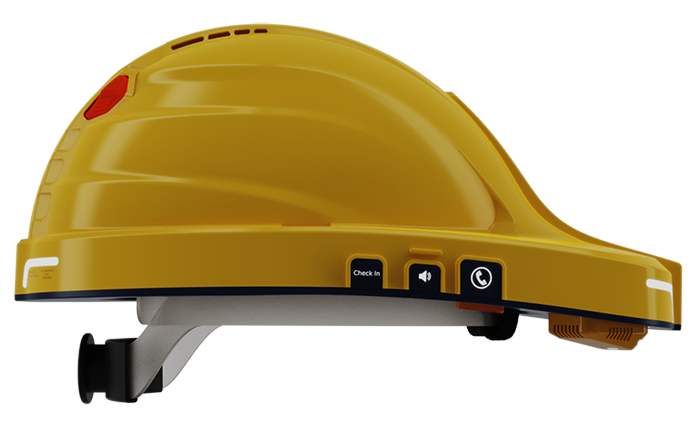
The flagship is the SmartHat, a connected industrial safety helmet that packs environmental sensing, health monitoring, communications and safety electronics into a hardened ABS shell. A removable sensor module sounds an alarm when it detects any of 14 flammable or three toxic gases, per the company’s technical rundown — and the company says it is the world’s smallest gas sensor. Environmental sensors track temperature, humidity and pressure; body-worn sensors watch the worker’s heart rate, blood oxygen and body temperature. A proximity sensor warns of dangerously close overhead objects through haptic feedback.
Safety automation is where the helmet earns its keep. The SmartHat detects falls, alerts supervisors if a worker leaves a geofenced area, and flags when it is not being worn when it should be — all without the worker pressing anything. There is an SOS switch for when he needs to act. The electronics are IP67-rated against water and dust, suited to construction sites, mines and refineries.
It is also a communication device. Workers get two-way audio-visual calls with managers or each other over a multi-channel walkie-talkie link, with a front HD camera — infrared-capable for low light — and a rear camera covering 160 degrees of the wearer’s surroundings. Both cameras can record video or stills on a Capture button press, and the helmet integrates with Microsoft Teams so a desk-bound manager can simply call the worker and see through the cameras what is happening on the floor. Analytics India Magazine, which profiled the company this month, describes the helmet as the “AI hub” of the worker — the company’s words — substituting for a laptop the worker cannot carry.
More Read

The stack: helmets, bands, locks and boxes
The SmartHat is one of more than ten SKUs Proxgy now sells. Sleefe turns any cap into a smart cap with a camera, speakers and mic for logistics, warehousing and policing use. Lockator is a 4G smart lock for containers and cargo with GPS tracking, geofencing, NFC and RFID unlocking, and — per the company — satellite connectivity for network-deprived stretches. BirdBox is a portable 360-degree surveillance unit with AI analytics. The AudioPod and AudioCube are 4G-enabled audio devices for alerts and payment confirmations.
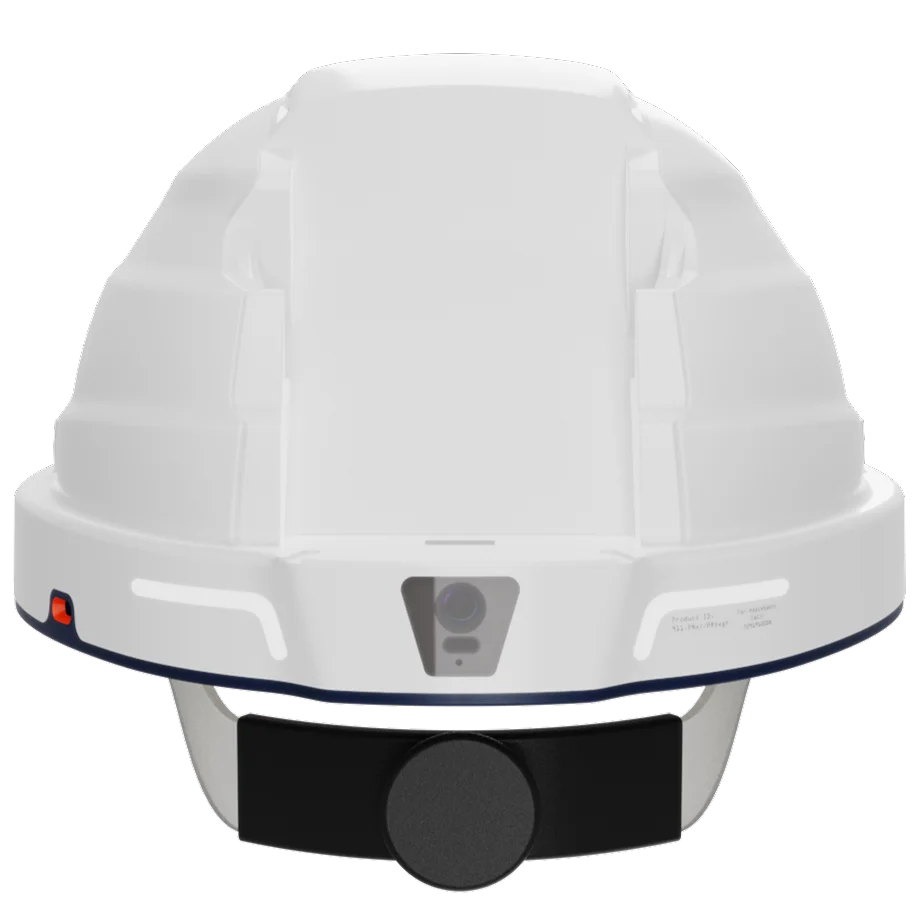
Perhaps the cleverest products are the retrofit bands. The ProHat and Hat+ bands, launched under ≈9,990, turn any off-the-shelf industrial helmet into a smart or even air-cooled helmet — addressing the field complaint the company says it heard repeatedly: AC helmets are too expensive and employers rarely buy them for ground-level workers. It is a Made-in-India play at the bottom of the safety pyramid rather than the top.
The company: hardware for the factory floor
Proxgy was founded in 2020 by Pulkit Ahuja in Delhi NCR, after he quit a corporate career — he had been national head of ORIX’s MyChoize self-drive rental business — to build for industrial workers instead of consumers. The thesis is simple: AI copilots have transformed white-collar work, but millions of blue-collar workers in factories, mines, oil fields and construction sites still run on walkie-talkies and paper slips, because laptops and phones cannot survive — and are not permitted in — their environments. Proxgy’s answer is a three-layered stack: industrial IoT hardware, software middleware and a SaaS subscription layer feeding dashboards and workforce analytics.
The company says it serves clients across power, fintech, logistics, warehousing, construction, mining, oil and gas and banking, and industry reporting has named Tata Steel, JSW Steel and Larsen & Toubro among its users. It has raised about $7 million to date — including a $3 million Series A and a ≈2 crore infusion from cricketer Riyan Parag — and competes with established PPE names like KARAM and Mallcom as well as startups like Jarsh Safety and Twyn.
What is verifiable is the direction of travel: a Delhi NCR startup that began during the COVID lockdown selling the idea of smart safety has, six years on, ten shipping products, a CES innovation award, a Shark Tank deal, and now an Ericsson innovation challenge win. The SmartHat’s boldest claims — the gas-sensor superlative, the patent counts — remain the company’s own, but the engineering inside the shell is real, inspectable, and deployed on real factory floors.