Solinas Integrity, a Chennai deeptech startup, builds robots that go where humans can’t — inside the country’s underground water, sewer and stormwater pipelines. Its EndoBot crawler family inspects pipes from 90mm to 1,500mm in diameter, spotting leaks, corrosion and contamination without digging up roads or sending workers into hazardous spaces, according to the company’s product specifications.
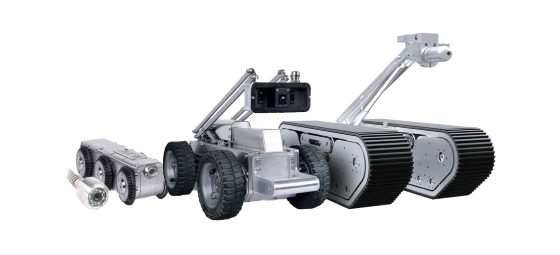
EndoBot: a crawler that sees inside pipes
EndoBot is a series of wheeled crawler robots in four size classes — from the ENDO90, which fits into pipes just 90mm wide, up to a large-diameter variant for sewers as wide as 1,500mm. Each crawler carries HD pan-tilt-zoom cameras, IMU sensors for precise motion tracking and laser profilers that measure the pipe’s internal shape, per the company’s official site. The robots detect leaks, blockages, corrosion, sediment, dents, illegal connections and contamination — and, crucially, pinpoint each defect’s exact location so a utility can open the right stretch of road instead of digging blind.
Swasth AI: mapping what’s buried
The robots are only half the product. Solinas’s Swasth AI platform converts inspection runs into digital infrastructure records: GIS-tagged maps of underground networks, geo-tagged assets, auto-generated maintenance reports and AI-enabled defect detection. That matters because, as the company notes, many Indian cities don’t even have accurate records of their own buried pipe networks — some exist only as paper drawings or institutional memory. Digitising the underground makes predictive maintenance possible instead of repair-by-crisis.
HomoSEP: a robot for the worst job in sanitation
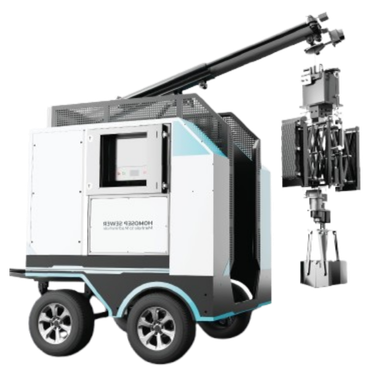
The company’s second flagship goes after an even harder problem: manual scavenging. HomoSEP is a robotic system for cleaning manholes and septic tanks — which Solinas describes as India’s first septic tank and manhole cleaning robot — combining blade cleaning, desilting, suction, jetting and waste handling in one machine. It is, the company says, engineered to make entering a septic tank unnecessary at all.
From an IIT Madras project to 100+ deployments
Solinas started as a student project at IIT Madras, was co-founded in 2018 by alumni Divanshu Kumar and Moinak Banerjee, and remains incubated there, reported The Hindu BusinessLine. The company says it has completed more than 100 projects across India, identified over 25,000 defects in underground infrastructure and digitally mapped more than 1,000 kilometres of piping. Recent coverage puts its footprint at 35+ cities across 15+ states with operations expanding into the Middle East, and in August 2026 it raised $5.5 million (about ₹52.66 crore) in a Series A1 round to scale robotics and AI for water and sanitation, per Way2World.
Recognition has followed: EndoBot is listed in the Central Public Health and Environmental Engineering Organisation (CPHEEO) drinking water manual under the Ministry of Housing and Urban Affairs as a condition-assessment solution for water pipelines, and Harvard Business Publishing has published a case study on the company. Its stated client roster includes WATCO, Suez, Voyants, Chennai’s CMWSS and the Ulhasnagar and Ahmednagar municipal bodies, per TechTimes and the company.
More Read

Here’s the company’s own explainer of how EndoBot works:
The context is stark: government studies put average non-revenue water in Indian cities near 39%, and newer estimates cite 30–50% in major metros — treated water lost to leaks, theft and broken pipes before it reaches a tap, per Drishti IAS citing The Hindu. A robot that can find the leak before anyone has to dig, plus one that can clean a septic tank without a human descending into it, is exactly the kind of engineering-first story worth noting.