For decades, diagnosing conditions like depression, schizophrenia, epilepsy or traumatic brain injury has depended more on interpretation than evidence — doctors leaning on behavioural assessments and prolonged observation before a diagnosis can be made. The process is slow, subjective, and frequently exhausting for patients already navigating complex conditions.
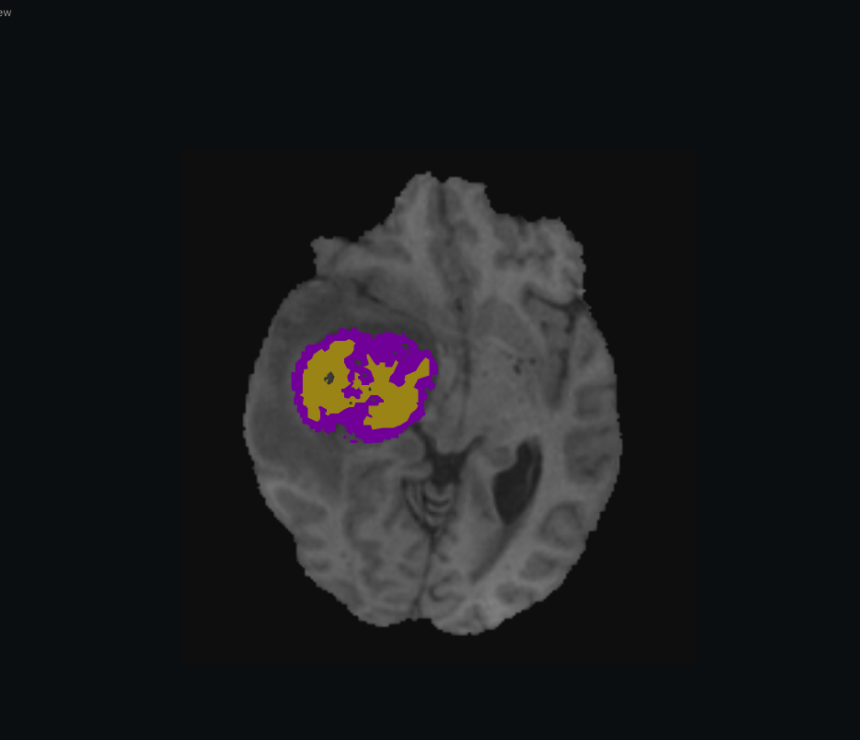
In Bengaluru, two founders decided the answer was a map. Their company, BrainSightAI, builds software that turns a standard MRI scan into a personalised, three-dimensional map of a patient’s brain networks — something co-founder and CEO Laina Emmanuel describes as a Google Maps for the brain — so surgeons can plan operations with a clear view of what must not be damaged.
VoxelBox: an MRI in, a brain map out
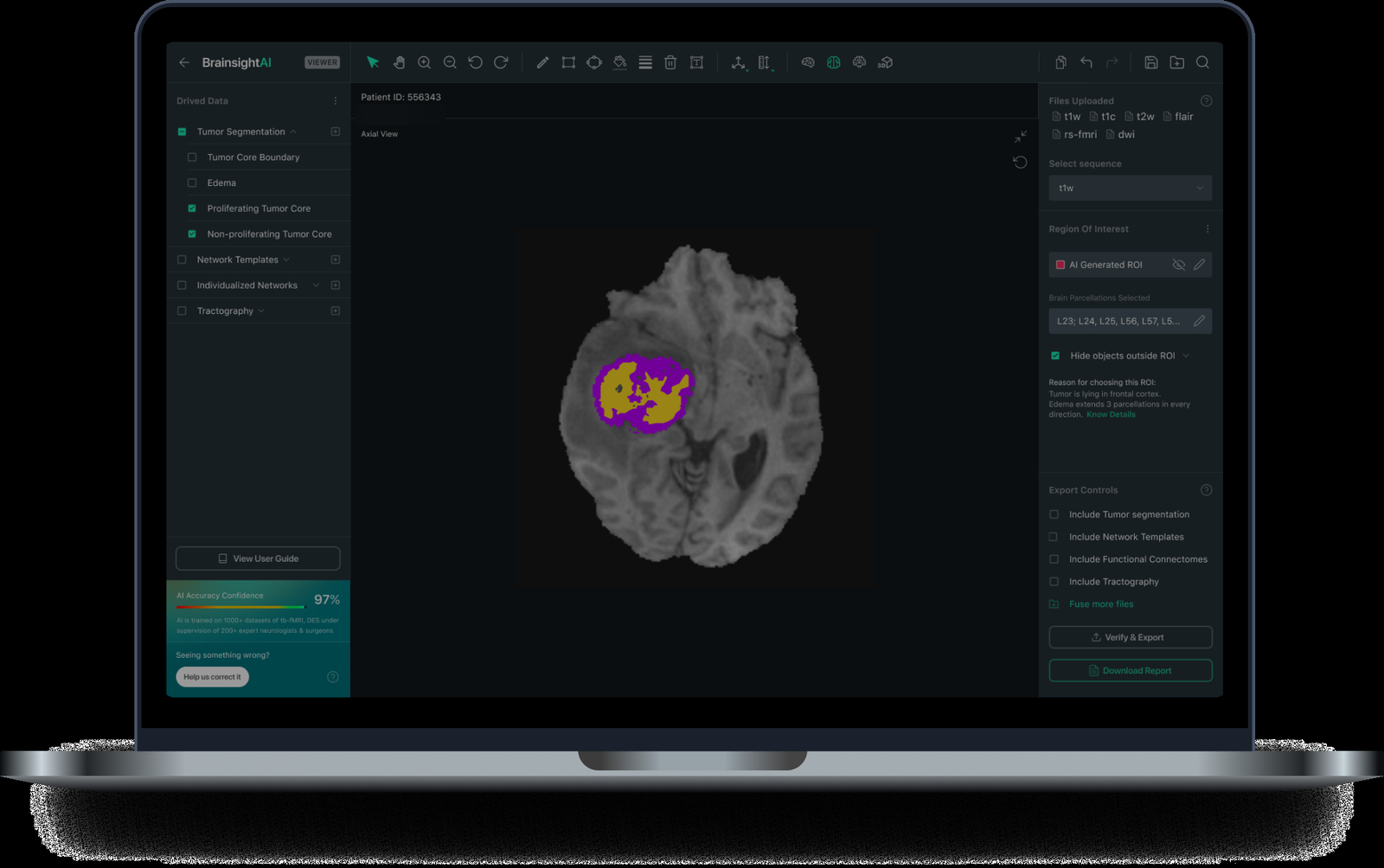
The product is called VoxelBox: an AI and machine-learning neuroimaging platform built on connectomics, the study of how regions of the brain are wired together. A radiologist uploads a patient’s MRI scan to the platform, and, the company says, within about an hour VoxelBox generates a detailed 3D map of the brain’s functional and structural networks — combining signal processing, neuroimaging, artificial intelligence and cloud technology into a single clinical tool.
The maps give neurosurgeons, psychiatrists and neurologists a connectomic view of functional and structural networks. In practical terms: more precise diagnosis, surgical plans that reduce risk to critical functions such as language and emotion, and a way to monitor how patients respond to treatment over time. The company positions it as a clinical decision-support tool — evidence-based features that help specialists understand how regions of the brain may be functioning — rather than a replacement for doctors.
The science it is built on
The core technique is resting-state functional MRI, one of the few imaging techniques capable of capturing whole-brain connectivity, combined with diffusion imaging and tractography — visualising the white-matter tracts that link brain regions. The company’s own clinical case studies walk through real examples, such as language-network mapping in a patient with a left fronto-temporal lesion, showing how the software renders tract and functional-network relationships around a tumour ahead of surgery.
The founders say that when they started in 2019, there was only one other company in the world working in connectomics. BrainSightAI also says it holds one of the world’s largest resting-state fMRI datasets — a claim, made by Emmanuel to Forbes India, that only the UK Biobank’s is larger. These are the company’s own characterisations, but the underlying point stands: this is a genuinely niche technical frontier.
More Read

The founders and the money
Laina Emmanuel holds an engineering degree from NIT Calicut and an MBA in marketing and healthcare from the Indian School of Business, and brings over 15 years of experience in healthcare management, policy and consulting. Co-founder and CTO Dr Rimjhim Agrawal studied at VIT before completing a PhD in machine learning in psychiatry at NIMHANS, Bengaluru — doctoral research on brain imaging indicators for schizophrenia and OCD that became the scientific foundation of VoxelBox. The two met through the Entrepreneur First accelerator in Bengaluru in 2019.
The original intent was psychiatry: map the brain so diagnosis could come earlier. But behavioural complexity made that hard to crack, and the company pivoted to neurosurgery as its beachhead market. BrainSightAI has raised $6.66 million in total, including a $5 million pre-Series A round in January 2025 led by IAN Alpha Fund, with participation from IvyCap Ventures and Silver Needle. It has been supported by the Google for Startups Accelerator India and Dassault Systèmes’ 3DEXPERIENCE Lab, was named a winner of the Pfizer INDovation Program, and took the Top Innovator award at the ET Startup Awards 2024.
Regulation cleared, hospitals on board
Healthcare software that touches diagnosis must clear regulators, and BrainSightAI secured its CDSCO licence in 2024. The company says its platform is now used in 55 to 60 hospitals across India — primarily in neurosurgery and radiology departments, with brain-tumour cases the main workload — and is in advanced demo stages at another 60 to 70 hospitals. It is HIPAA compliant and in the early stages of pursuing US FDA certification ahead of a US market entry.
The roadmap reaches back toward the founders’ original ambition: multiple sclerosis, Parkinson’s disease, major depression and OCD, with an eventual aim of a personalised 3D brain twin for every patient.
Caveats, honestly stated
Several headline claims are the company’s own: the “only one other company in 2019” framing, the UK-Biobank dataset comparison, and the “one of two companies worldwide” line repeated in interviews. These are plausible in a niche this small but unverifiable from outside, so treat them as founder characterisations. The FDA clearance is pursued, not obtained. And the return to psychiatry and neurology — the hardest part of the original vision — is a roadmap, not deployed product; neurosurgery is where the validation exists today.
Still: two founders turning resting-state fMRI research into regulated, hospital-deployed surgical planning software — built in Bengaluru, cleared by CDSCO, used in operating theatres across India, and aimed at one of the least-attentioned global health problems — is exactly the kind of engineering this site exists to showcase.