India operates its own satellite navigation constellation, NavIC, built by ISRO to cover the country and the region around it — yet for years the devices sold in India could not hear it. Phones and navigation gadgets could pick up the American GPS system, but no commercial receiver chip supported NavIC’s signals, and the handful of companies that made such chips were almost entirely foreign. A small Mumbai startup now wants to close that gap at the most fundamental level: it has designed, taped out and tested an indigenous radio-frequency chip that can listen to NavIC as easily as GPS, Galileo or BeiDou.
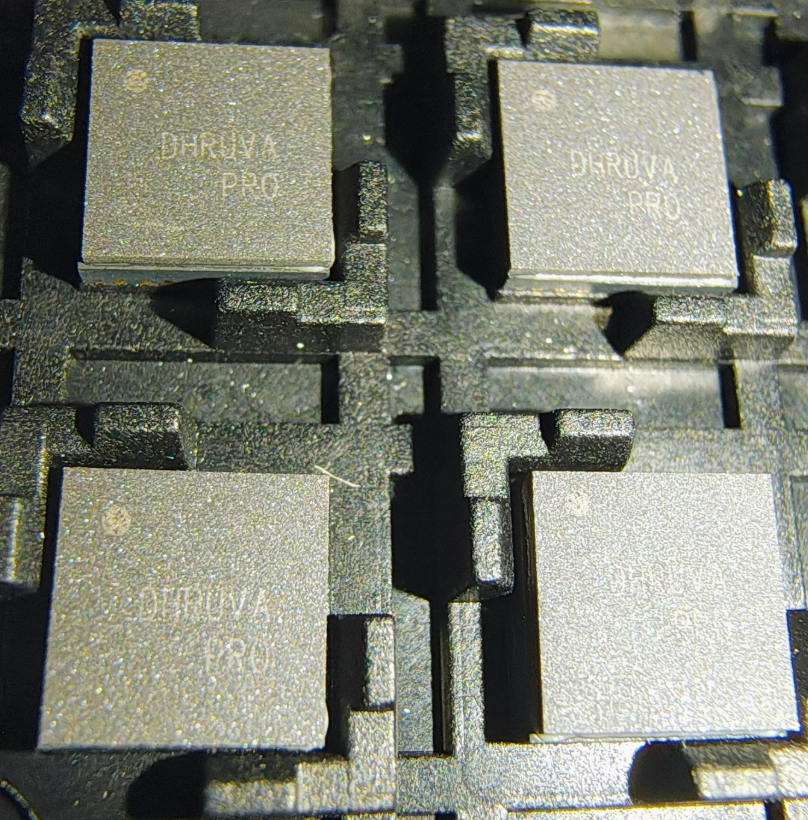
The company is MumbaiSemi, a 2024 spinout of the Indian Institute of Technology Bombay, incubated at the institute’s SINE technology business incubator in Powai. Its flagship product, DhruvaPro, is — in the company’s words — the first indigenous reconfigurable RF integrated circuit for navigation, covering NavIC, GPS, Galileo and BeiDou on a single chip. The company describes the design as silicon-proven, meaning fabricated and tested rather than simulated, and says it holds two patents on it.
Listening to a whisper
The engineering problem underneath is faintness. A navigation signal arriving from orbit is far weaker than the noise around it, and the chip must sift it out and amplify it enormously — the team describes amplification of roughly 400,000 times — before converting it to digital form on the same chip. Then comes the tuning problem: a conventional receiver is built for particular frequency bands, so supporting several navigation systems usually means several chips or a hardware change.
DhruvaPro’s answer, as described in the team’s published research, is a receiver that is fully programmable across the bands used by the four constellations, with no external components and no change to the on-chip hardware when switching between them. The official site adds that the chip is packaged in a QFN-32 package for evaluation in real environments, carries ESD protection and on-chip testing circuits, and is engineered for operation at extreme temperatures with low power consumption.
Six years of research before the company
MumbaiSemi’s story began long before the company did. The technology started as a research project called Dhruva, funded by the Ministry of Electronics and Information Technology with SAMEER as the nodal agency, and built by students and researchers in Professor Rajesh Zele’s electrical engineering laboratory at IIT Bombay. The first silicon came back from the foundry in December 2019. The chip was designed in about 18 months — and, as Zele has noted, it was the first receiver chip from his laboratory designed entirely by students.
The founders are Dr Vijay Kanchetla and Zele himself. Kanchetla took his doctorate in radio-frequency integrated circuit design at the institute and worked at Intel before returning to the project; Zele holds a doctorate from Carnegie Mellon and teaches in IIT Bombay’s electrical engineering department. The company runs with an 11-member team out of SINE.
More Read

The underlying research has been peer-reviewed: a paper describing the receiver, with Kanchetla as lead author and Zele among the co-authors, appeared in the IEEE Transactions on Microwave Theory and Techniques in March 2022. IIT Bombay also conferred its Dr P. K. Patwardhan Technology Development Award for 2024 on Zele and Kanchetla for DhruvaPro, presented on National Engineers’ Day. This week the company joined YourStory’s Tech30 2026 cohort of India’s most promising startups, unveiled at TechSparks in Bengaluru on 13 October 2026.
A company still at the start
What is not yet public is the commercial position. No customer, order, revenue figure or reliable funding amount has been disclosed, and the company was shown at the Bharat Innovates showcase in Nice in June 2026 describing itself as looking for partners in communications and navigation rather than announcing customers. The step from a silicon-proven chip to one being bought in volume is the one MumbaiSemi still has to take.
The ambitions go beyond navigation. The company’s roadmap lists advanced transceivers for next-generation wireless standards, high-speed communication interfaces for AI hardware and data centres, and silicon for automotive and autonomous systems. But it is the navigation chip that is furthest along — a single piece of silicon that lets an Indian device finally hear India’s own satellites. If DhruvaPro reaches volume production, it would give NavIC the one thing a navigation system cannot work without: a receiver, made in India, that listens.