Denim is one of the thirstiest fabrics on the planet — dyeing and finishing a single pair of jeans can consume thousands of litres of water, and the effluent poisons rivers. An IIT Delhi-originated startup says it has found a way around both problems at once: denim made with wool, dyed with indigo, finished without a single drop of water.
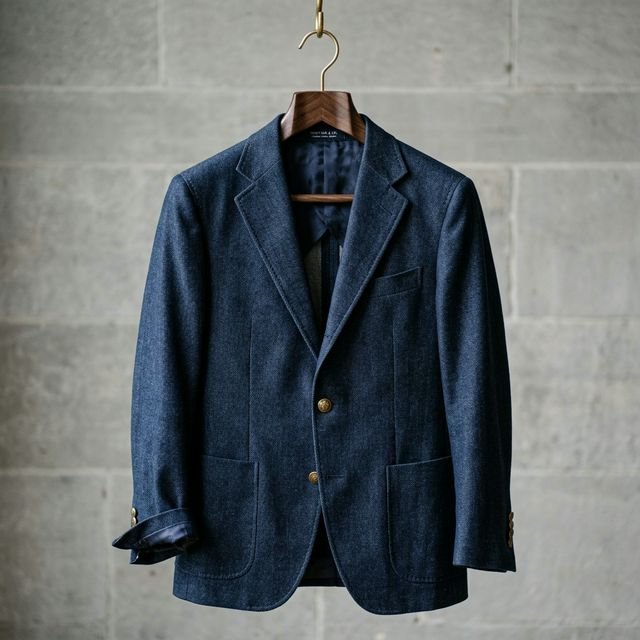
IndigoTex, founded in 2024 by Satendra Singh, Prof. B.S. Butola and Dilip Singh, is a deeptech textile startup working out of IIT Delhi’s Research and Innovation Park. In early October 2026 it raised Rs 5 crore in a round led by IAN Angel Fund, with SIDBI, FITT and IIT Delhi Angels participating — money it says will go into manufacturing, factory setup and taking its fabrics to market. It already runs a finishing facility in the Rai Industrial Area in Sonipat, Haryana.
Indigo on wool: a world’s first, the company says
The technical difficulty is real: wool and indigo do not naturally get along. Conventional indigo dyeing degrades wool fibres and strips their strength, which is why indigo-dyed wool has remained a laboratory curiosity rather than a commercial fabric. IndigoTex says its patented process delivers authentic indigo shades on wool without fibre degradation or strength loss — a world’s first, according to the company — enabling denim fabrics with anywhere from 5% to 100% merino wool content.
That matters because wool brings properties cotton denim lacks: natural insulation, odour resistance and temperature regulation. The company contrasts conventional denim — comfortable only down to about 19°C, heavy once lined for winter — with its IndiWool denim, which it describes as an all-climate fabric: lightweight, less bulky, and made from fully natural, biodegradable fibres.
ECOTEX: the waterless finish
The second innovation is ECOTEX, the company’s waterless wool-finishing technology. Wool garments normally need chemical-heavy “superwash” treatment — historically chlorine-based — to become machine-washable; without it, a wool sweater felts and shrinks in the wash. IndigoTex says ECOTEX eliminates water and chemicals entirely from finishing, cuts energy use significantly and replaces chlorine-based superwash altogether, making wool and poly-wool fabrics machine-washable without dry cleaning.
Those are the company’s own figures, and they deserve the usual caution: reporting by YourStory in August 2026 noted that no independent verification of the complete water-savings claim had been located. What is independently documented is the institutional backing — SIDBI and FITT invested earlier in 2026 — and the company’s selection for national deep-tech showcases including Startup Mahakumbh 2025, Bharat Tex 2026, VivaTech 2026 and Bharat Innovates 2026 in Nice, France.
More Read


From Sonipat to the world’s fashion houses
IndigoTex is not chasing the Indian mass market, at least not yet. Merino yarn costs Rs 1,500 to Rs 1,800 a kilogram against Rs 120 to Rs 150 for cotton, which puts the fabric firmly at the premium end — so the company is aiming at colder markets in Europe, with lower-wool blends planned for warmer climates. It says it has signed non-disclosure agreements with Ralph Lauren and France-based Kering Group, and is in talks with premium brands, garment makers and fabric exporters across Europe, Australia, Russia and Denmark.
Beyond fashion, the startup is working on protective and extreme-cold textiles: founder Satendra Singh has described developing lightweight, breathable fabrics rated to minus 30 degrees for the Indian Army, which he says currently uses imported fabric in Siachen. If the waterless finishing scales as claimed, the bigger prize may be industrial — a textile industry that, by the company’s own accounting, consumes 93 billion cubic metres of water a year and contributes 35% of ocean microplastics.