Every lithium-ion battery carries a contradiction: it is hazardous waste and, at the same time, a deposit of lithium, nickel, cobalt, copper and aluminium — metals India largely imports. In Bengaluru, a startup founded by two IIT Roorkee graduates is mining those metals back out of dead batteries. It says it does the whole job without adding a single chemical to the process.
The chemistry that isn’t there
At the heart of Metastable Materials’ facility in Bengaluru’s Harohalli Industrial Area sits a trademarked reaction the company calls Integrated Carbothermal Reduction. Conventional battery recycling breaks the chemical bonds inside a cell with externally added chemicals. Metastable’s approach, the company says, makes the elements already inside the battery — graphite and nickel-manganese-cobalt — react with one another, so nothing needs to be added from the outside. Co-founder and CEO Shubham Vishvakarma has described it as reacting “stuff inside the batteries with the stuff inside the batteries to separate things apart.”
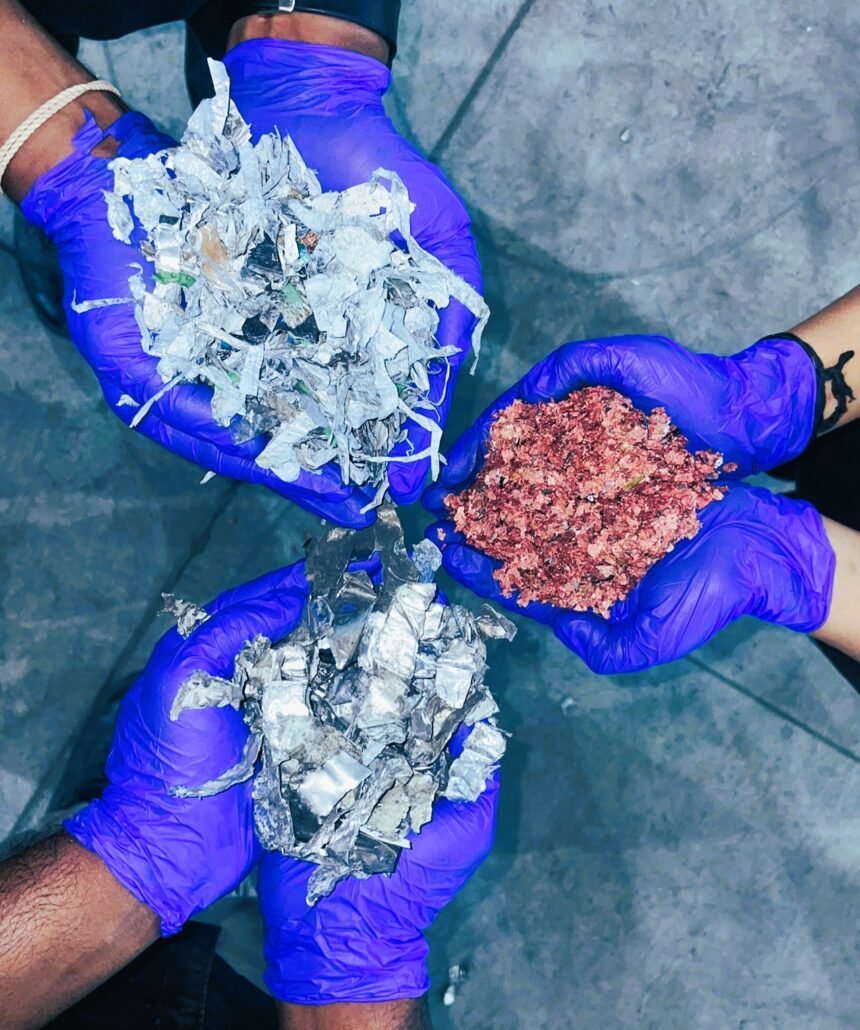
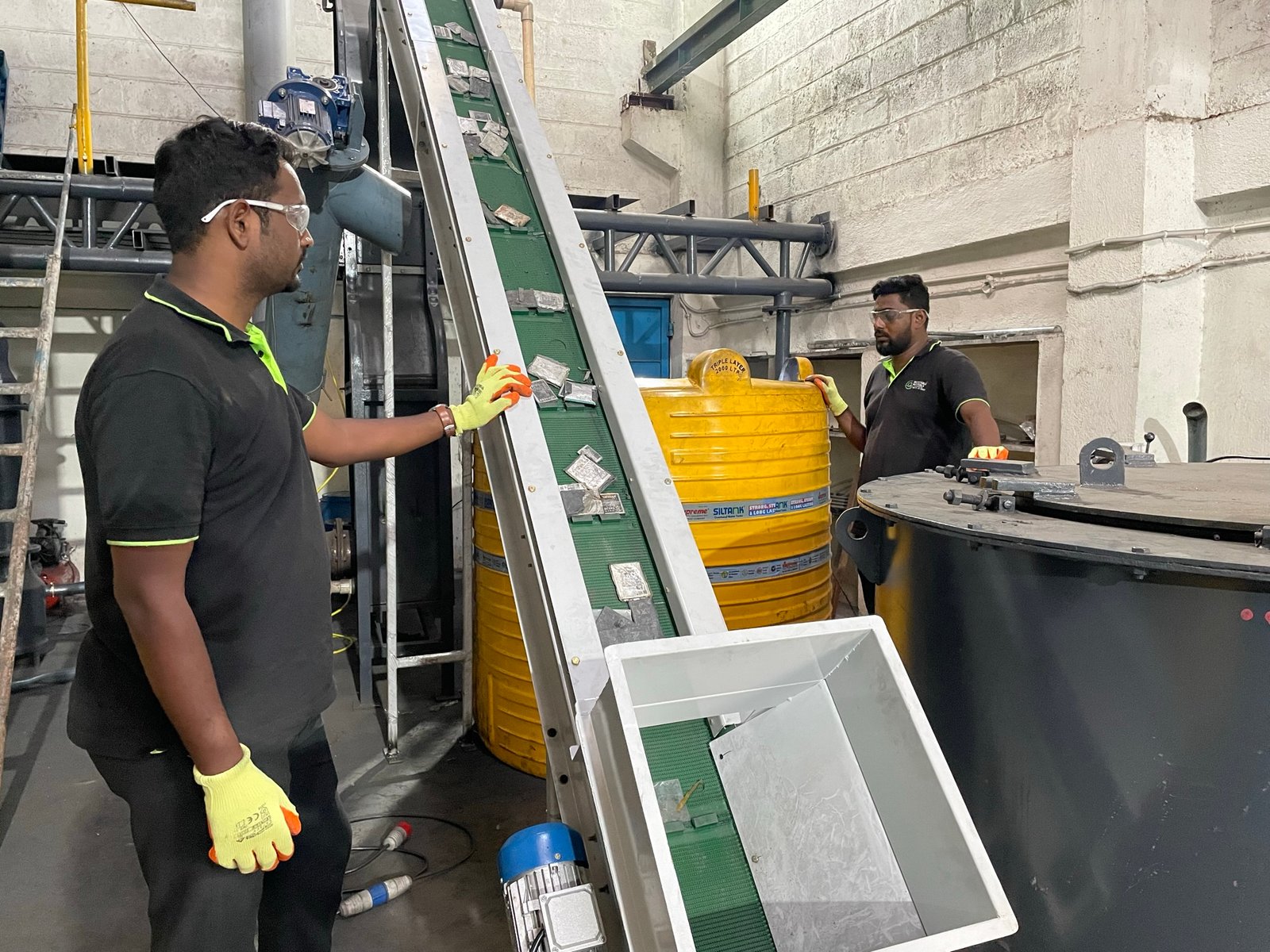
Before the reaction, batteries are dismantled and shredded underwater, which the company says eliminates fire risk and stops toxic gases from escaping. Once the bonds are broken, the metals are separated by their physical properties: copper by density and ductility, lithium by dissolving it in water, nickel and cobalt by magnetism.
The company claims a recovery rate above 90% and says the process uses just 3 litres of water per kilogram of recycled waste, with a zero-liquid-discharge system — designed and built in-house — recycling all liquid on site. Nearly all the machinery, from shredders and mills to magnetic and density separators, furnaces and agitators, is designed and manufactured by the company itself.
A refiner, not a recycler
Metastable doesn’t think of itself as a recycler. It is a B2B refiner: it buys spent batteries and black mass — the powder left after batteries are crushed — from scrap dealers, recyclers and original equipment manufacturers, then sells the recovered metals as standard commodities priced against international metal exchanges.
Lithium comes back as battery-grade lithium carbonate, which the company says it supplies to glass, ceramics and cement manufacturers. Nickel goes to chemical producers and the stainless-steel industry; cobalt to magnet and pigment makers; copper to casting and busbar production; aluminium to automotive casting.
Scale, patents and the next plant
The company began generating revenue in 2025. Its half-acre Bengaluru plant has an installed processing capacity of 1,500 tonnes a year, and the company says capacity utilisation has doubled every quarter for three consecutive quarters. A second facility near Delhi sits close to its feedstock suppliers, and Metastable has commissioned a 21,000-square-foot urban-mining unit outside Bengaluru designed to process up to 5 tonnes of raw material a day at full capacity.
The technology is protected by six patent filings across India, the US, Europe, Japan, Korea and China, with the first Indian grant already in hand, according to the company. Metastable raised a pre-seed round in January 2022 led by Log9 Materials founders Akshay Singhal and Kartik Hajela, followed by a 2023 seed round from Surge (Peak XV Partners), Speciale Invest and Theia Ventures. It is now preparing another round to fund full-scale commercial facilities.
The idea traces to Vishvakarma’s final-year research on lithium-ion battery chemistry at IIT Roorkee; he founded the company in October 2021 with Manikumar Uppala, an industrial engineer who had spent three and a half years at NBC Bearings specialising in machine design and manufacturing. This week, the startup was picked for YourStory’s Tech30 2026 cohort of promising Indian startups.