Most industrial hydrogen in India still arrives the old way — compressed into cylinders, loaded onto trucks, and driven to the factory gate. In Mangaluru, a startup is betting the future looks more like a tap: make the hydrogen where you use it, on demand, and skip the logistics entirely.
The company is HYDGEN (Hydrogen Innovation Pvt Ltd), and on 15 October 2026 it inaugurated a 20 MW-per-year electrolyser manufacturing facility at Ganjimutt, Mangaluru, during its HYDGEN Innovation Day 2026. On the same day it unveiled 250 kW AEM and 250 kW PEM electrolysers — designed, assembled and tested in Mangaluru, the company says.
AEM: alkaline’s price, PEM’s performance
Electrolyser technology today is split between two established camps: alkaline systems, which are cheap but bulky and slow to respond, and proton-exchange membrane (PEM) systems, which are efficient and flexible but depend on expensive platinum-group metals. HYDGEN’s bet is on a third, newer route — the anion exchange membrane (AEM). Its proprietary AEM stacks combine the low cost of alkaline electrolysis with the efficiency and flexibility of PEM, without relying on platinum-group catalysts, according to the company.
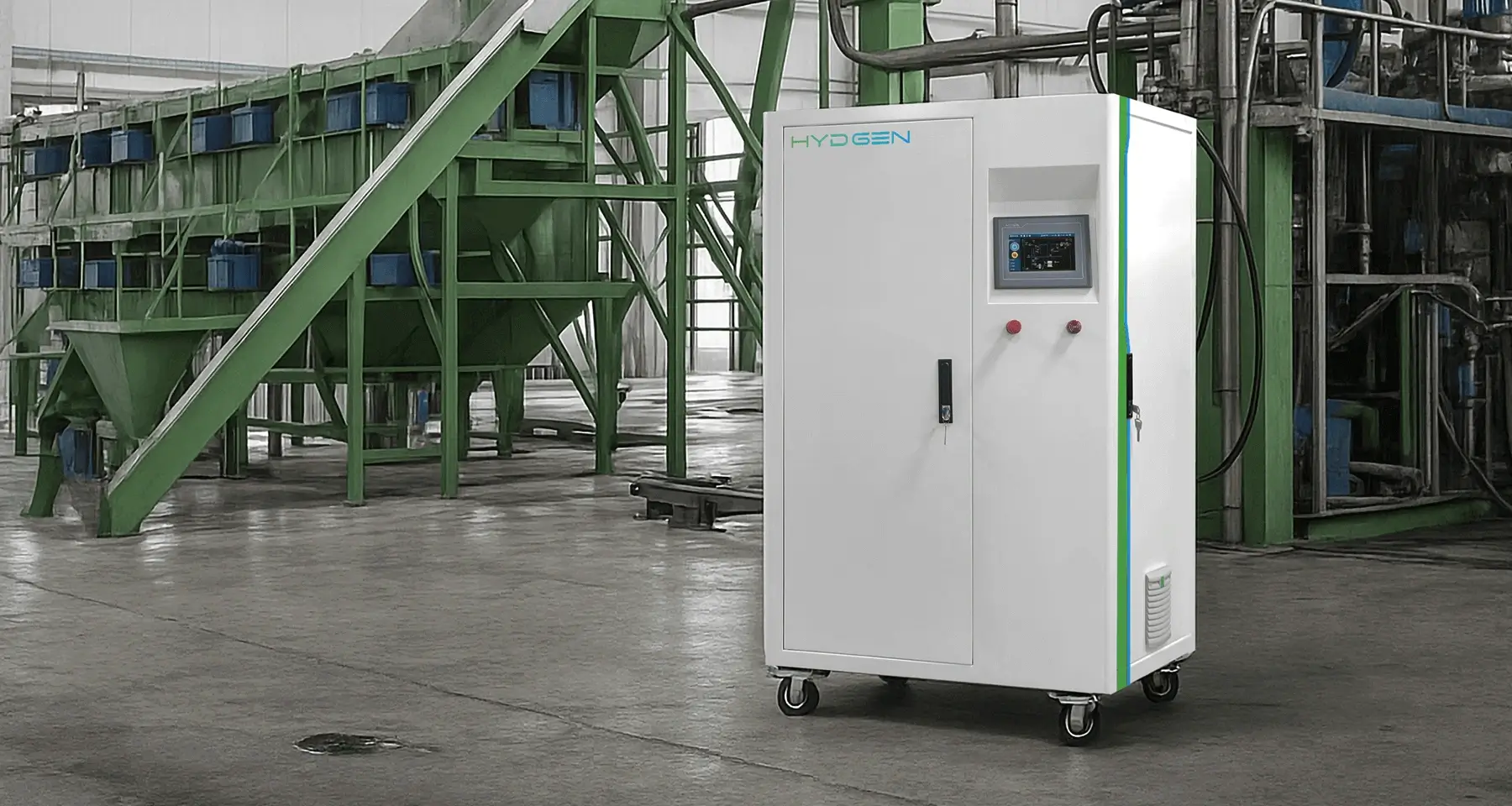
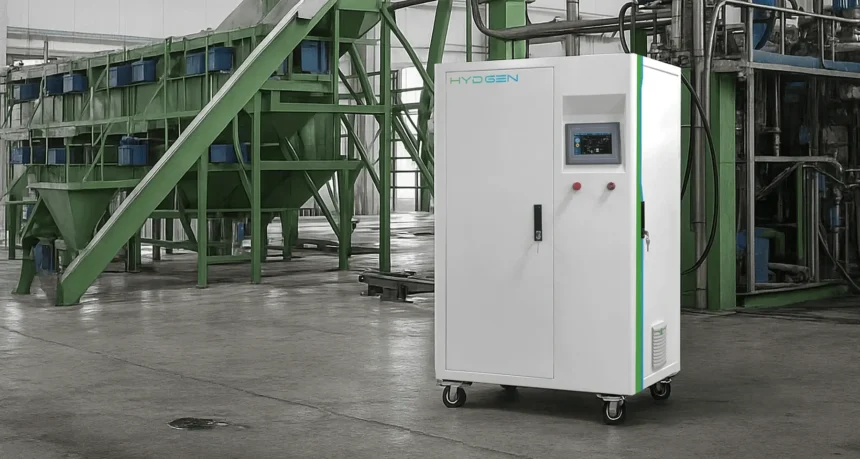
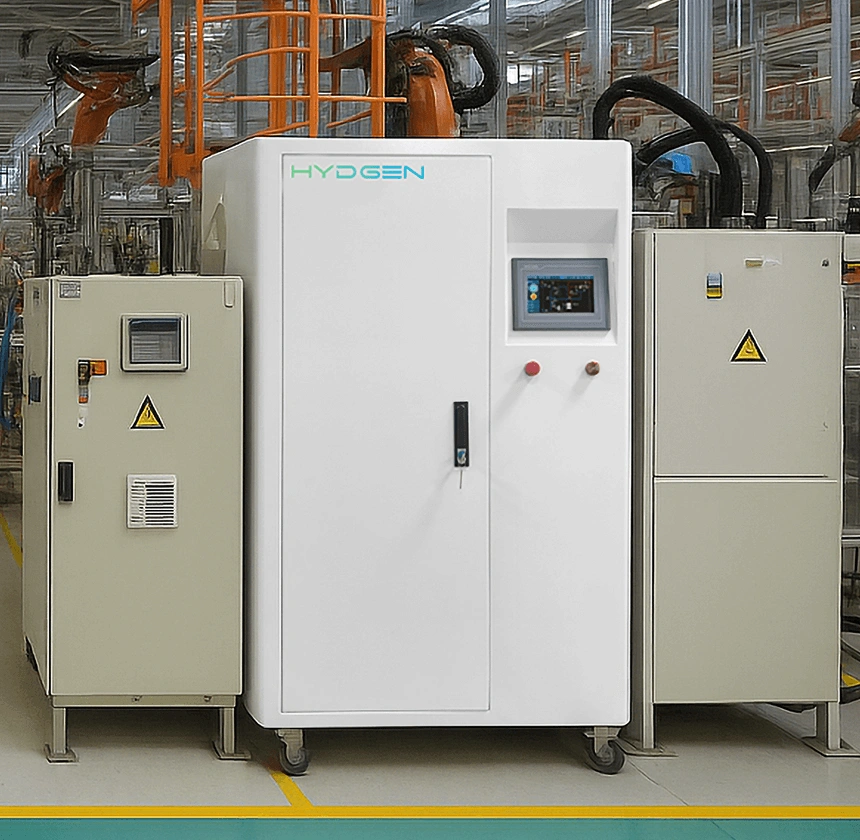
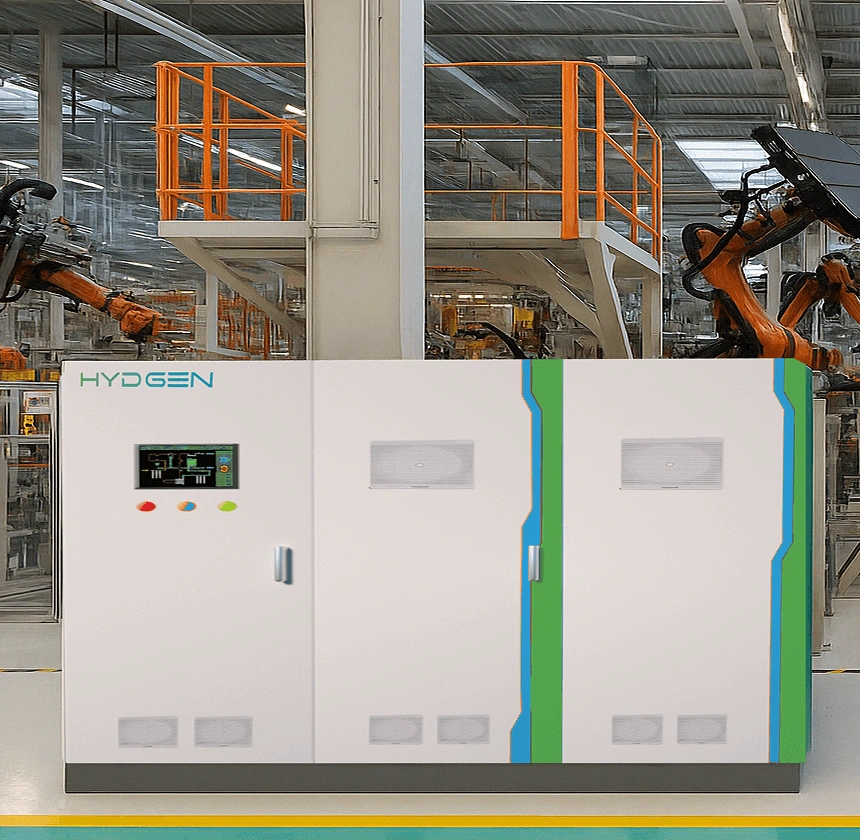
The product line is modular, spanning 1 kW to 100 kW systems, with the new 250 kW single stack aimed at plants with larger daily hydrogen needs. The company’s published datasheets list DC efficiency of 75–82% (HHV) and hydrogen purity up to 99.999% at the balance-of-plant level. On-site generation, grid or renewables powered, with plant-utility and SCADA integration, is the whole pitch: a hydrogen plant the size of a cabinet, sitting next to the process that consumes it.
Why on-site changes the maths
The economic argument is stark. According to HYDGEN, industries that buy hydrogen in cylinders and tube trailers — lab-grown diamonds, specialty chemicals, pharmaceuticals, semiconductors — pay 70–85% of the delivered price for compression, transportation and storage rather than the hydrogen itself. A late truck can stop a production line. Generating hydrogen at the point of consumption removes the logistics cost, the supply risk and the purity variability in one move.
The lab-grown diamond angle is already commercial: HYDGEN’s first shipment was an indigenously built electrolyser engineered for chemical vapour deposition at a diamond facility, where hydrogen acts as the reducing agent that sustains the plasma environment. That first commercial deployment, the company says, marked the beginning of its commercial phase.
More Read
From 25 kW to 20 MW in a year
The pace is the story. HYDGEN was founded in 2024 as a spin-off from the National University of Singapore by Dr Manipaddy Krishna Kumar (co-founder and COO), Dr Michael Gryseels (co-founder and chairman) and Dr Goutam Kumar Dalapati (co-founder and CTO). At its Innovation Day 2025, the company unveiled what it described as India’s first 25 kW AEM electrolyser stack, fully manufactured in India. A year later, the 20 MW Ganjimutt facility — covering stack assembly, system integration, testing and hydrogen quality checks on one site — is open, and the 250 kW systems are unveiled.
Capital has followed the hardware: a $5 million pre-Series A round in October 2025 led by Transition VC, with Cloudberry Pioneer Investments, Moringa Ventures and family offices from India and Singapore participating. The company says its systems are already deployed with clients across India and Southeast Asia, and it is targeting Japan, Europe and the Middle East next. The inauguration was attended by MP Captain Brijesh Chowta and MLA Dr Y. Bharath Shetty, with a keynote by CSIR–National Chemical Laboratory director Dr Ashish Lele on moving hydrogen technologies from the lab into commercial use.
Caveats, honestly stated
The “first” claims — India’s first 25 kW AEM stack, first fully manufactured in India — are the company’s claims, reported by the press but not independently verified here. The 70–85% logistics-cost figure and cost-parity-with-grey-hydrogen framing are likewise company numbers. And 20 MW is nameplate annual capacity; real throughput depends on order flow, which the company has not disclosed in unit terms.
AEM itself remains an emerging membrane technology industry-wide: long-duration durability at industrial scale is the question every AEM maker, HYDGEN included, still has to answer over years of operation. The corporate structure is also dual — Hydrogen Innovation Pte Ltd in Singapore with manufacturing and testing in Mangaluru (and some components from a Pune facility, per earlier company statements) — so “designed, assembled and tested in Mangaluru” is the precise claim, and the fair one.
Still, a Mangaluru startup turning water and electricity into industrial-grade hydrogen at the factory gate — and now building the machines to do it at 20 MW a year — is exactly the kind of unglamorous, hard-engineering bet worth watching.