
India has decided that hydrogen will help move its heaviest cargo. Electrolysers are being manufactured in Mangaluru and Bengaluru, fuel-cell truck programmes are running, and the National Green Hydrogen Mission is pouring money into production. But there is a question no amount of hydrogen production can answer on its own: when a hydrogen truck finishes a long haul across Maharashtra, where does it refuel? A fuel-cell vehicle without a dispenser is a very expensive paperweight — and India has almost no indigenous dispensers to speak of. The pumps, the safety interlocks, the metering electronics: nearly all of it is imported.
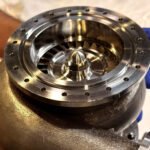
Hyperonic Engineering Pvt Ltd, a Pune startup founded in 2024, is trying to change that. The company is building what it describes as an indigenous hydrogen gas dispenser for refuelling stations — a piece of equipment that sits at the exact boundary between the hydrogen economy’s promise and its practical reality. The system has been fabricated, the design was unveiled in August 2026, and it is currently undergoing final assembly, programming and testing at NCL Innovation Park, where the startup is incubated.
Why it matters: refuelling infrastructure is the missing middle of India’s hydrogen story. Producers make the fuel, vehicle makers build the trucks, but almost nobody in India is building the equipment that moves hydrogen safely from station to tank at 350 or 700 bar. That equipment is precision hardware with life-and-death safety requirements — hydrogen is invisible, odourless, and flammable across a wide concentration range. Importing every dispenser means India’s hydrogen corridors stay dependent on foreign hardware, foreign service contracts, and foreign certification. An indigenous dispenser, engineered for Indian conditions and Indian prices, is the sort of unglamorous component that decides whether the National Green Hydrogen Mission’s vehicle targets are real or decorative.
Two CPUs, one job: never leak
Hyperonic’s technical bet is on control architecture. Most dispenser designs route everything — metering, pressure regulation, leak detection, emergency shutdown — through a single controller. The startup is instead developing a hybrid control system: one dedicated CPU handles only the safety functions, while a second CPU runs the primary dispensing operations. The two processors work in tandem, the company says, so a fault in the metering or billing logic cannot compromise the safety interlocks — and a safety shutdown doesn’t corrupt the metering records either.
That separation is a real engineering answer to a real problem. Hydrogen refuelling protocols (SAE J2601 and its derivatives) are among the most demanding in the fuelling world: the dispenser must manage temperature-compensated pressure ramps, pre-cooling, leak checks and communication with the vehicle’s tank sensors, all while guaranteeing that any anomaly triggers an immediate, clean stop. Baking safety into a physically separate compute path is the kind of design conservatism that certification bodies like to see — and the company says the architecture is currently going through a patenting procedure.
Patient capital, bootstrapped start
The founders arrived at the problem from inside the industry. Akshay Muley, Tejas Dattatray Chikhale and Nilesh Jadhav — all three co-founders and directors — bring experience across hydrogen production, fuel cells and high-pressure gas systems. The company spent its first year researching the market and identifying where domestic capability was missing before going full time in 2025.
More Read
While the dispenser goes through testing, the company has kept the lights on with engineering services: over the past year it has done technical work for clients including TÜV Rheinland, AHAsolar and the Dutch fuel-cell company Nedstack, and it is developing a hydrogen laboratory for a National Institute of Technology — a hydrogen production system plus a cylinder-filling setup. It has received Rs 50 lakh through the Startup India Seed Fund as a convertible debenture and is now looking to raise around Rs 5 crore for product commercialisation and R&D. The company was selected for YourStory’s Tech30 2026 cohort, the annual list of 30 Indian startups building next-generation technology, unveiled at TechSparks Bengaluru.
The honest caveat: the dispenser is not yet a product in the commercial sense. The company says it has showcased the fabricated system to multiple prospective customers but has not closed an order, and is targeting its first dispenser contracts in 2027. Muley himself is candid about the timeline — the startup expects real demand for hydrogen vehicles, and therefore for its dispensers, to materialise only after 2030, and is building ahead of the curve.
That patience is either prudence or peril. But if India’s hydrogen trucks are ever going to refuel from Indian-made pumps, the dispenser will have to be built somewhere, by someone, before the trucks arrive. In a Pune incubator, Hyperonic Engineering is building it now.