Image credit: CaliperAI
A self-driving car, a warehouse robot, an inspection drone — each one sees the world through cameras, LiDAR and inertial sensors, and each one learns to understand what it sees from labelled data. But preparing that data is where autonomy programmes stall: hours of multimodal recordings have to be synchronised to a single clock, the rare scenarios that matter have to be found inside them, and each one has to be annotated in 3D under a consistent taxonomy. A Bengaluru startup says the missing piece is infrastructure built specifically for that loop — and that most existing data tools treat geometry as an afterthought.
The company is CaliperAI, founded in 2024 by Mohanvarakrishna Boddeti and Gautham Raju. The name is a mission statement: “We wanted to develop AI which works as precisely as measuring with calipers,” Raju told YourStory. The founders are AI alumni of IISc and IIT Kanpur and, according to the company, hold more than ten combined patents in autonomous-driving technology, filed while working in industry. They spent six to eight months validating the idea before going full-time in May 2025; the team is eight people, and the startup is bootstrapped on roughly Rs 2 crore of the founders’ own money.
Three products, one loop
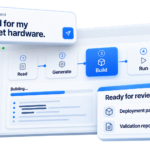
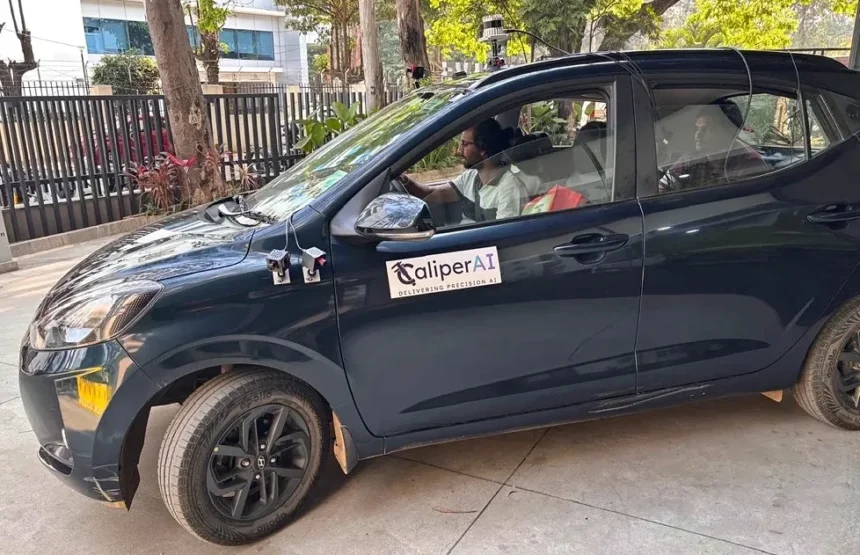
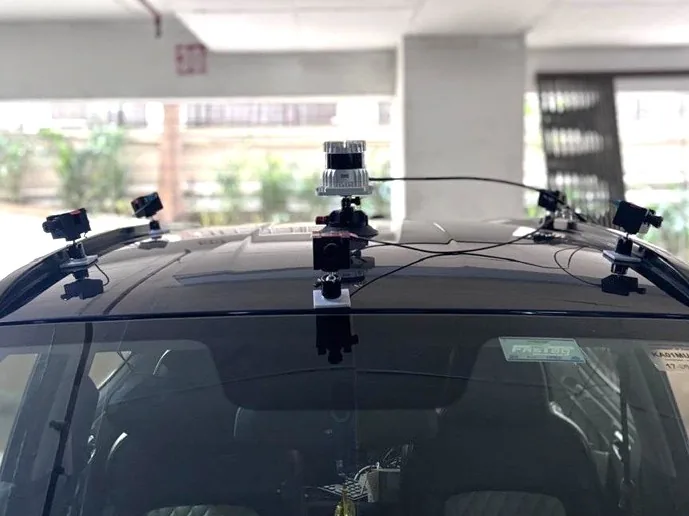
CaliperAI’s platform covers the stretch from raw field data to training-ready ground truth in three products designed to hand over to one another. CaliperCapture handles acquisition and synchronisation of multimodal sensor data — six cameras, LiDAR and GNSS/INS on one clock, per the company, with its own sensor-rigged capture vehicle already running on Bengaluru roads. CaliperOwl is the scenario engine: it reads whole recordings, mines scenarios, clusters them into families, analyses operational-design-domain coverage and builds the validation sets that close the gaps. CaliperGT is the ground-truth engine: 3D cuboids in the point cloud, semantic segmentation and lane geometry under one 16-class taxonomy and one QA workflow, with camera-to-LiDAR projection. The stack speaks the formats autonomy teams actually use — ROS and ROS 2, MCAP, sequence annotation — and mixes AI-assisted labelling with human QA.
Spatial intelligence, first-class
The differentiator CaliperAI stresses is architectural: “Most data tooling treats geometry as metadata,” the company says. It builds mapping, localisation, calibration and sensor fusion as core capabilities, so point clouds, transform trees and GNSS/INS behave correctly rather than being bolted on. It is also open-sourcing parts of the stack — annotation tooling with ROS and sensor-data support — on the argument that critical infrastructure for physical AI should be accessible to the engineers building intelligent machines. And the company insists it builds autonomy, not just tooling for it: its products exist, it says, because the team needed them itself — so they assume rosbags, calibration drift, night runs and QA disagreements rather than clean benchmark data.
The bigger bet: modular machines
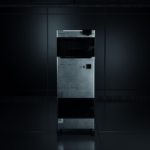
Beyond software, CaliperAI is developing its own unmanned ground vehicle for inspecting heavy assets — cranes, transformers, transmission lines, electrical substations — where sending humans on patrol is unsafe around high-voltage infrastructure. “We do not replace humans, but we help them where it is unsafe for them to work or move around,” Raju says. The robot is being designed as a configurable platform rather than a single-task machine: the same mechanical, software and AI components reconfigured for warehouse operations, surveillance, patrolling or grid monitoring. “We want to modularise physical AI,” Raju says. “With modular software, you develop it once and reuse it based on configurations and architectures. We want to replicate that for hardware.”
More Read
What would make this real
The honest caveats matter. The UGV is in development, not deployed — Raju’s timeline, a field trial in about five months and a position to deploy a hundred robots in six, is an illustration of the intended development process rather than an existing programme, and YourStory flags it as such. The company is small and bootstrapped, with no disclosed platform customers or revenue figures, and the patent count refers to the founders’ industry filings, not CaliperAI’s own. In October 2026 it was named to YourStory’s Tech30 cohort and is recognised by DPIIT. The test that matters now is adoption: whether autonomy teams trust a young Indian toolchain with the data loop their perception models depend on. Still, the pedigree is specific — founders who have shipped autonomy systems, a product stack that already runs on real machines on Bengaluru roads, and a bet on the unglamorous layer every robot programme quietly depends on. For a country trying to build its own autonomy stack, that is infrastructure worth watching.