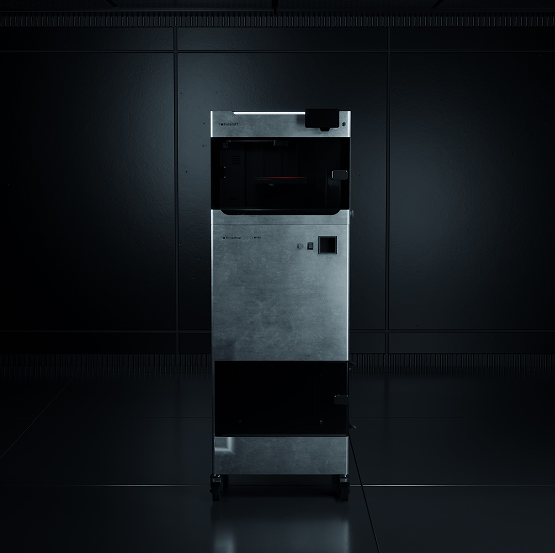
Image credit: ThinkMetal
A die, a mould, a jig, a fixture — the unglamorous steel tools that every factory depends on are also the ones that take weeks to make and cost a fortune to import. A Chennai startup says the answer is to print them: its industrial metal 3D printer builds precision components layer by layer from wound metal feedstock, then a furnace removes the binder and sinters them to full metal strength. ThinkMetal claims its approach can produce high-value precision parts up to ten times faster and at half the cost of conventional methods. On 13 October 2026, the startup raised Rs 27 crore led by IAN Alpha Fund, with 3i Partners and existing investors, to take the technology from enterprise pilots into larger commercial deployments.
Three products, one indigenous stack
ThinkMetal’s platform, described on its own site as an “end-to-end indigenous ecosystem”, has three parts. The SistemT1 is the compact industrial metal additive-manufacturing unit: a floor-standing machine that deposits wound metal feedstock layer by layer. The proprietary FuseX materials are the company’s own metal filaments — the process, dubbed MFAM (Metal Fused Additive Manufacturing), prints green parts from filament, then debinds and sinters them to full metal strength. Thinkware is the one-click software layer that generates optimal manufacturing parameters from standard CAD files. The company’s own site summarises the pitch as producing “complex, high-strength metal parts 10x faster”.
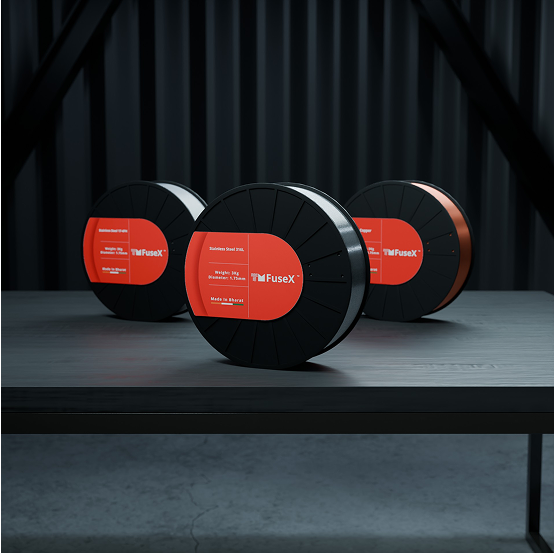
The stack is aimed squarely at import substitution. ThinkMetal was founded in 2021 by Sabyasachi Ghosh (CEO) and Arushi Sharma (CTO), and it serves manufacturers in aerospace, defence, space, automotive and electric mobility. Its customers already include Ants Ceramics, ZeQube Technologies and Hosur CNC, according to Inc42, and the company says its components serve applications across the automotive, aerospace and defence sectors.
From pilots to commercial deployments
The Rs 27 crore round, reported by The Times of India on 13 October, is what the company calls its step “from technology development towards commercialisation”. “We’ll use this capital to strengthen our product development, expand our team and materials capabilities and accelerate adoption across industrial applications,” co-founder and CEO Sabyasachi Ghosh said. The money will fund product development, materials R&D, hiring, and an expanded materials library — the range of metals the platform can process. Prior to this round, the company had raised around $1.1 million from YourNest Venture Capital to scale production of its first-generation system.
IAN Alpha Fund managing partner Rajnish Kapur said part quality has been tested at NABL and ASME accredited labs, and that the company has filed more than 17 intellectual-property applications. The startup was also named to YourStory’s Tech30 cohort for 2026.
More Read
What would make this real
The honest caveats matter. The headline “10x faster, half the cost” figure is the company’s claim, echoed by its lead investor — not an independently verified benchmark across materials and geometries. ThinkMetal is explicitly in transition from enterprise pilots to larger commercial deployments, which is the stage where a manufacturing startup has to prove repeatability, uptime and service at industrial scale. But the bet is legible: a domestic materials-plus-machine-plus-software stack, built by a company that calls its long-term goal “deep indigenous capabilities in materials and manufacturing technologies from India for global markets”.
Metal additive manufacturing in India is projected to grow from $677.4 million in 2023 to $3.75 billion by 2030, per Inc42’s report. If ThinkMetal can make the economics of low-volume precision tooling work, it won’t just be selling printers — it will be selling independence from the import queues that today pace Indian industry.