Picture a missile the length of your forearm, launched from a soldier’s shoulder, needing to sprint to supersonic speed in seconds — reliably, every single time, in the desert heat of Rajasthan or the thin cold of Ladakh. The muscle behind that sprint is the rocket motor. And in Bengaluru, a company that began life machining precision tools and automotive components now builds that muscle from CAD to combustion chamber, entirely in-house. The company is Prime Toolings, and it has quietly become one of India’s most ambitious private propulsion houses.
Prime Toolings grew out of precision press tools into aerospace propulsion, assembling a team of metallurgists, CFD specialists and additive-manufacturing experts around a single idea: India should make its own missile engines, end to end, with 100% indigenous intellectual property. The company is self-financed and wears that independence as a badge — its philosophy, posted publicly, is “No investors. No delays. No excuses.”
The booster for MANPADS
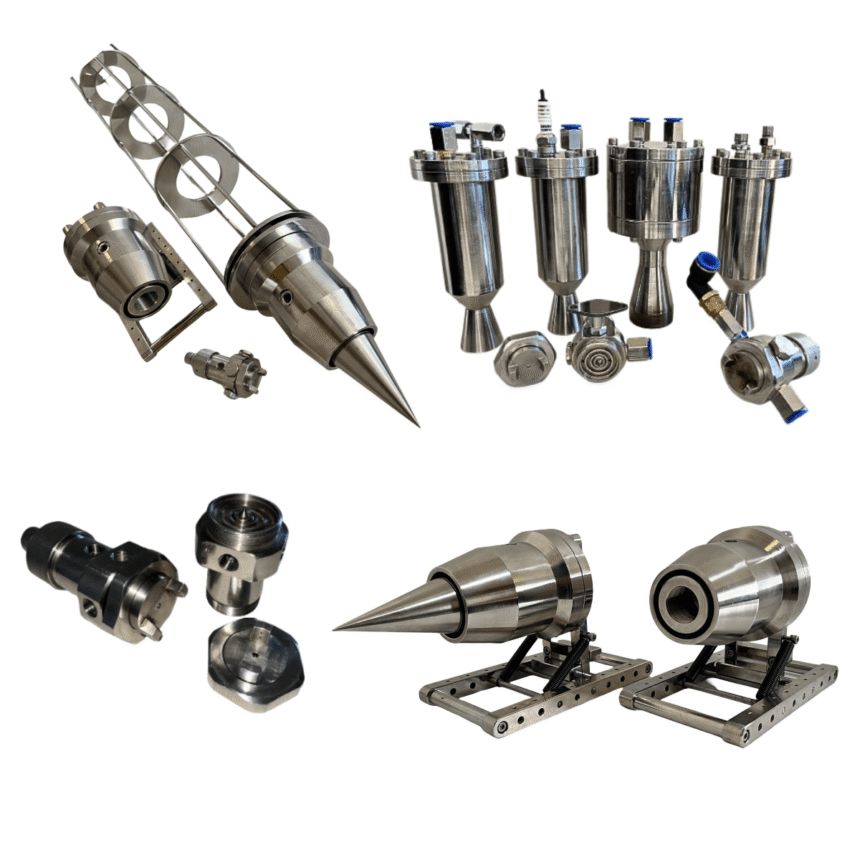
Prime Toolings’ most battle-ready hardware is a compact solid rocket booster designed specifically for Man-Portable Air Defence Systems — the shoulder-launched missiles carried by infantry to take down low-flying aircraft, helicopters, drones and cruise missiles. According to details the company shared, the booster measures just 85 centimetres long and 7.6 centimetres across, yet delivers 7.3 kN of thrust — the kind of instant, violent acceleration a MANPADS interceptor demands, with the reliability the Army, Navy and Air Force would require. The company is already working on the next step up: a 10 kN-class missile motor under its “Project 10 kN” programme, opening the door to more advanced MANPADS variants and tactical interceptors.
Riding the detonation wave
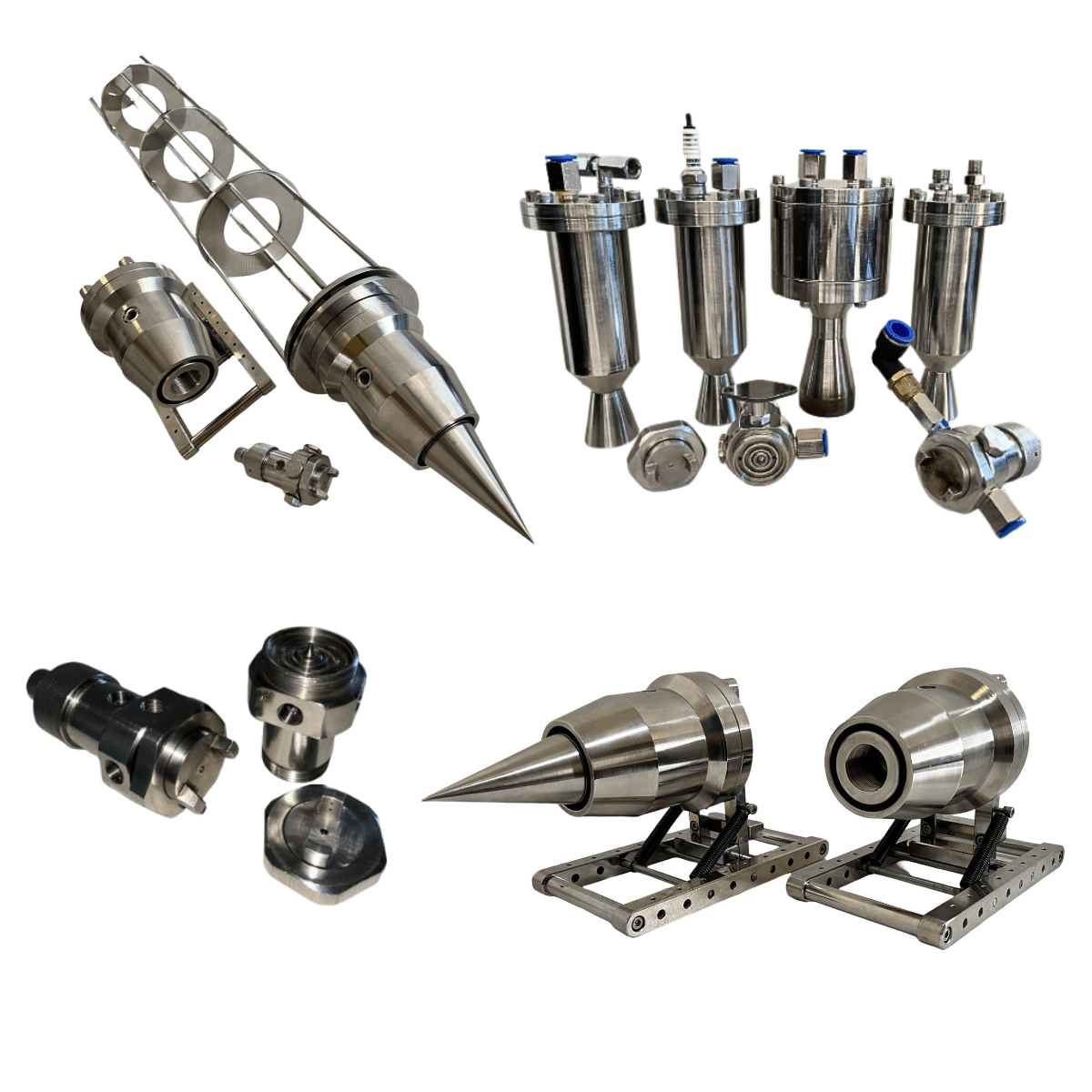
The company’s flagship technology is the rotating detonation engine, or RDE — one of the most exciting frontiers in propulsion worldwide. Conventional rocket and jet engines burn fuel with deflagration, a subsonic process. An RDE instead sustains supersonic detonation waves racing around an annular combustion chamber, a pressure-gain cycle that the company says can deliver up to 25% better fuel efficiency in a compact engine with no moving parts.
Prime Toolings unveiled its 1–2 kN-class RDE prototype in 2025, aimed at powering short-range tactical missiles in the 300–500 km class, and has since scaled the platform to roughly 2.8–3.0 kN, which the company reports at TRL 5. The roadmap spans a family of sizes — roughly 1.3 kN, 2.4 kN and 4.08 kN variants — built with additive manufacturing and advanced materials engineered to survive detonation’s brutal thermal and pressure environment. It is cutting-edge propulsion, designed and fired in Bengaluru.
A full indigenous propulsion stack
What makes Prime Toolings exceptional is the breadth of the stack it is assembling. The company has successfully tested a dual-booster setup for missiles and loitering munitions — twin compact boosters engineered for symmetric thrust — alongside a hybrid engine that packs 986 newtons of thrust into a 15-centimetre body. It has unveiled Agnira, a solid-fuel ramjet artillery round designed to fit standard 155 mm guns and fly Mach 2–3 out to 20–45 km, turning conventional howitzers into long-range precision-strike platforms. And in April 2026, the company test-fired India’s first liquid-fuelled aerospike engine — the altitude-compensating nozzle architecture coveted for reusable launch vehicles — a milestone reported by Karnataka’s IT BT Department.
More Read
Prime Toolings has also proposed mating its RDE to JSR Dynamics’ Khagantak-243 glide bomb — a concept that would turn an unpowered glide weapon into a powered stand-off system — and has announced plans to test its long-range missile engine on the Barak series by February 2026, a programme it says could extend interception ranges well beyond 100 kilometres.
Why this one is worth watching
Missiles get the glory, but engines decide what is possible. Prime Toolings is building, motor by motor, the propulsion muscle India will need for air defence, tactical strike and loitering munitions — solid boosters, detonation engines, ramjets and aerospikes, all designed, machined and tested under one roof in Bengaluru. From press tools to the sharp end of the arsenal, this is Atmanirbhar Bharat with a lit fuse.
Keep reading: 30 Kilos at 16,400 Feet: Inside Bajrang UAV, the Ahmedabad Startup Delivering to India’s Highest Battlefields · Six Lakh and a Hot-Fired Engine: Inside Astrophel Aerospace, the Pune Startup Building India’s Reusable-Rocket Hardware · More Aerospace & Defense stories
Like stories like this? Add Exceptional Technology as a preferred source on Google to see more of our reporting in your search results and Discover feed.