Most industrial robots are built for predictability. They weld the same seam, pick the same part, repeat the same motion ten thousand times — and the moment a component arrives slightly misaligned or a new SKU lands on the line, they stall. In Hyderabad, a young deep-tech company has decided the missing piece is not a better arm, but a hand that can feel.
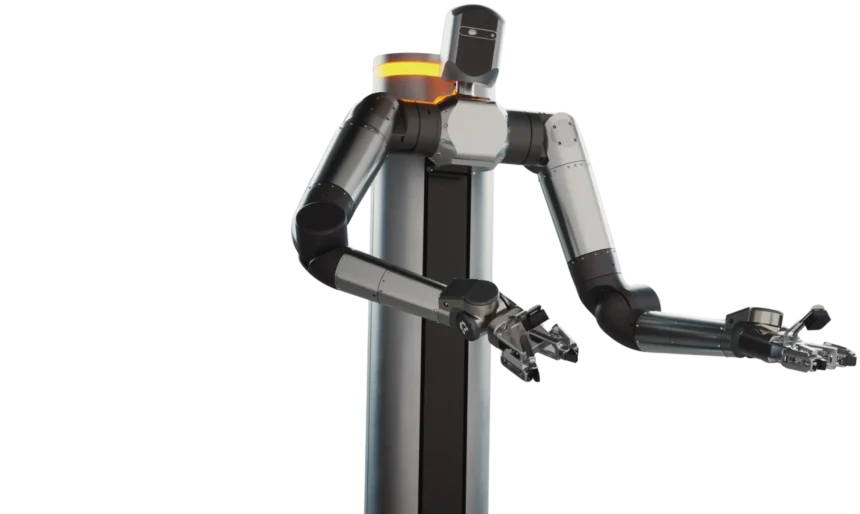
The company is Perceptyne Robots, founded in 2021 by Raviteja Chivukula, Jagga Raju Nadimpalli and Mrutyunjaya Nadiminti, and its flagship is the PR-OMNI, a dual-arm, wheeled semi-humanoid robot built for the dexterous end of factory automation — handling printed circuit boards, driving tiny screws and assembling small components in electronics, semiconductor and automotive manufacturing. Each arm offers seven degrees of freedom, and the platform carries a combined payload of 10 kg with vision, force and tactile sensing feeding every move. A holonomic drive plus a vertical gantry lets it glide sideways through tight manufacturing spaces that legged robots cannot navigate efficiently.
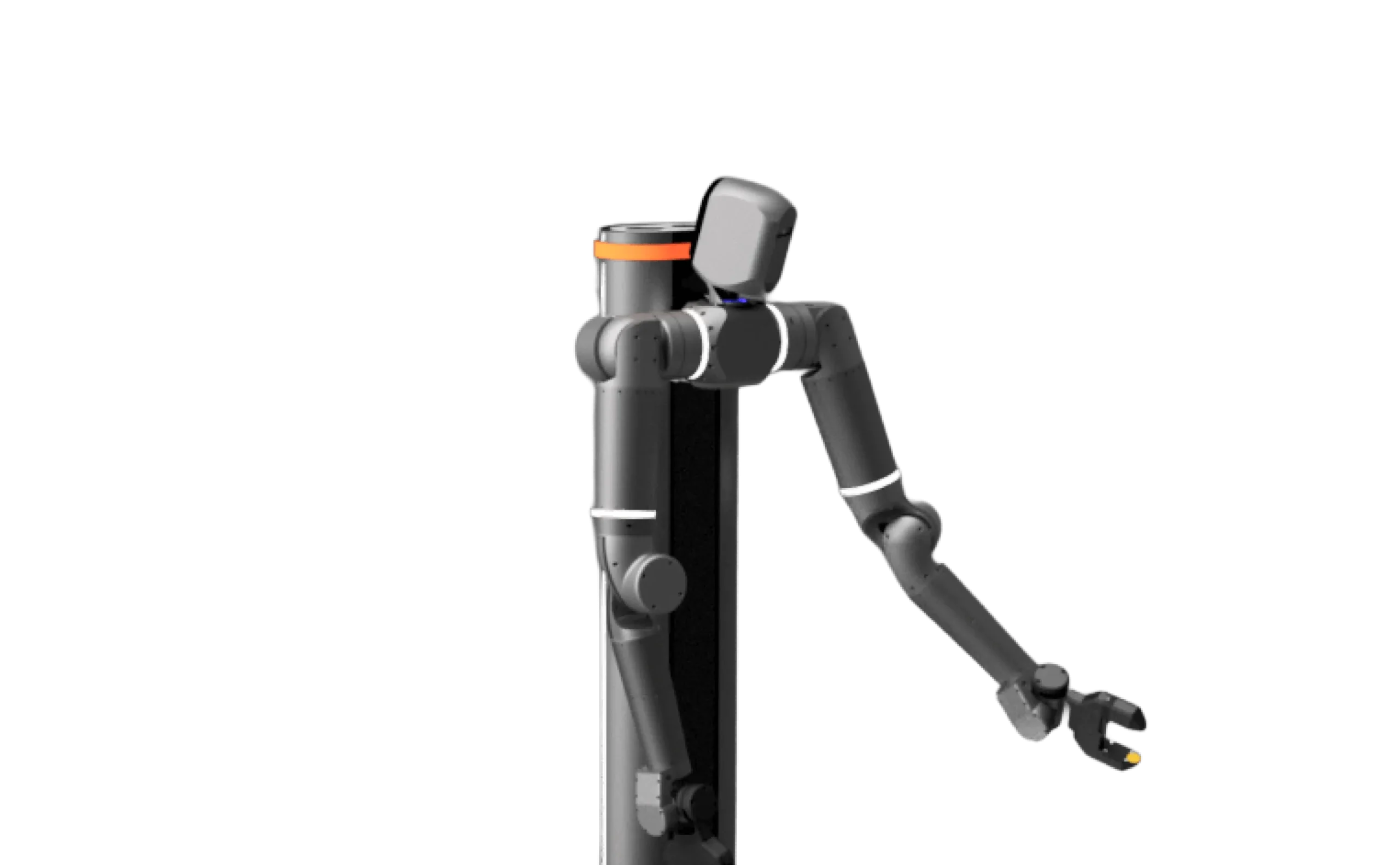
This week brought the company a fresh piece of global recognition. Perceptyne has been shortlisted as a finalist at the Humanoid Robotics Industry Awards 2025 in the “Groundbreaking Technology” category — a shortlist the company says sits alongside global robotics names. The recognition, announced on 15 October, honours the PR-34D humanoid, whose core innovation is integrated force-torque and high-resolution tactile sensing engineered entirely in-house: the company describes 2mm × 2mm tactile resolution across the entire hand, torque sensing at every joint and seven degrees of freedom per arm.
That vertical integration is the heart of the Perceptyne story. Rather than assembling robots from costly off-the-shelf components, the team designs and manufactures its own actuators, drives, gearboxes, controllers and six-axis force-torque sensors from the ground up — retaining control over more than 60% of the bill of materials. The company says this keeps the robots price-competitive against global and Chinese alternatives while letting new hardware be designed, fabricated and tested in hours. On the software side, its PR-PhI physical-intelligence stack trains through teleoperation — a human mirrors the robot’s arm while performing actions like picking a bottle or folding cloth — while AI layers record angles, vision, force and grip changes, learning patterns that gradually become autonomous execution.
The journey began in a two-bedroom flat, with one bedroom doubling as the office, supported by a NIDHI-PRAYAS grant, the Startup India Seed Fund and Hyderabad’s T-Hub and IIIT ecosystem. A $500,000 seed from family and early believers built the first functional prototype, and a $3 million seed round in October 2024 — with Whiteboard Capital, Yali Capital, Endiya Partners and T-Hub among the investors — took total funding past $3.28 million. The company says it is now validating its full technology stack through commercial pilots with Fortune 500 companies in the semiconductor, electronics and automotive sectors, and that its EMS and automotive clients are cutting automation costs by up to 40 percent.
India imported around 4,500 robots in 2022 and nearly 9,000 in 2024, none manufactured locally — a gap the founders cite as the reason they committed, back in 2022, to engineering every critical component themselves. With its product line expanding to the fixed dual-arm PR-DUO, the single-arm PR-UNO and the bipedal PR-SAPIEN, Perceptyne’s bet is that the future of factory automation will not be the fastest robot, but the most dexterous one — built, sensor and all, in India.
More Read

Keep reading: Five Chips Deep: Inside Vervesemi, the Greater Noida Startup Turning India’s Analog Designs Into Silicon · From 5G to 6G: Inside Jio, the Indian Operator Building an Indigenous 6G Stack for the World · More Industrial Automation & Technology stories
Like stories like this? Add Exceptional Technology as a preferred source on Google to see more of our reporting in your search results and Discover feed.