Every electric motor hides an Achilles’ heel: the rare-earth magnets at its core, drawn from a supply chain dominated by a single country. In New Delhi, a deep-tech company has decided to engineer around the problem entirely — building electric-vehicle motors that deliver the torque without depending on rare-earth materials at all.
The company is Tsuyo Manufacturing, founded in 2020 by Vijay Kumar, Tripurari Kumar and Lalit L. Baid, and it has quietly become one of India’s deepest EV-powertrain companies. It designs and manufactures the whole stack in-house: motors, controllers, DC-DC converters, gearboxes, e-axles, vehicle control units and IoT telematics. The company says it has shipped more than 200,000 motors to over 50 OEM partners — including Mahindra, Volvo Eicher, Sonalika, Hyundai, Hero and Greaves — across a range from 0.5 kW three-wheeler motors to 350 kW heavy-commercial drives.
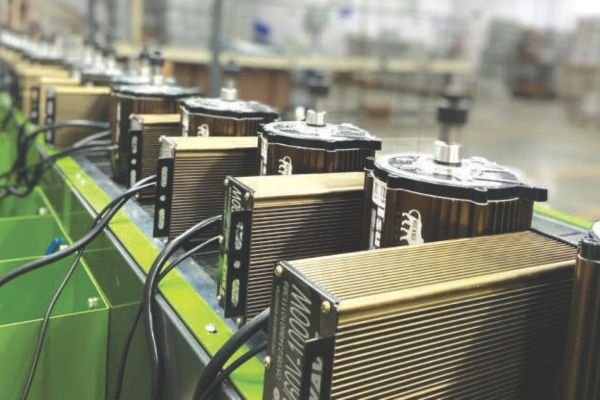
October brought the company’s latest proof point. On 8 October, Tsuyo announced a new annual order worth approximately US$3.2 million from a leading Indian OEM for its next-generation Interior Permanent Magnet (IPM) motor for electric three-wheelers — a 10-year programme covering supply, technical support, service and after-sales. The motor, the company says, is Heavy Rare Earth (HRE)-free, touches up to 93 percent system efficiency with air cooling, and carries an IP65 protection grade.
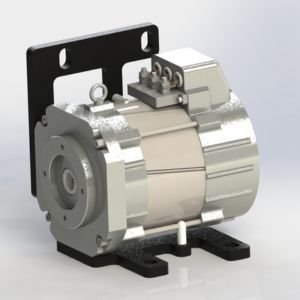
The deeper engineering story is the rare-earth-free core. Tsuyo holds four granted patents with around 25 more filed, including its patented magnet-less synchronous reluctance motor — an architecture designed to sidestep rare-earth supply chains entirely. Working with researchers from VNIT Nagpur, the team has also secured what reports describe as two world-first patents in EV motor technology, alongside hairpin winding the company says delivers up to 20 percent higher motor performance. Its Gen 3.0 IPM motors and controllers, plus what the company calls India’s first AMT system for electric three-wheelers, extend the portfolio to forklifts, tractors, buses, trucks and mining equipment.
The scale behind it keeps growing. The company says it runs two manufacturing facilities in Greater Noida, and has Karnataka government clearance for a &rupee;250 crore EV powertrain plant on a 20-acre site in Hubli-Dharwad, expected to generate over 500 jobs. It was selected among the top 30 Indian startups showcasing at VivaTech 2026 in Paris, has raised US$4.5 million in pre-Series A funding from Avaana Capital, and works with IIT Delhi and VNIT Nagpur on research. Tsuyo’s bet is a simple one: the motor of India’s electric future should be designed — and built — in India.
More Read

Keep reading: &rupee;1.25 Lakh, 260 km, Zero Imports: Inside Avore’s Indigenous Electric Motorcycle · No Magnets, No Problem: Inside Chara Technologies’ Rare-Earth-Free Motor Revolution · More Automotive & Mobility stories
Like stories like this? Add Exceptional Technology as a preferred source on Google to see more of our reporting in your search results and Discover feed.