


The next time your mobile phone holds a call through a power cut, spare a thought for the battery that made it possible. Behind the bars on your screen is a telecom tower that can never sleep, and across much of India those towers stay alive on diesel generators chugging through the night. A Hyderabad company believes the tower’s future is electric — with batteries engineered, manufactured and serviced in India, at gigafactory scale.
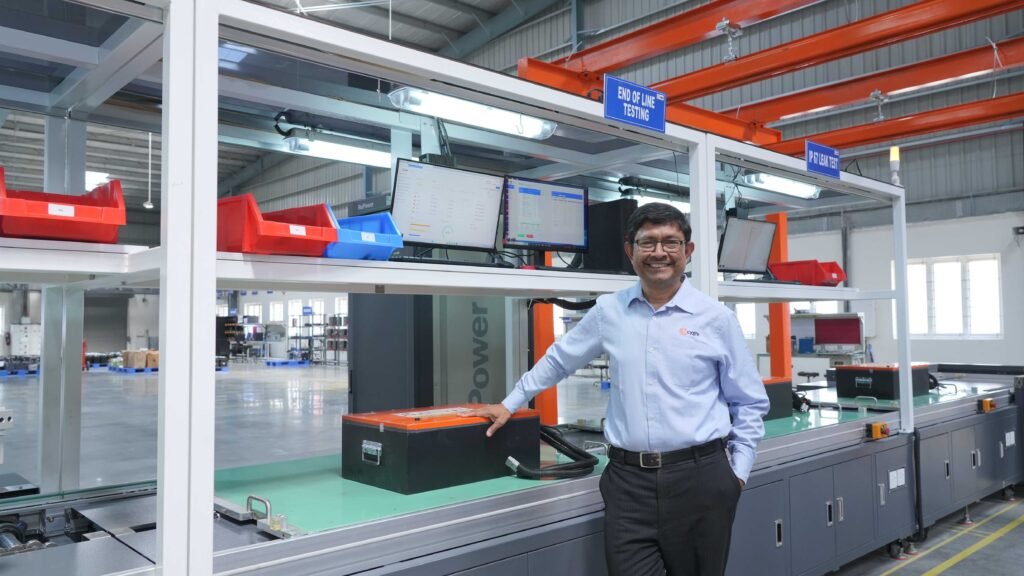
Cygni Energy is an IIT Madras-incubated energy storage company founded in 2014 and led by founder-CEO Venkat Rajaraman. The company was among the first recognised under the Make in India start-up programme, and it builds storage for everything from two-wheeler batteries to grid-scale systems. Its crowning asset is the plant it commissioned in Hyderabad in April 2025: a 4.8 GWh automated battery energy storage system (BESS) gigafactory at the E-Mobility Valley in Maheshwaram, inaugurated by Telangana’s special chief secretary Jayesh Ranjan alongside IIIT-Hyderabad chairman Prof Ashok Jhunjhunwala and iLabs founder Srini Raju. The 1.6-lakh-square-foot facility on a five-acre campus, built at an investment of over ₹100 crore, is one of the largest battery-pack plants of its kind in the country — and, the company says, India’s first LEED-qualified battery facility.
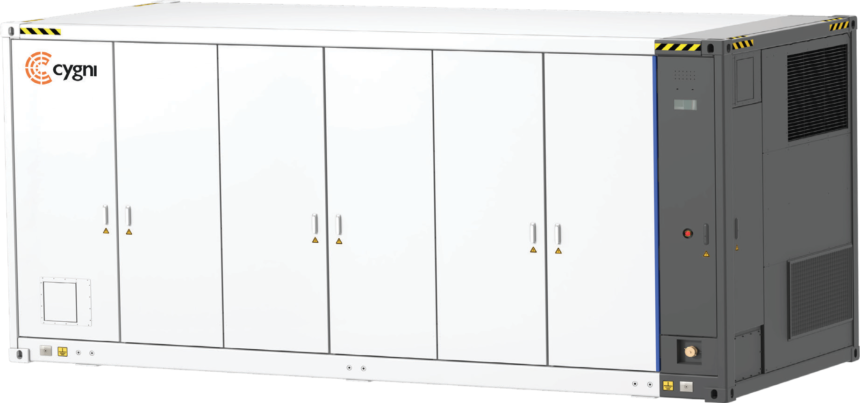
The engineering inside is industrial to the core. The automated assembly line runs on Poka-Yoke error-proofed stations with end-to-end traceability through its manufacturing software, building liquid-cooled 105 kWh modules on 314Ah cells. The flagship Cygni Max packs 5 MWh of storage into a 20-foot container using industry-standard 314Ah LFP cells, while the Cygni Ultra Max fits 6.25 MWh into the same footprint — 25% more energy with a smaller land footprint and lower auxiliary costs. The containers are engineered for high availability in rugged Indian conditions: liquid cooling, low auxiliary consumption during operation, and a calendar life the company puts at up to 25 years, matching the working life of the solar plants they will serve. Safety is certified to a global stack — UL1973, UL9540, UL9540A, UN38.3 and NFPA 855 — with IEC 61850 grid integration.
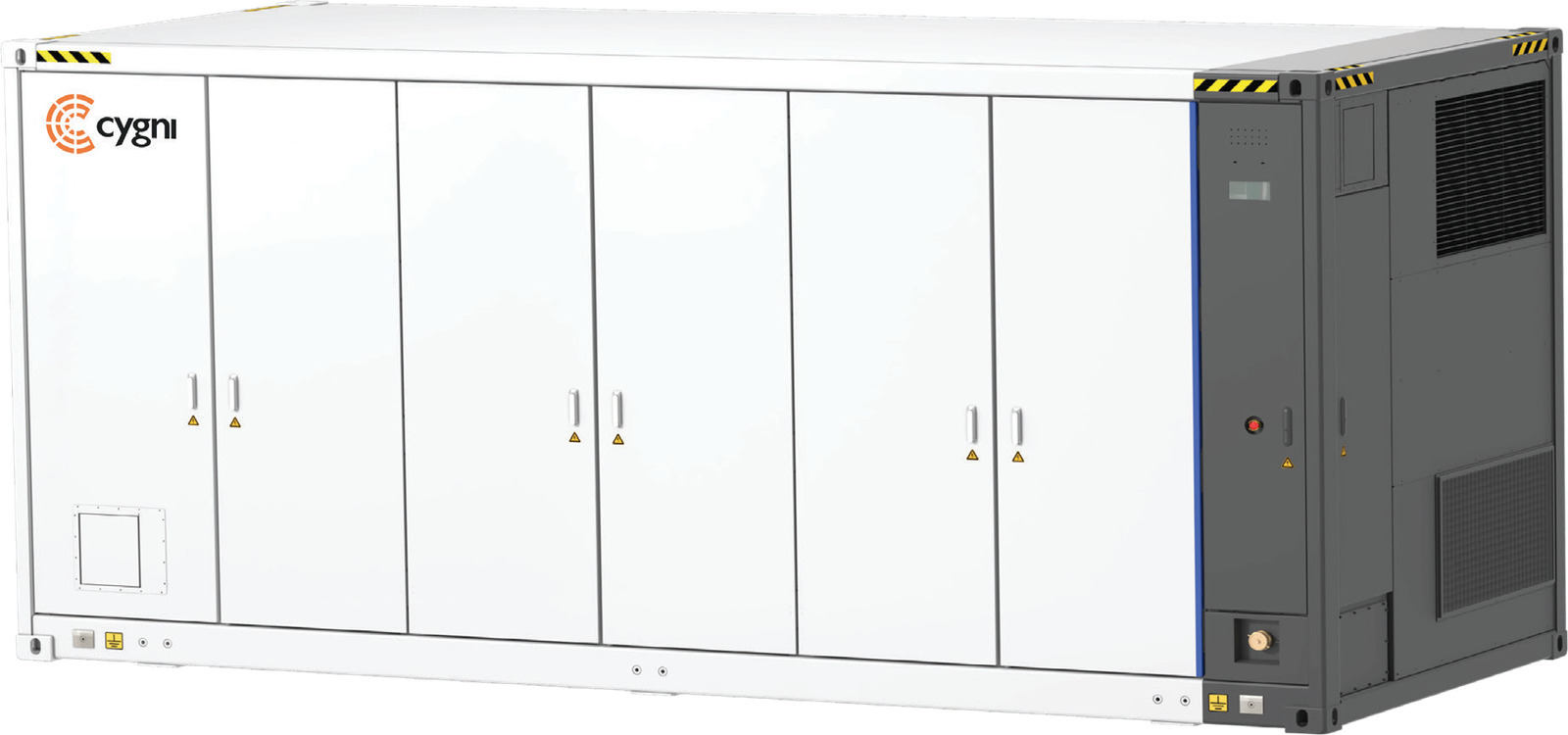
The scale is already real. The company says it has delivered 500 MWh of batteries to the power and energy segment and holds an order pipeline of over 1 GWh from BESS developers and automotive clients. And the factory was built to grow: Phase II will add three automated 2 GWh cell-to-pack lines and a container integration facility on the same campus, taking total capacity to 10.8 GWh by 2027 at an additional ₹150 crore investment. The two-phase programme totals ₹250 crore, and the company says it will create over 1,000 direct and indirect jobs.
Underneath the manufacturing sits a deep research engine. Cygni keeps its IIT Madras roots alive through a research partnership with the Centre for Battery Engineering and Electric Vehicles, where dedicated teams work on battery analytics, safety and battery-management-system software. The company is also investing in next-generation bets — sodium-ion chemistry with technology provider HiNa Battery, cell-to-pack and cell-to-chassis architectures, supercapacitors, machine-learning-driven predictive analytics and digital-twin monitoring of deployed systems.
The freshest chapter opened this month. On 5 October 2026, Cygni signed a memorandum of understanding with Indus Towers — operator of more than 267,000 towers across 22 telecom circles — to explore dedicated BESS manufacturing capacity of up to 1.5 GWh for telecom applications, and to evaluate advanced battery technologies for tower sites. “This initiative goes beyond supplying batteries,” Rajaraman said. “We plan to develop capacity of up to 2 GWh, while building a portfolio that can evolve from today’s 100Ah solutions to higher-capacity 314Ah systems and emerging battery technologies.”
More Read
It is a fitting pairing. Towers must stay powered around the clock, and better batteries mean less downtime, smarter energy management and fewer diesel generators humming through the night. Prof Jhunjhunwala, who chairs the ITEL Foundation at IIT Madras, framed the wider promise: “Cooperation among users, startups, manufacturers and technology institutions can speed up energy storage adoption in India, including for telecom.”
From an IIT Madras incubation cell to a 4.8 GWh gigafactory with a 10.8 GWh horizon, Cygni’s arc is the story of Indian energy storage growing up in public. The next time the grid blinks and your call carries on, there may well be a Cygni battery keeping the conversation alive.
Here’s the company’s own look at the gigafactory’s grand opening:
Keep reading: From Medicine to Megawatts: Inside Macsen Energy, the Udaipur Lab Turning a Pharma Pigment into Sodium-Ion Batteries · The Robots Cleaning 5 Gigawatts of Solar Without a Drop of Water: Inside Taypro, the Indian Company Turning Dust Into Data · More Energy & Power stories
Like stories like this? Add Exceptional Technology as a preferred source on Google to see more of our reporting in your search results and Discover feed.







