Hold a flask of Prussian Blue up to the light in a Udaipur laboratory and it glows an almost unreal blue. For decades, Macsen Labs has made this pigment for a very different purpose — as a pharmaceutical ingredient for treating radioactive contamination. Today, the company’s energy vertical, Macsen Energy, is doing something remarkable with that chemistry: reducing and sodiating the compound into Prussian White, and turning it into the cathode of a sodium-ion battery cell the company says has just sailed past 1,500 charge-discharge cycles in its own labs.
The journey, the company says, began three years ago with a simple question from its chemistry team. While working on Prussian Blue as an active pharmaceutical ingredient, the chemists at Macsen Labs — a family-run specialty chemicals manufacturer founded in Udaipur in 1952 — wondered whether the reduced, sodiated form of the pigment, Prussian White, could work as a battery cathode. They had no electrochemistry lab at the time. So they built a pouch cell by hand in a regular chemistry lab — and when that improvised cell lit up an LED bulb, the team knew it was onto something worth pursuing.
The 1,500-cycle milestone
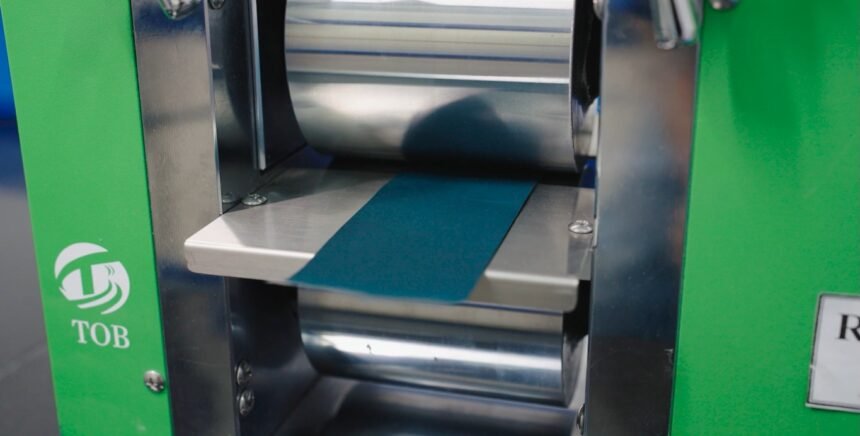
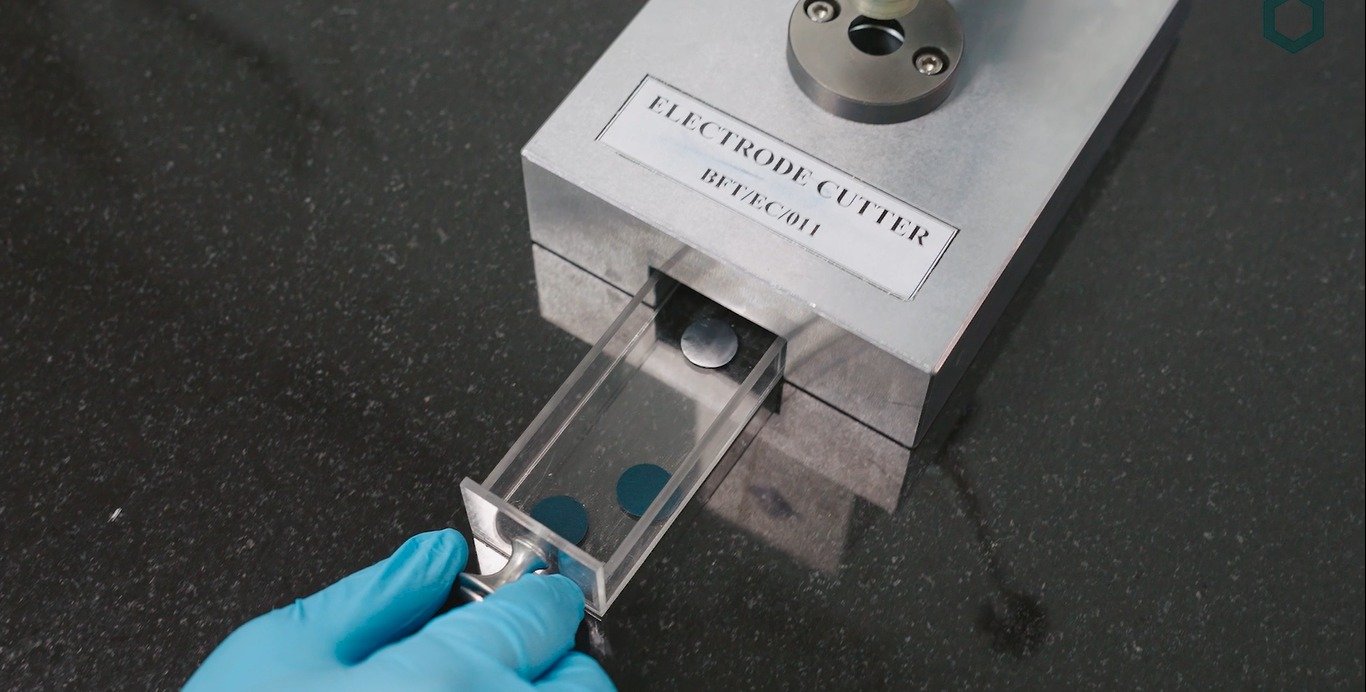
Since then, Macsen Energy has built a fully integrated battery R&D lab in Udaipur — fume hoods and ball mills for synthesis, a vacuum mixer and coating machine for electrodes, a roll press and punching machine for cell-ready formats, an argon-filled glovebox for inert-atmosphere cell assembly, and galvanostatic cyclers and potentiostats for testing. The cell that crossed 1,500 cycles came out of this lab: the company says it retained 90% of its initial capacity after 1,000 cycles, with coulombic efficiency around 99.9% and a specific capacity above 150 mAh/g — performance the company compares to lithium iron phosphate, built instead from abundant sodium and iron.
The engineering is in the synthesis. Prussian White’s open crystal framework is what lets sodium ions shuttle in and out of the cathode reversibly — but the material is famously sensitive to moisture and oxygen during manufacturing, which has held back its commercialisation. Macsen Energy’s answer is a proprietary single-step, single-vessel synthesis under a controlled inert atmosphere, designed to deliver a highly crystalline, fully sodiated, air-stable powder in fewer processing steps — a process the company has filed a patent application for, and already runs at kilogram scale in its pilot chemical synthesis facility.
Why sodium changes the game
The bet on sodium-ion chemistry is easy to see. Sodium is abundant everywhere, and the upstream feedstocks for Prussian White — natural gas, nitrogen, oxygen, caustic soda — are ordinary industrial chemicals, free from the concentrated supply chains of lithium, cobalt and nickel. Sodium-ion cells can use aluminium current collectors instead of copper, sidestepping one of lithium-ion’s costliest raw materials. And the material is compatible with standard lithium-ion cell manufacturing infrastructure, so factories built for lithium can retool for sodium.
The applications the company is aiming at are the ones where long life matters most: grid-scale battery energy storage, solar and household backup, short-range electric vehicles, auto-rickshaws, two-wheelers, city buses and rural microgrids. The company has also begun R&D into hard carbon synthesis for the anode side of its full-cell design, and offers custom Prussian White synthesis, full-cell design consultation and pilot-scale testing to partners.
More Read
The next milestone is scale. Macsen Energy has allocated 10,000 square metres of land for a dedicated facility to take Prussian Blue Analogue cathode production to tonne scale, alongside a sodium-ion cell fabrication pilot line — with construction set to begin in 2027. As CEO Achal Agrawal puts it: “Sodium-ion batteries are India’s opportunity to build a truly indigenous, scalable, and affordable energy storage ecosystem.” From a medicine for radioactive contamination to the cathode chemistry of India’s grid-scale storage — few industrial pivots are as poetic, or as promising.
Keep reading: The Robots Cleaning 5 Gigawatts of Solar Without a Drop of Water: Inside Taypro, the Indian Company Turning Dust Into Data · India’s First Mass-Scale LFP Cell: Inside NASH Energy’s 600 MWh Bengaluru Plant · More Energy & Power stories
Like stories like this? Add Exceptional Technology as a preferred source on Google to see more of our reporting in your search results and Discover feed.