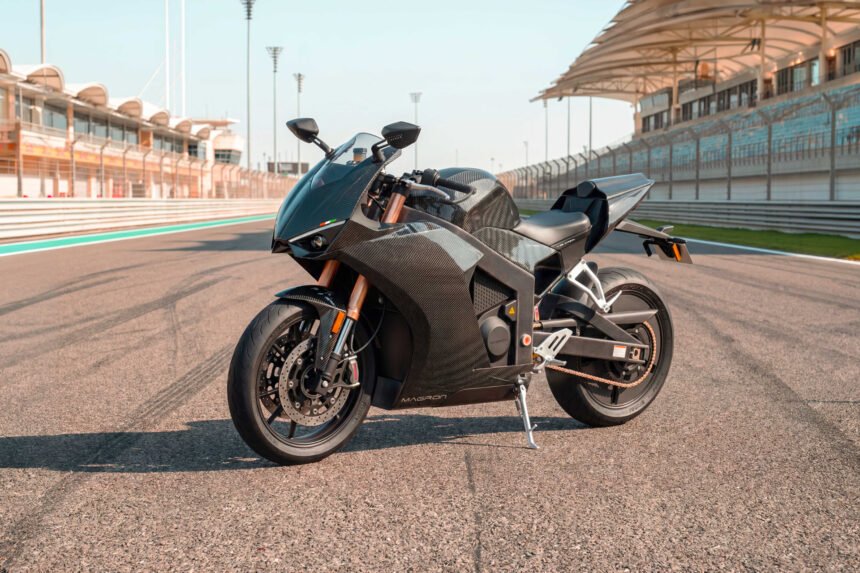
Every electric motorcycle asks its rider to make the same compromise: plug in, wait, and settle for a machine built to a price. In Bengaluru, a small team of motorcycle obsessives is refusing that deal. Magron Novus is building electric motorcycles that charge without a cable, watch the road with rider-assistance sensors, and wear bodywork in forged carbon fibre — the material more often found on supercars than on Indian streets.
Magron Novus Private Limited — the name stands for Mobility Architecture Global Research Organisation — was founded in 2022 by Abiram Menon and Jahnavi Jaiswal. Menon began his career as Bounce’s first engineer and later led electric-vehicle work at Yulu, and the company says its 26-member team averages 15 years of experience across motorcycles and related engineering. Its first complete prototype, built from carbon-fibre composites, came together in just 85 days.
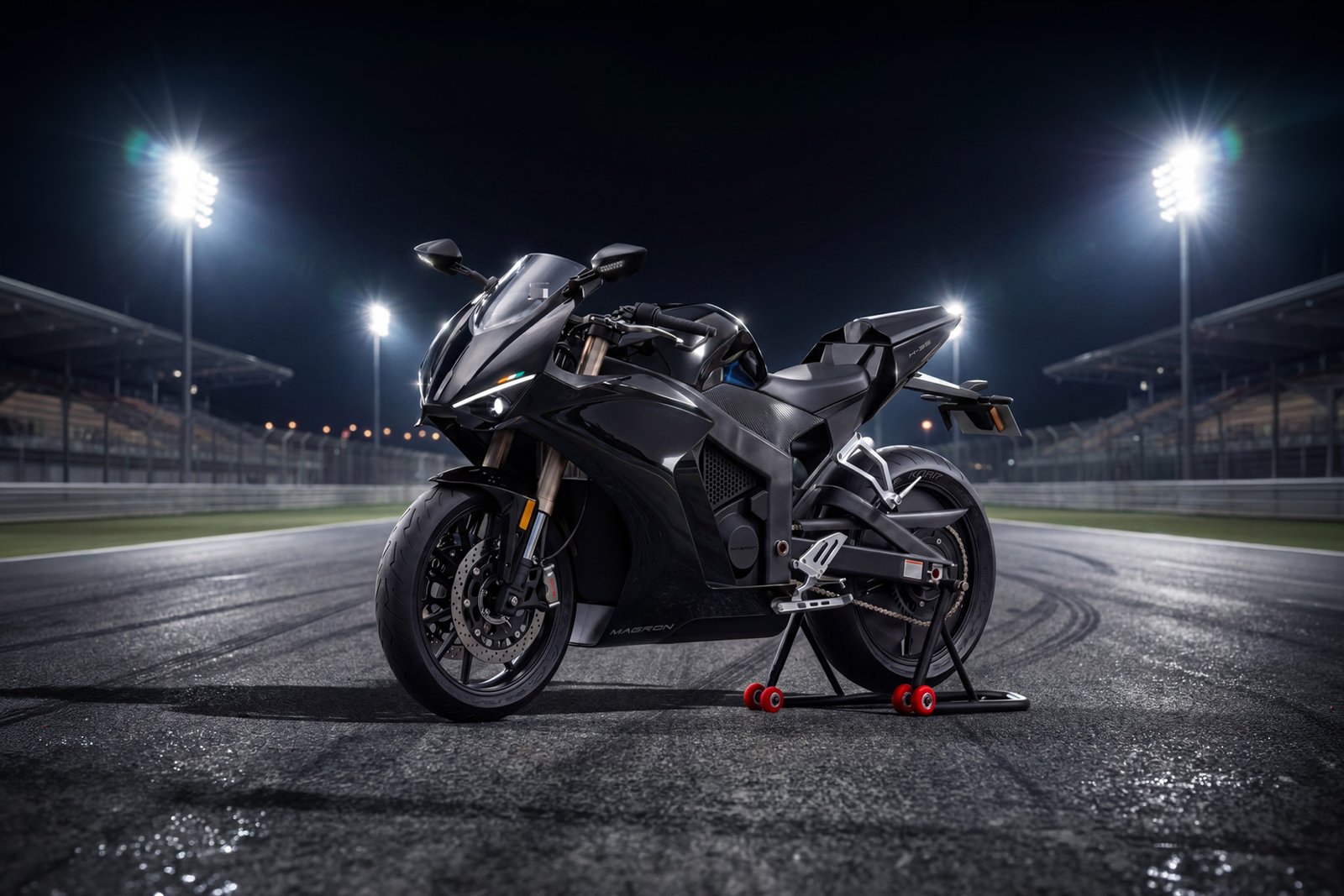
The flagship of the range is the H-35, a fully faired performance machine. The company quotes 35 kW and 90 Nm from a 12.2 kWh battery pack, a claimed real-world range of 175–225 km, a 0–100 km/h sprint of 5.5 seconds and a top speed of 170 km/h. A 6.6 kW fast charger tops the pack up in a listed 1 hour 50 minutes, while a 3.3 kW wireless charger offers a cable-free alternative — a feature the company describes as a first for India. A limited-edition H-35 Carbon, badged ‘The Night Fury’, tops the range.
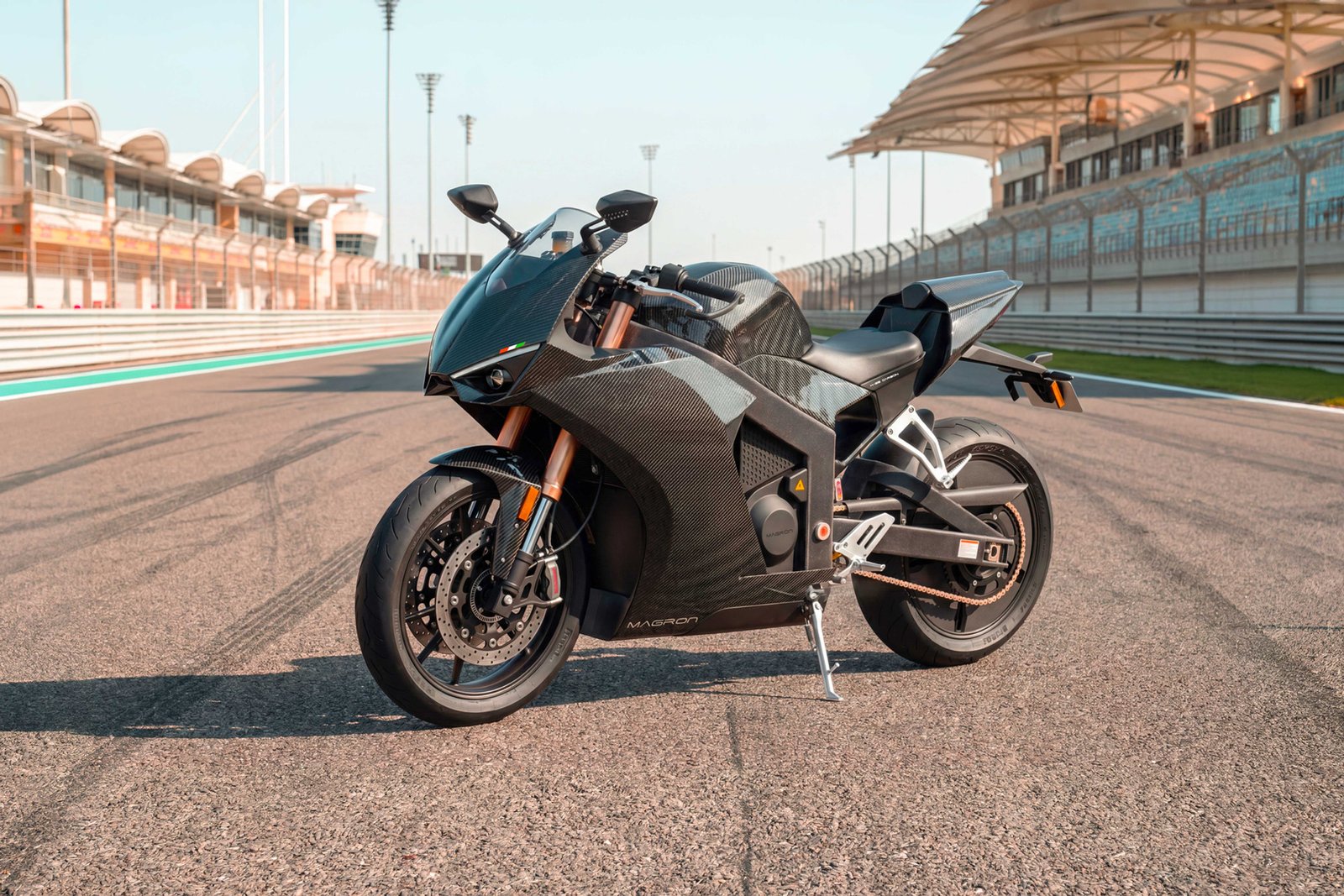
The second machine, the C-20 Talon, brings the same thinking to a wider audience. The company lists 22.5 kW and 60 Nm, a choice of 8 or 10 kWh battery packs, a claimed real-world range of 200–250 km, a 0–100 km/h time of 6.5 seconds and a top speed of 125 km/h — with fast and wireless charging carried over from the H-35. A blacked-out C-20 Stealth is also offered.
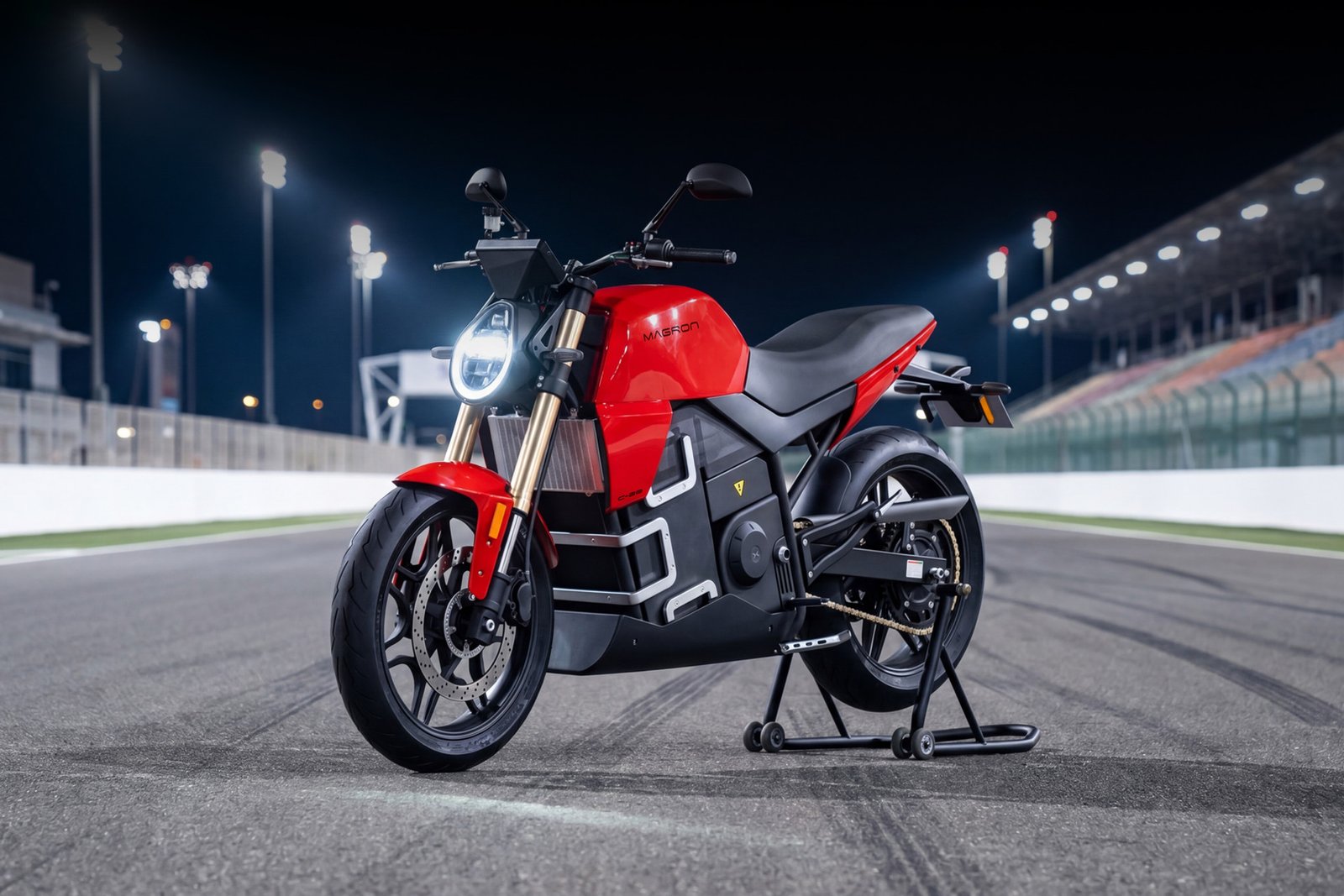
Underneath both machines sits the same homegrown technology stack. Apex Drive is Magron’s liquid-cooled drive system, paired with its Hyper X1 battery architecture, a Drive Resonance System, ActiBoost tech and an Intelligence Core that combines AI with the vehicle control unit. The MIVA intelligent virtual assistant and Novus Connect platform keep rider and machine linked, while rider-assistance features — blind-spot detection, lane-change warning and a 6-axis inertial measurement unit — bring car-style awareness to two wheels.
Magron expects the C-20 and a stripped-down C-10, priced below Rs 2 lakh, to reach the market around the middle of 2027, with the H-35 following a few months later as a limited, hand-built machine expected to cost Rs 3–3.5 lakh, while the C-20 is aimed at Rs 2–2.5 lakh. The machines have already been spotted testing on Bengaluru’s roads and were shown at Auto Expo 2023, and Inc42 named Magron among the manufacturing startups to watch in October 2026. For a country that buys more two-wheelers than anywhere else on Earth, a homegrown electric motorcycle that charges itself wirelessly and thinks as it rides is exactly the kind of leap worth watching.
More Read

Keep reading: Motors Without Magnets: Inside Tsuyo, the Delhi Startup Rewiring India’s EV Powertrains · ₹1.25 Lakh, 260 km, Zero Imports: Inside Avore’s Indigenous Electric Motorcycle · More Automotive & Mobility stories
Like stories like this? Add Exceptional Technology as a preferred source on Google to see more of our reporting in your search results and Discover feed.