Picture a drone flying where the satellite signal has vanished, the radio link keeps dropping in and out, and there is nobody on the ground who can steer it home. Most unmanned systems would be lost in that moment. A Greater Noida startup has spent years building the brain that keeps flying anyway — perception, decisions, coordination and communications, all running on the aircraft itself, with no cloud to phone home to.
That startup is Rebhu Computing, founded in 2021 by Chintan Mishra and Dr Shubham Sharma. Mishra first explored edge computing while studying at IIT Dhanbad, and Sharma brings a PhD in geophysics and seismology from the University of Potsdam. Their conviction, stated plainly on the company’s site, is that the future of robotics and autonomy is edge-first: intelligence small enough to fit in your hand, and smart enough to act on its own.
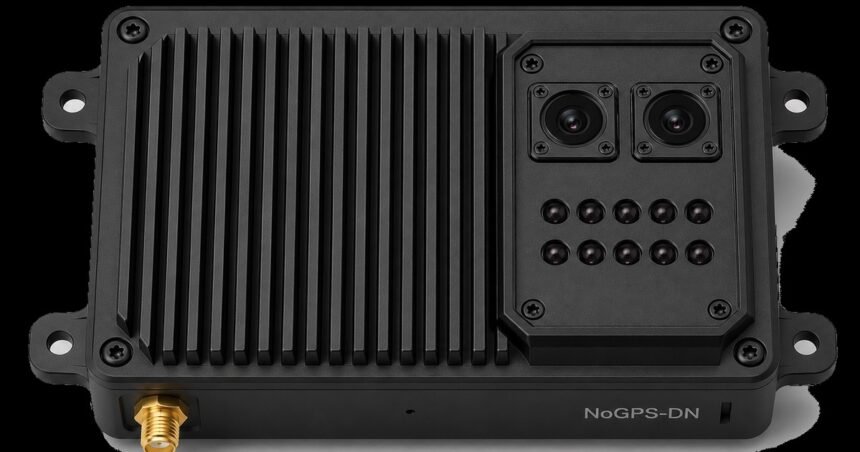
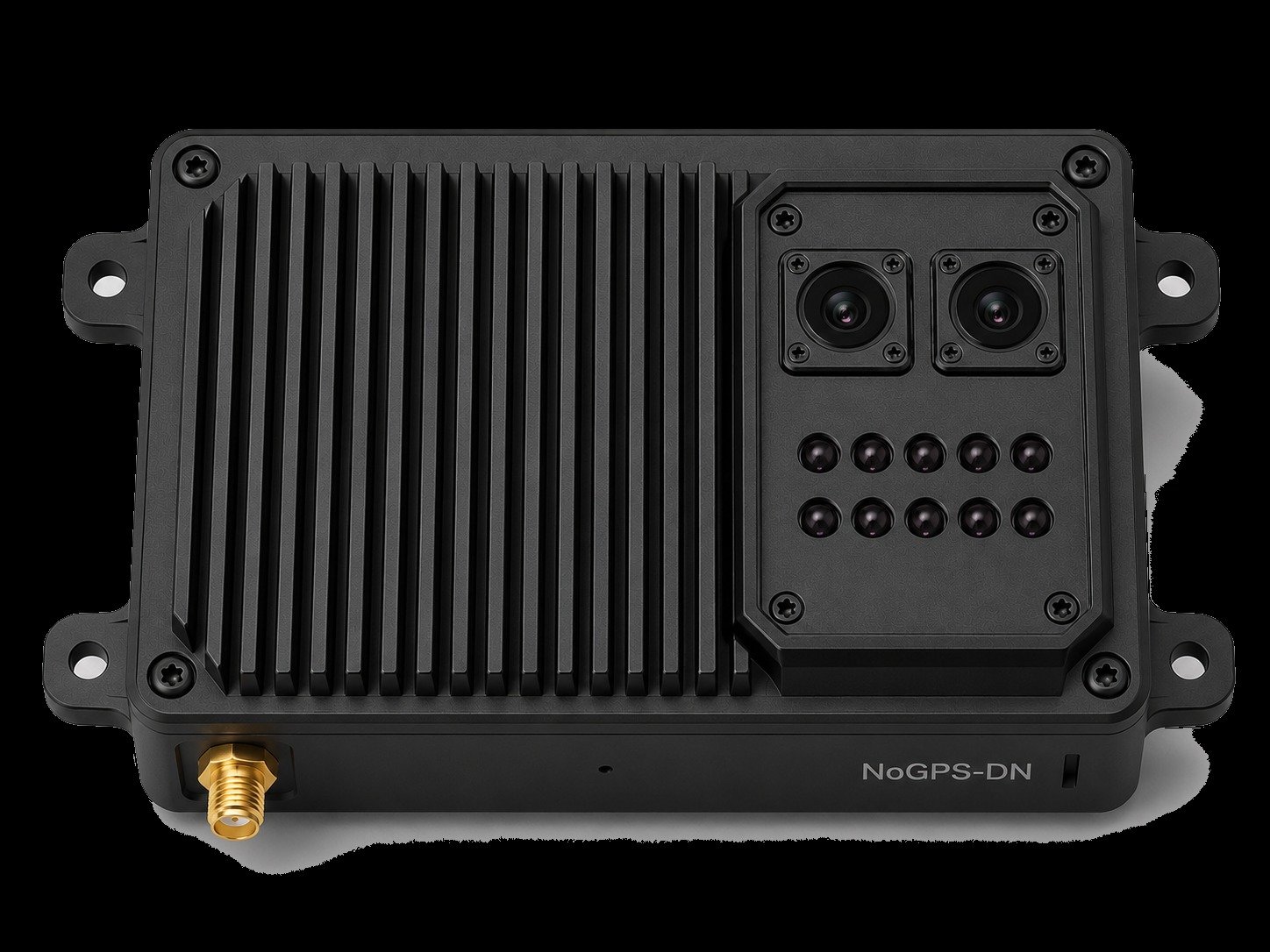 Rebhu Computing’s NoGPS-DN unit, which keeps drones navigating when satellite signals are denied. (Image: Rebhu Computing)
The heart of the offer is what Rebhu calls its mission stack — five products that walk a mission end to end, each shipping independently but compounding when they run together. Dhurandhar is the automatic target recognition core: on-board recognition for electro-optical and infrared sensors that detects, classifies and tracks vehicles, personnel and structures, with the company targeting sub-200 millisecond inference at the edge, entirely without the cloud. Vyomastra is the autonomy core for loitering munitions, covering mission planning, geofencing, abort logic and terminal guidance, with the operator always staying in the loop. VyuhOS is the swarm operating system, allocating tasks across a fleet, resolving conflicts, routing over a mesh and degrading gracefully when nodes are lost. ChakraVyuh is the swarm ground control station — one pane of glass for airspace, targets, link health and the mission queue, built for a commander running a whole formation, not a single aircraft.
Underneath the software sits hardware built for the same contested world. Rebhu Radio CY-2 is a MIMO mesh radio carrying video, telemetry, serial data and IP tunnels between aircraft, munitions and the ground station — frequency-agile and hardened for the field. NoGPS VILS is the company’s visual-inertial localisation system, field-validated for continuous drone navigation through healthy, degraded and denied satellite conditions, in day and day-plus-night variants. And AutonomySi is the edge compute board the software targets: a Texas Instruments TDA4VM-based module with USB-C, gigabit ethernet, GPIO and camera inputs, packing vision, machine-learning inference and safety-critical control onto one low-power board.
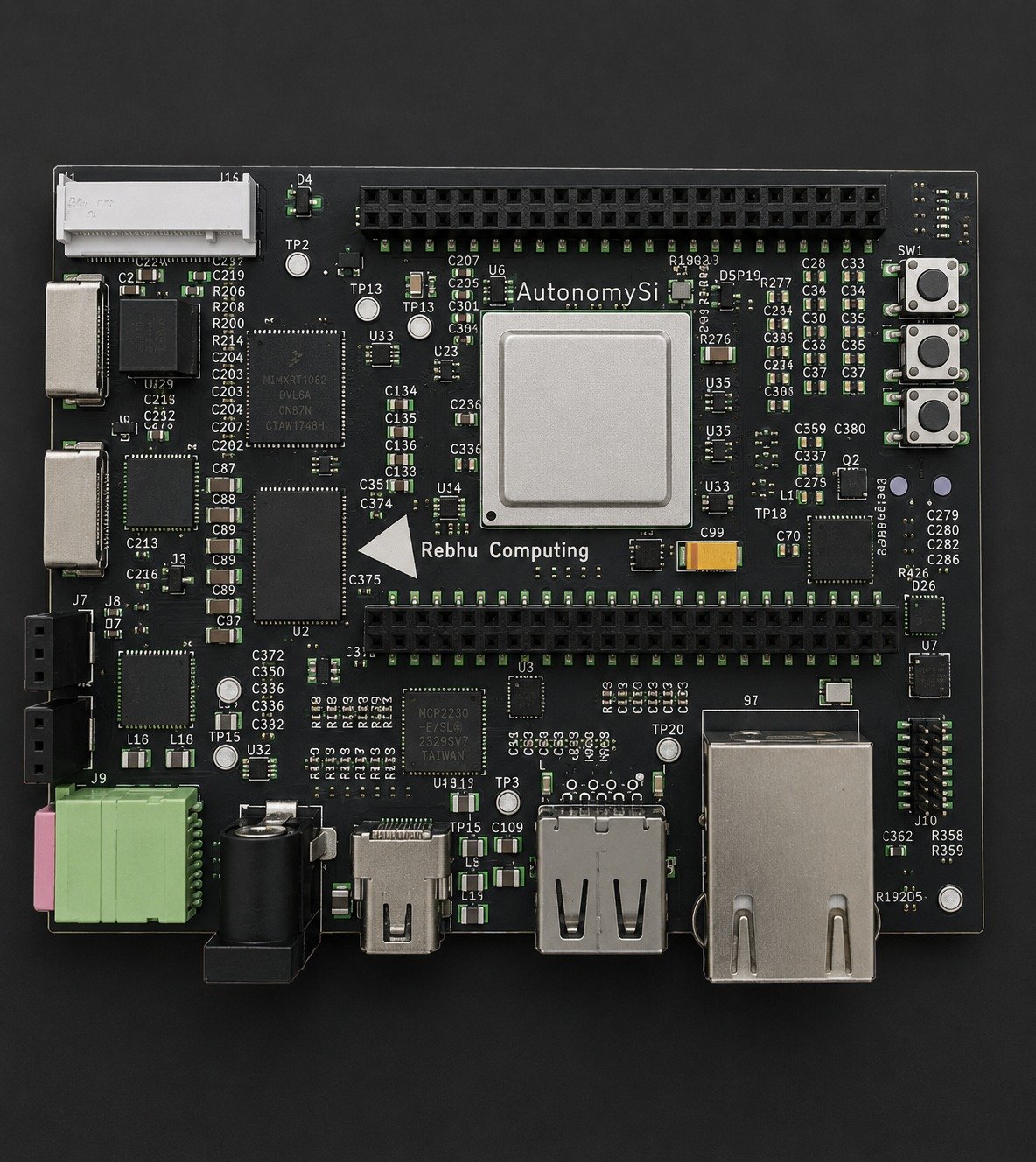 AutonomySi, Rebhu Computing’s edge compute board for autonomy workloads. (Image: Rebhu Computing)
More Read

What makes the stack different is how little it asks of the outside world. Rebhu’s visual navigation toolkit, VNTK, builds a three-dimensional understanding of surroundings from multiple camera feeds, estimating depth and mapping environments — an approach the company presents as a reliable, low-cost alternative to LiDAR and radar. Its perception models, the company says, deliver their performance with just 35 neural-network layers where others need 1,000 or 2,000 — a design choice that keeps processing fast, light and efficient enough to run entirely on board.
The stack is already working inside India’s defence ecosystem. The company says its subsystems are in field service through prime contractors, with Tier-2 deliveries across India’s defence ecosystem since 2022, and it names the Indian Army’s land-systems and unmanned-platform programmes, along with the BEL, HAL and DRDO ecosystem, among the programmes its technology serves. Beyond defence, the same autonomy has been tested in autonomous farming vehicles and in warehouse robots that follow human workers, avoid collisions and find optimal paths — the same brain, on a different chassis.
Rebhu’s commercial story has grown the same way its technology has: by demonstration. Its first client, Bullwork Mobility, came on board after live demonstrations of performance, and by 2025 more than 22 companies had tested its systems, with six repeat paying clients including Karman Drones and Bravecore. The full solution — chipset and software suite together — is priced from Rs 2 lakh to Rs 8 lakh depending on the level of autonomy required, and the company was backed early by the Startup India Seed Fund Scheme as it built its team at its Greater Noida research base, with testing and production at TIDES, IIT Roorkee.
The mission classes tell the story of where this goes next: loitering munitions, UAV swarms and ground robotics, all running the same perception, the same coordination, the same link. One stack, not five vendors — built in India, for India’s mission profile, for the day the links go dark.
Keep reading: From Orbit to Runway: Inside Inbound Aerospace, the Chennai Startup Building India’s Reusable Spaceplane · The Eye That Never Blinks: Inside GB Texcoat’s Made-in-India Tactical Aerostat · More Aerospace & Defense stories
Like stories like this? Add Exceptional Technology as a preferred source on Google to see more of our reporting in your search results and Discover feed.