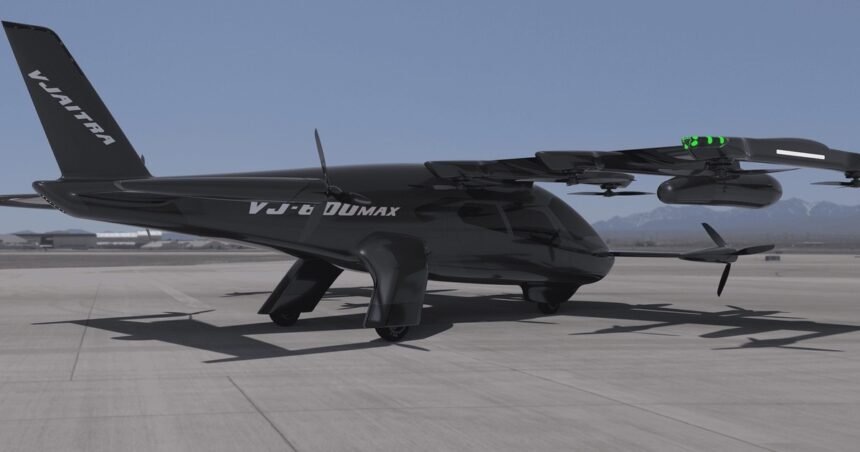
Seven minutes from Gurugram to Delhi. No runway, no traffic jam, no exhaust — just a quiet aircraft lifting straight off a vertiport and settling over the capital minutes later. That is the journey Vjaitra Air Mobility is building toward, with an air taxi that swaps batteries for hydrogen on the longer routes and promises to turn some of India’s most punishing commutes into short, clean hops through the sky.
Vjaitra Air Mobility, based in Noida and operating under Darsh Dronobotics Systems Pvt Ltd, was founded in 2023 by Ratandeep Tripathi, who spent more than 24 years in military aviation before turning to urban air mobility. The company says its aircraft are engineered for the day everything goes wrong, not just the perfect flight — designed from the first sketch around certification, degraded conditions and unprepared landing spots, the realities of operating across India rather than over a pristine test range. Its research and development sits at IIT Delhi’s Sonipat campus, and the company says it is incubated and supported by IIT Delhi and IIM Lucknow, alongside backing from Startup India and a prototype grant from the Uttar Pradesh government’s StartinUP programme.
The company’s city machine is the VJ-220, a battery-electric aircraft the company says carries one pilot and four passengers for around 220 km of zero-emission flight. It is the aircraft Vjaitra has in mind for airport feeders and intercity hops: the company says it can connect Delhi’s IGI Airport with the upcoming Jewar International Airport in 18 minutes, and Bengaluru with Mysuru in 22 minutes, with passenger services targeted for 2028 in high-traffic markets like Mumbai and Bengaluru.
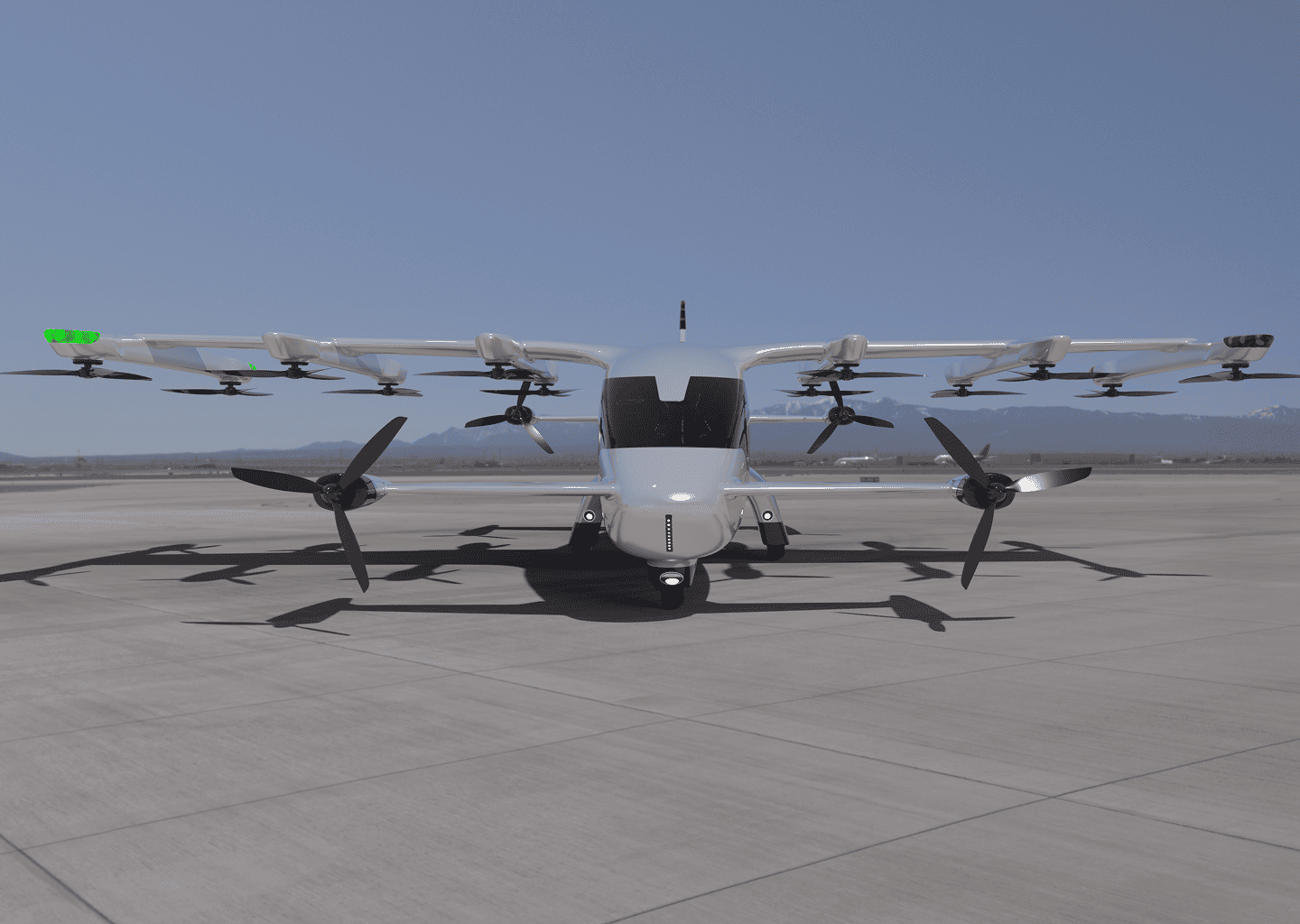
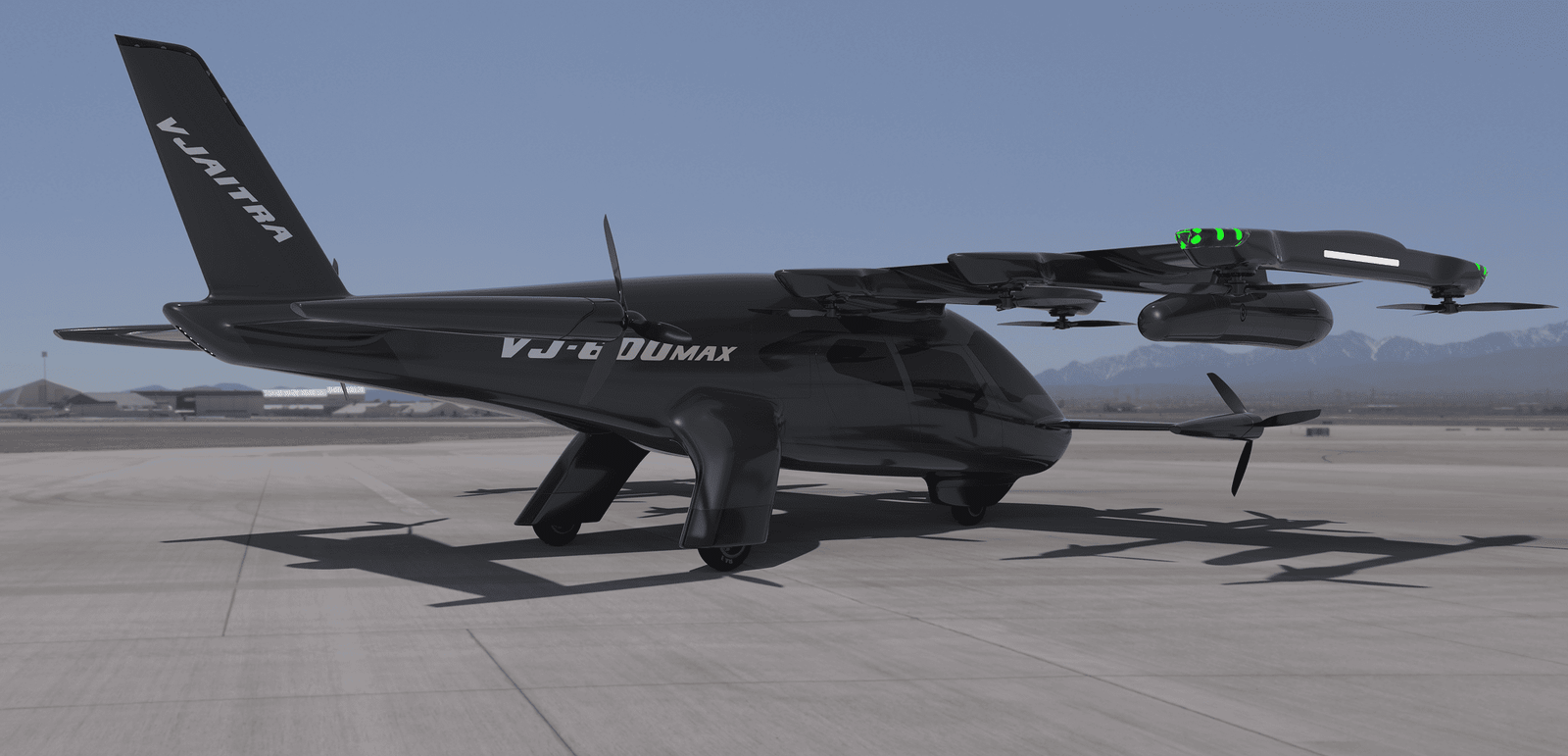
The flagship is the VJ-600Max, which the company calls India’s first patented hydrogen-powered eVTOL. The company says it holds two Indian patents covering its full VTOL architecture and design, and that the hydrogen fuel-cell aircraft flies up to 600 km — enough, the company says, for Gurugram to Delhi in 7 minutes, Mumbai to Ahmedabad in 1.7 hours, and Chennai to Hyderabad in 2 hours. The company says the aircraft carries one pilot and four passengers, features a full-aircraft parachute system and multi-redundant systems, and pairs AI and unmanned technologies with whisper-quiet acoustics. Where other programmes hedged with hybrid engines, the company says it made a deliberate choice: hydrogen-only propulsion for the long-range aircraft, because going back toward fossil-fuel hybrids would break the zero-emission promise the aircraft is built on.
The order book, the company says, already exceeds $312 million in letters of intent — including 25 aircraft for SkyBound Airways of Bengaluru and five aircraft for Mewar Helicopters of Udaipur. Around the aircraft, the company is assembling the ecosystem a new kind of aviation needs: a strategic collaboration with Jio-bp on electric and hydrogen air-taxi charging infrastructure, prototyping support from T-Works, the Government of Telangana’s prototyping centre, a place in NASSCOM’s DeepTech LaunchPad, membership of the CII eVTOL UAM Task Force, and a partnership with the Advanced Air Mobility Institute of the USA. The company also says it is developing India’s first Experience Centre for Sustainable Urban Air Mobility, for live demonstrations, simulations and pilot training.
Beyond the city pairs, Vjaitra’s pitch is about the India that roads still don’t reach well: last-mile connectivity for towns without four-lane highways, medical evacuation, and uncrewed cargo variants for high-altitude defence logistics in places like Ladakh and Siachen. The company says its modular platform scales from the five-seat air taxi to 20-seat regional models, and it has opened a second base in Dubai’s DIFC to serve markets in Europe and the Gulf while India builds out its green hydrogen production. For a country whose green hydrogen mission is laying down electrolyser capacity, storage and distribution, Vjaitra is positioning itself as one of the first aviation applications ready to consume it — an aircraft built for the fuel ecosystem that is coming, not retrofitted to it years later.
More Read

Keep reading: Thin Air, Jet Speed: Inside Invente, the Indian Startup Proving Its Drones Over Leh · Built for the Day the Links Go Dark: Inside Rebhu Computing, the Startup Giving India’s Unmanned Systems Their Own Brain · More Aerospace & Defense stories
Like stories like this? Add Exceptional Technology as a preferred source on Google to see more of our reporting in your search results and Discover feed.