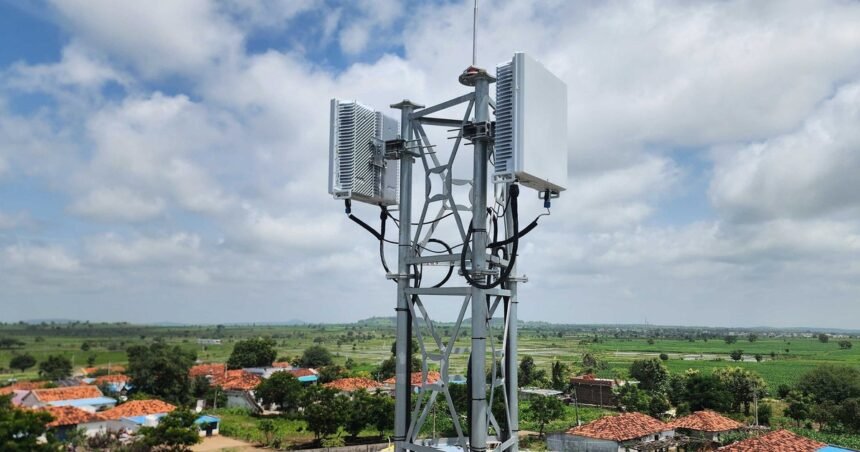
Every phone call, video stream and sensor reading in India rides on radio equipment — and almost none of that equipment is designed here. WiSig Networks, an IIT Hyderabad-incubated startup, is changing that equation from the ground up: it builds the radios, the baseband software, the device stack and even the cellular IoT silicon for a 5G network, entirely engineered in India — and the research behind it is already finding its way into the global 6G standard.
WiSig Networks was founded in 2016 by Professor Kiran Kuchi and his research group at IIT Hyderabad, and the company says it remains incubated at the institute. Its pitch is unusually complete for a telecom startup: rather than one component, the company says it designs and validates the whole chain as a single system — Open RAN radio and baseband, an end-to-end 3GPP Release 15/16 device stack, and its own cellular IoT silicon — so the parts work together instead of merely interoperating. The company puts the system at technology readiness level 8/9, a complete system qualified through test and demonstration and running live.
The most visible proof is in the countryside. The company says its radios run multiple live outdoor sites across India carrying traffic daily, delivering fixed wireless broadband to places fibre was never going to reach. Its platform has completed two and a half years of qualification testing with C-DOT at sites in Ambala, Delhi and Hyderabad, is certified by the Telecommunication Engineering Centre, and works with Telangana’s T-Fiber grid, where fibre reaches the site and a WiSig base station covers the last mile to the household.
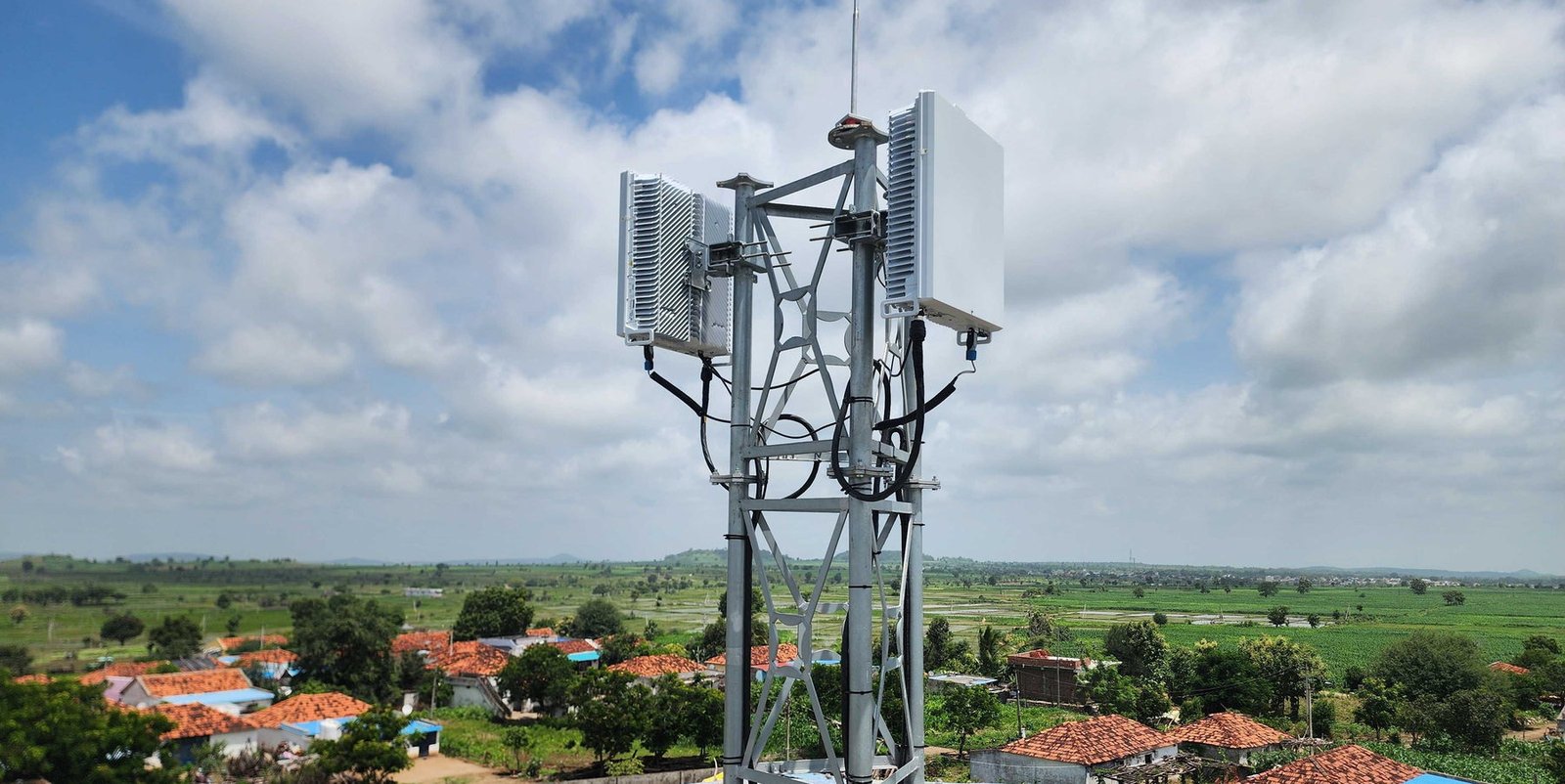
WiSig’s Navabeam radio units on a tower over a village. (Image: WiSig)
But the deeper story is in the standards rooms where the future of wireless is written. Work that began as research at IIT Hyderabad in 2014 — the π/2-BPSK uplink waveform, a low peak-to-average modulation that lets a device transmit closer to its amplifier’s limit — is now a mainstream 5G feature, carried into the specification by a consortium including Qualcomm, Apple, Ericsson, Nokia, Samsung, MediaTek, DOCOMO, AT&T, Reliance Jio and Thales. The company’s NB-IoT coverage-extension techniques were likewise carried into the standard and then into its own NB-IoT silicon.
More Read

Now the company is doing it again for 6G. At 3GPP’s TSG RAN #108 meeting in Prague in June 2025, the consortium proposed extending the π/2-BPSK uplink waveform for the uplink-heavy services 6G is expected to carry, from high-definition video to on-device AI inference — and WiSig’s OTFDM waveform and structural MIMO antenna architecture were advanced within the newly approved 6G study item. OTFDM packs reference signal and data inside a single symbol, cutting reference overhead from a fixed 28.6 per cent to between 4.9 and 13.5 per cent; combined with structural MIMO panels that cover a full 360 degrees from a single installation, the company cites published analysis putting combined spectral efficiency at up to 116 bits per second per hertz, against 21 for 5G. And the platform is designed to reach the new 6G release by software upgrade rather than by replacing hardware.
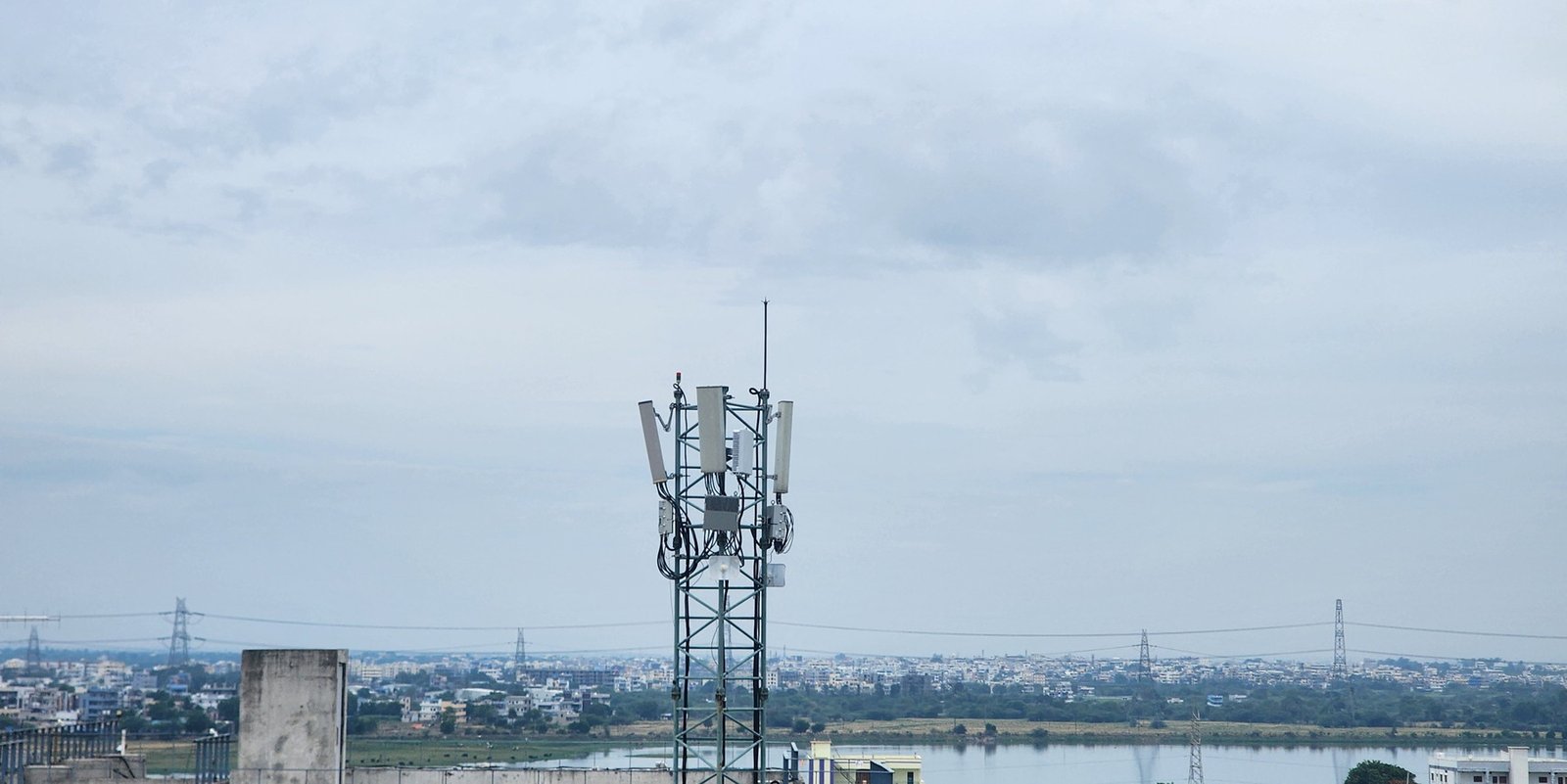
A WiSig rural deployment site. (Image: WiSig)
A waveform argued for in a standards meeting still has to be shown working, and WiSig says it has done that too. In May 2025, with Sharp Semiconductor Innovation and IIT Hyderabad, the company ran beyond-5G and 6G field trials on the IIT Hyderabad campus, pitting Sharp’s ASUKA software-defined-radio system-on-chip against its Open RAN base stations and user equipment — with connectivity and performance comparable to commercial 5G silicon, across fixed wireless access, mission-critical push-to-talk, vehicle-to-everything and satellite-capable NB-IoT metering.
The work came to national attention this week at the Emerging Science, Technology and Innovation Conclave (ESTIC) 2026 in New Delhi, where the company showcased its indigenous 5G and emerging 6G innovations to Prime Minister Narendra Modi. Among the demonstrations was Koala Tag, a compact device the company says connects through mobile towers and satellites, letting users in remote areas send messages, share locations and seek emergency help through existing phones — technology aimed at fishermen far offshore and defence personnel in border regions. The company also demonstrated operational indigenous 5G networks for rural India, bringing high-speed connectivity to households, gram panchayats, anganwadis and schools in underserved villages. The Prime Minister, the company says, asked about the 6G work at IIT Hyderabad and WiSig, and the team briefed him on OTFDM.
Behind the company stands a broad Indian ecosystem: backing from the Department of Telecommunications, MeitY and the Department of Science and Technology, a place in India’s telecom standards body TSDSI, and an alliance with C-DOT and VVDN Technologies to create indigenous 5G Open RAN products and intellectual property. Its production radios have been demonstrated at Mobile World Congress in Barcelona.
For a country that has long imported the equipment its networks run on, WiSig’s arc runs the other way: research born in a Hyderabad lab, carried into the world’s 5G standard, running live on village towers today — and already shaping the 6G standard the rest of the world will build to tomorrow.
Keep reading: Speak to India in India’s Own Languages: Inside CoRover’s BharatGPT, the Homegrown AI Joining the Government’s AIKosh Platform · No Human Should Ever Climb Down There Again: Inside Project SHUDH, the Hyderabad Robots Taking Over India’s Sewers · More Industrial Automation & Technology stories
Like stories like this? Add Exceptional Technology as a preferred source on Google to see more of our reporting in your search results and Discover feed.