Picture an architect describing a building out loud — a four-bedroom home, light pouring into the living room, a quiet corner for reading — and watching the whole design take shape on screen: walls, floors, staircases, plumbing and wiring, all coordinated in a single three-dimensional model. That is the everyday magic Gurugram-based Tagbin is building with BRIXX, its AI platform for architecture, engineering and construction. Instead of months of drawings passed back and forth between specialists, Tagbin says, a team can describe what it wants in plain language and get a coordinated design back in days.
BRIXX, launched by Tagbin in August 2026, turns natural-language prompts into architectural designs, CAD drawings, building information modelling (BIM) models, cost estimates and project plans. The company says the platform can also produce IFC models, renders, bills of quantities (BOQs), detailed project reports (DPRs) and implementation plans — the full paperwork trail of a construction project, generated from one brief rather than assembled by hand across a dozen tools.
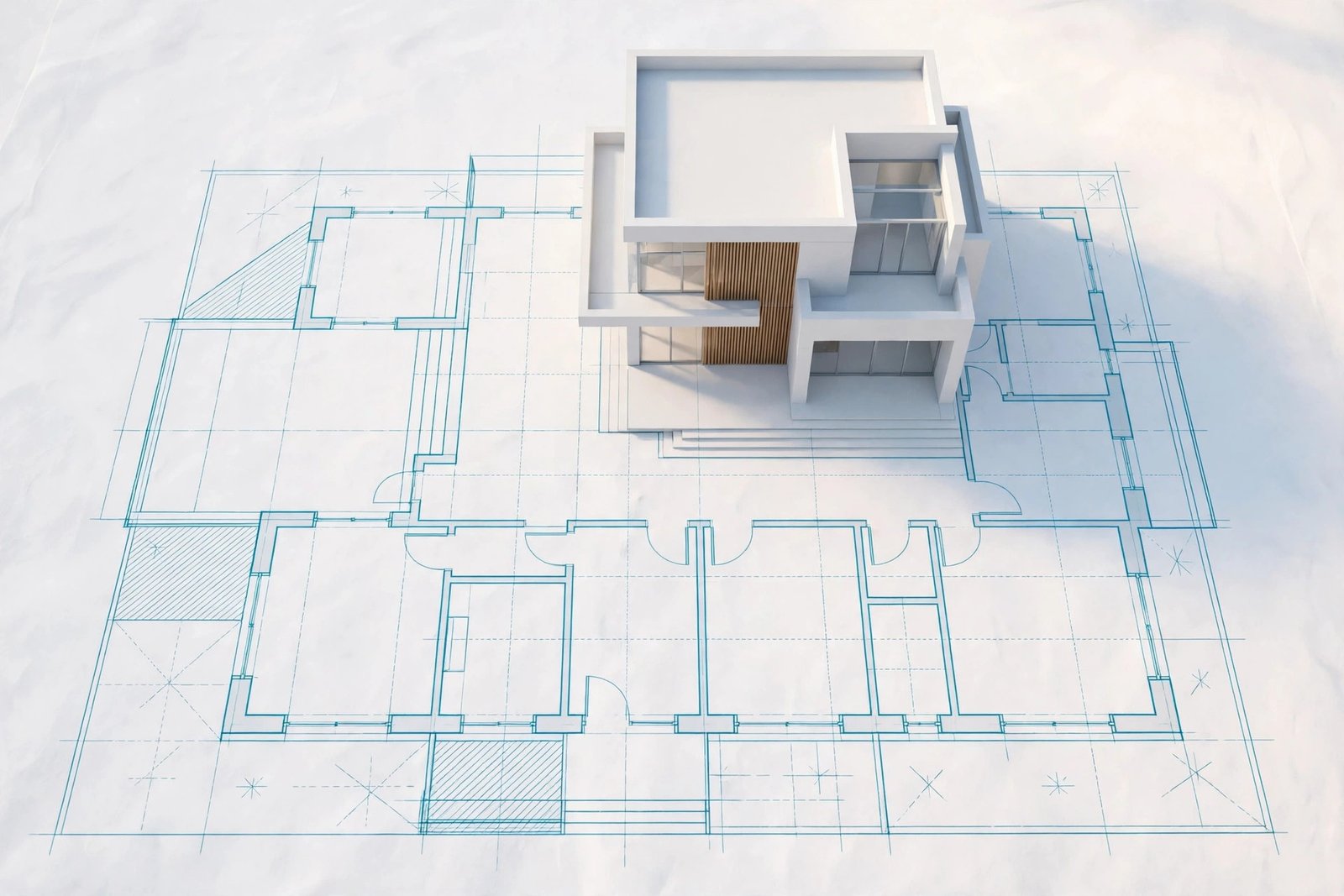
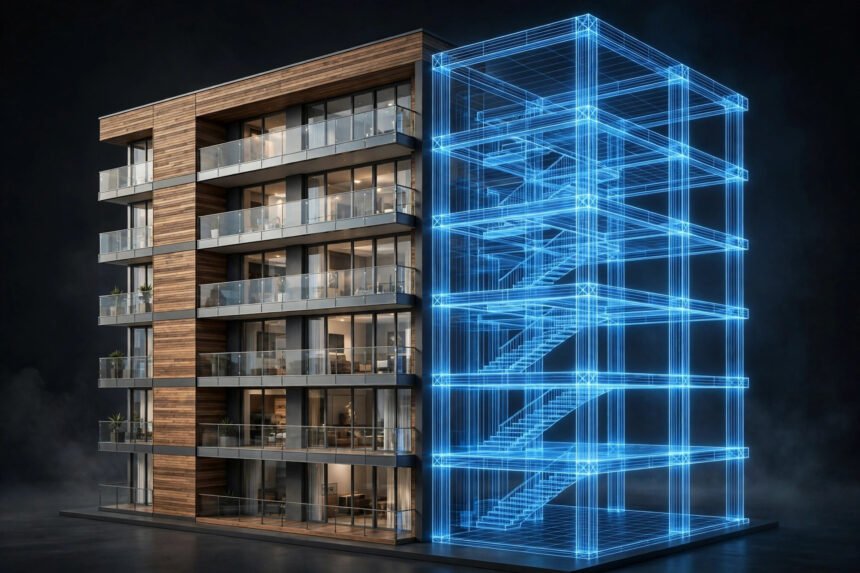
A 3D building model rising from its blueprint — the kind of coordinated design BRIXX generates from a plain-language brief. (AI-generated illustration.)
Describe it, and watch it take shape
The heart of BRIXX is a simple idea: the language model only needs to understand what the user wants. Tagbin’s founder and chief executive Saurav Bhaik told YourStory that the actual modelling is done by a combination of AI and mathematical algorithms — the words become intent, and the mathematics becomes a building. A user can describe a project in plain language, or upload an image as a reference, and BRIXX generates a three-dimensional BIM model complete with structural elements, foundations and excavation plans.
It does not stop at the shell. The platform folds in mechanical, electrical and plumbing systems, applies the building regulations that matter for the project, estimates costs and draws up a construction schedule. And the design stays conversational: at a demonstration at TechSparks 2026, Tagbin’s co-founder and chief technology officer Ankit Sinha showed how a follow-up prompt could add a tower connected by a skybridge, with the model updating around it. The demonstration ended with a bill of quantities estimating the showcased project at approximately Rs 95 crore.
More Read

From a government report to a design engine
BRIXX grew out of serious, unglamorous work. It traces its origins to an AI-powered detailed project report project Tagbin developed for the Ministry of Development of North Eastern Region under the IndiaAI Mission. In March 2026, the company says, it secured the work order to build an AI framework for creating and analysing DPRs — automating validation and compliance checks, mapping costs against government benchmarks, and generating bills of quantities and cost abstracts.
The design-generation layer came next, turning that rigorous reporting engine into a creative one. Tagbin has also trained the system around state-specific building rules, and the company says it is in discussions with some state governments about using the technology to assist with building-plan and occupancy-certificate approvals. The longer roadmap runs further down the construction lifecycle: design and BIM generation, cost estimation, regulatory compliance, DPR preparation, construction monitoring, and comparing work on the ground with the sanctioned design — a digital thread from the approved drawing to the finished building.
Why this matters for India’s building boom
India builds at a scale few countries match, and the cost of getting the planning wrong is enormous. YourStory notes that the 1,847 central-sector infrastructure projects monitored by the government in June 2026 carried a combined revised cost of Rs 40.54 lakh crore, against an original estimate of Rs 35.61 lakh crore. Much of that gap opens at the planning stage, when designs live in two-dimensional drawings that make it hard to spot conflicts and price them accurately before work begins.
BIM changes that equation by giving every discipline one coordinated digital model of a building and its systems, so architects and engineers can resolve clashes before construction starts. BRIXX’s bet is that natural language can put that power in far more hands: engineers and architects who can describe a building should not have to build its model line by line. Bhaik puts the shift vividly — planning that happens in three to four months, the company says, can now be done in days.
Built by a team that has done this before
Tagbin itself is no overnight startup. Founded in 2013 by IIT Roorkee graduates Saurav Bhaik, Ankit Sinha and Abhishek Negi, the Gurugram company has spent more than a decade building experiential technology and AI platforms for governments and enterprises, including large-format digital installations and interactive museums. Tagbin says it recorded annual revenue of Rs 160 crore and has been profitable for seven consecutive years as of March 2026, and it raised $10 million in December 2025.
BRIXX is initially aimed at large enterprises and institutional customers, with forward-deployed engineers and architects working alongside customers as they adopt the platform, and the company says it eventually plans to make it directly available to engineers and architects. It is a confident, Indian answer to one of construction’s oldest frustrations: the building in your head should not take months to reach the drawing board. With BRIXX, Tagbin is making sure it takes days — and that every pipe, wire and rupee is accounted for along the way.
Keep reading: Teach Your Old Machines New Tricks: Inside Tensrai, the Hyderabad Startup Making Factory Machines Drive Themselves · Every Part, Checked at Line Speed: Inside Jidoka Technologies, the Chennai Company Teaching Factory Lines to See · More Industrial Automation & Technology stories
Like stories like this? Add Exceptional Technology as a preferred source on Google to see more of our reporting in your search results and Discover feed.