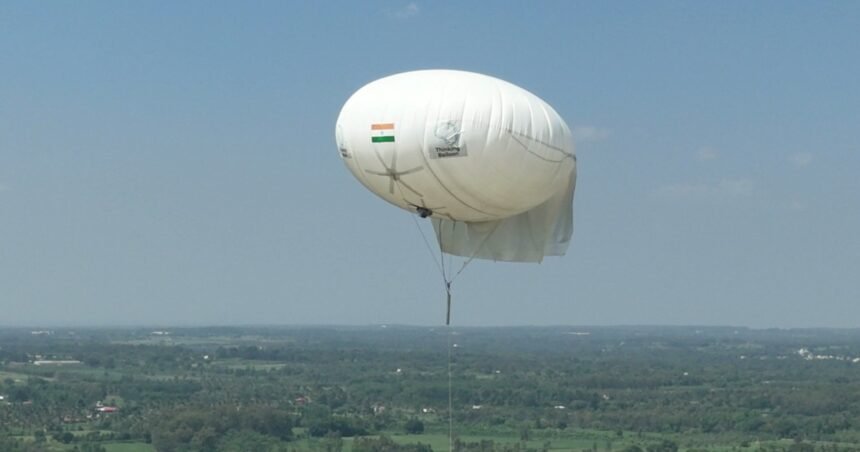
Image credit: Thinking Balloon official photograph of its autonomous aerostat demonstrator in flight.
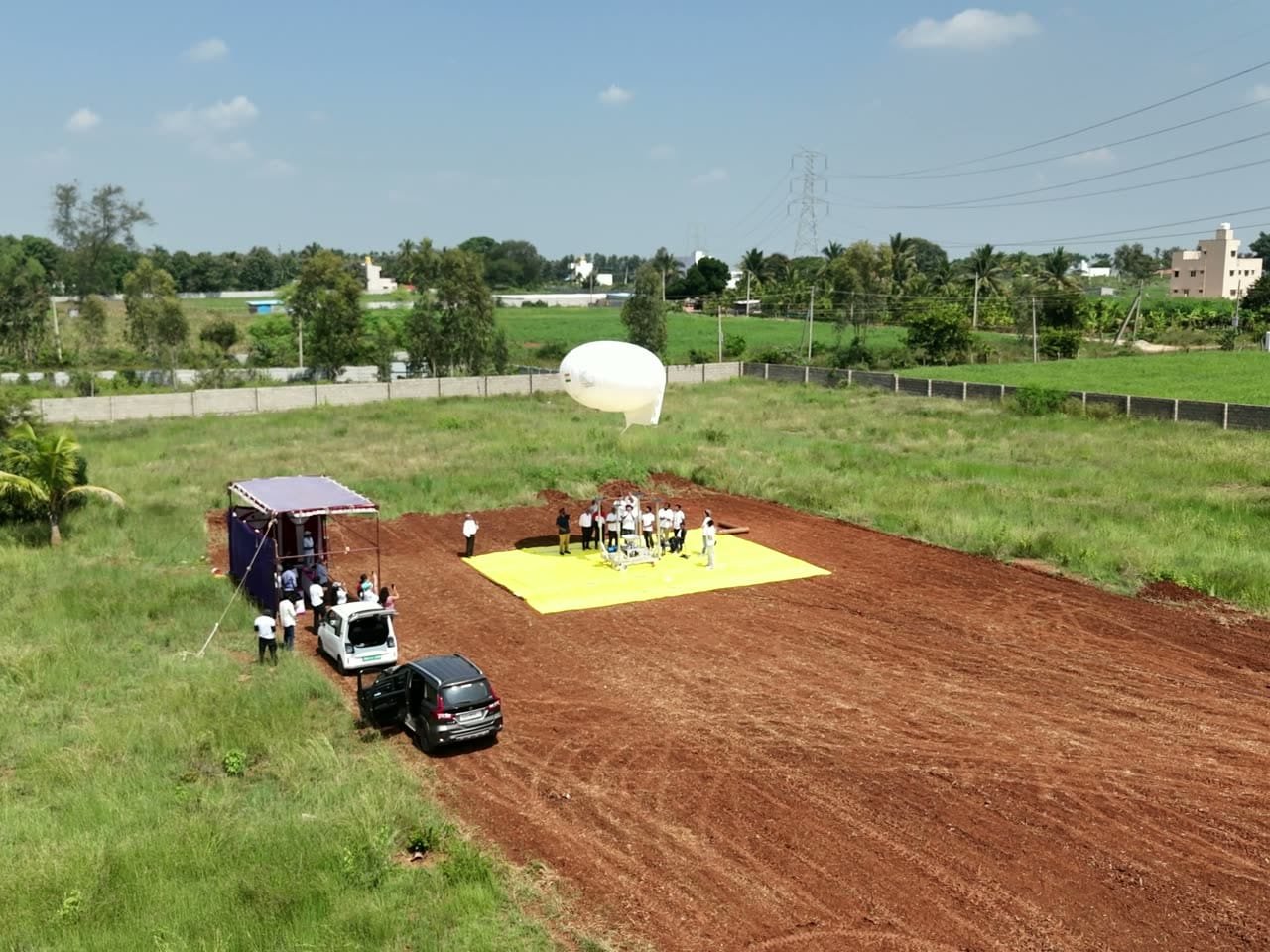
On 5 November 2026, at a test site near Nelamangala outside Bengaluru, a balloon climbed into the sky with no one at the controls. It rose, held its position, came back down on its own, and refilled its lifting gas on its own too. Thinking Balloon, a deep-tech startup incubated at the Foundation for Science Innovation and Development (FSID) at IISc, calls it India’s first autonomous tethered balloon — and it flew in public, in front of the people who have supported the team.
Why a balloon beats a drone at staying up
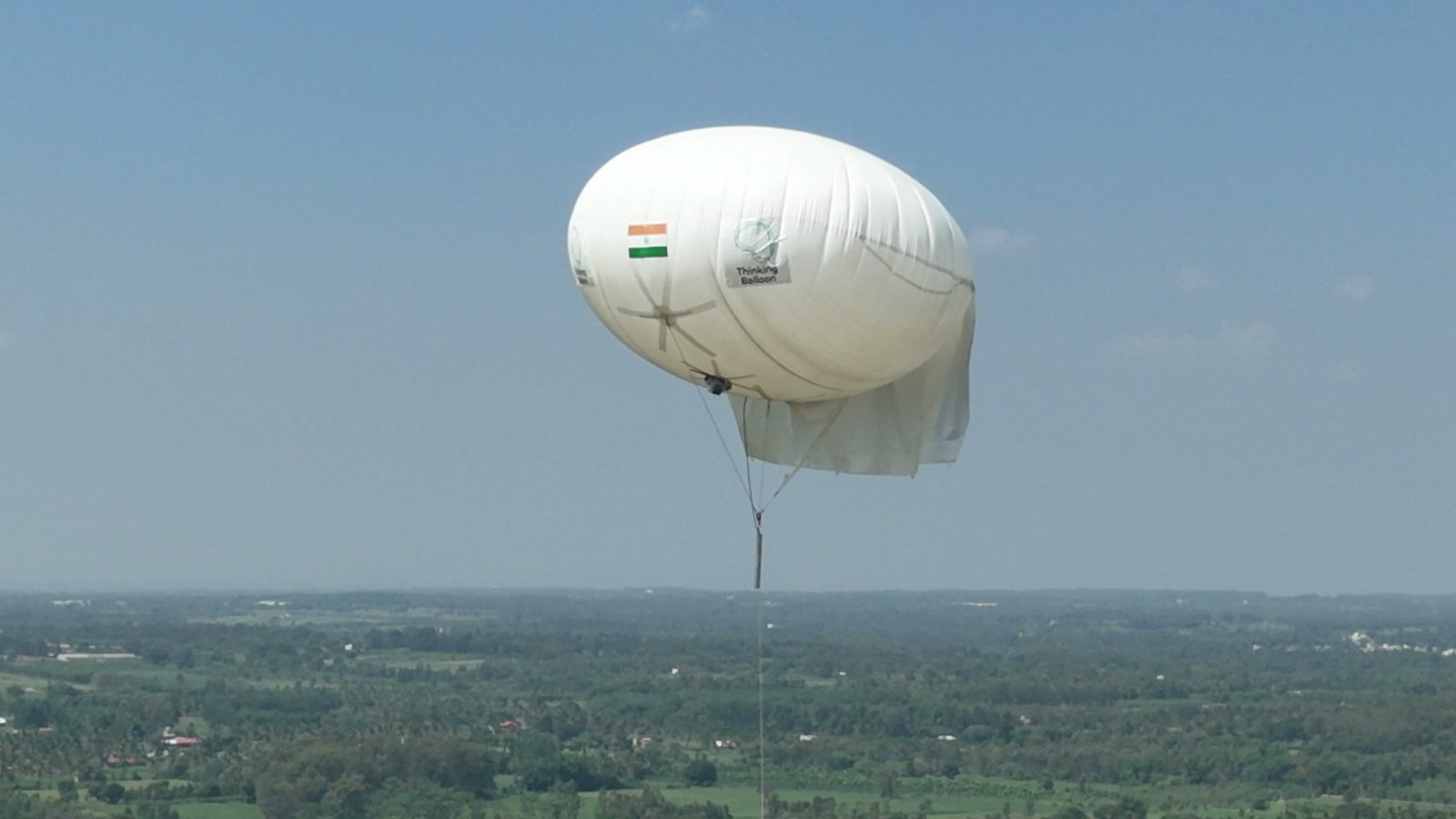
An aerostat is a helium balloon held to the ground by a strong cable, called a tether. A drone burns energy just to hover; a balloon floats, so the power sent up the tether goes to the equipment on board instead. That is the whole idea: Thinking Balloon’s system is designed to stay up for months, carrying heavy, power-hungry radars, cameras and radios that no drone could keep aloft for more than an hour or two.
The gap it fills is easy to see. Ground radar and cameras stop at the first ridge. A mast helps, but most stop near 40 metres and cannot move with the unit. A drone gets higher, then comes down within the hour to change batteries. Aircraft and satellites see far, but they cannot stay over one site all day. Large aerostats have watched borders for decades, but most are imported, and launching and recovering them takes a large crew, so few sites can have one. Thinking Balloon is building the smaller, self-running version instead.
The station does the work
The clever part is not the balloon — it is the ground station underneath it. The station launches the aerostat, holds it at a chosen altitude, brings it back, docks it and services it, all autonomously. Software plans each flight around the weather, and the whole loop — launch, hold, work, recover, dock, service, repeat — runs with nobody standing by to handle the aerostat. The company says a site should need two people or fewer to run.
It has already been put through its paces. During demonstrator field testing in Bengaluru, the platform completed over 100 autonomous launch-and-recovery cycles, and the team flew and tested the system over three days, from 28 to 30 October, before opening the site for the public demonstration. The station is designed to fail secure: if power is lost, it holds on to the tether, a hardwired safety circuit stops winch motion without relying on software, and there is no automatic restart — an operator restarts the system deliberately.
More Read

What it will watch
The platform is built for defence work first: spotting low-flying drones early, and keeping radio links alive over hills and borders. From 2 km up, the radio horizon to a target on the ground is about 185 km, the company notes. It also serves civilian uses, including monitoring ports and industrial sites — a camera a few hundred metres up sees over container stacks that hide everything from a mast — and testing aerospace hardware from height.
Thinking Balloon plans two sizes: a fixed-site version on a prepared pad, for early warning at one to three kilometres and drop tests up to about five, and a smaller trailer version for events, summits, disaster zones and temporary bases. The production platform is designed to hold a payload one to five kilometres up, with no engines. Its open payload interface carries standard mounting, power, data, time and position, so partner and government sensors fit without changing the aerostat, and the company flies proven sensors from partners and handles the integration. The aerospace test range it is opening in stages will run drop tests, counter-drone evaluation and telemetry relay from altitude.
Built in Bengaluru, tested in the open
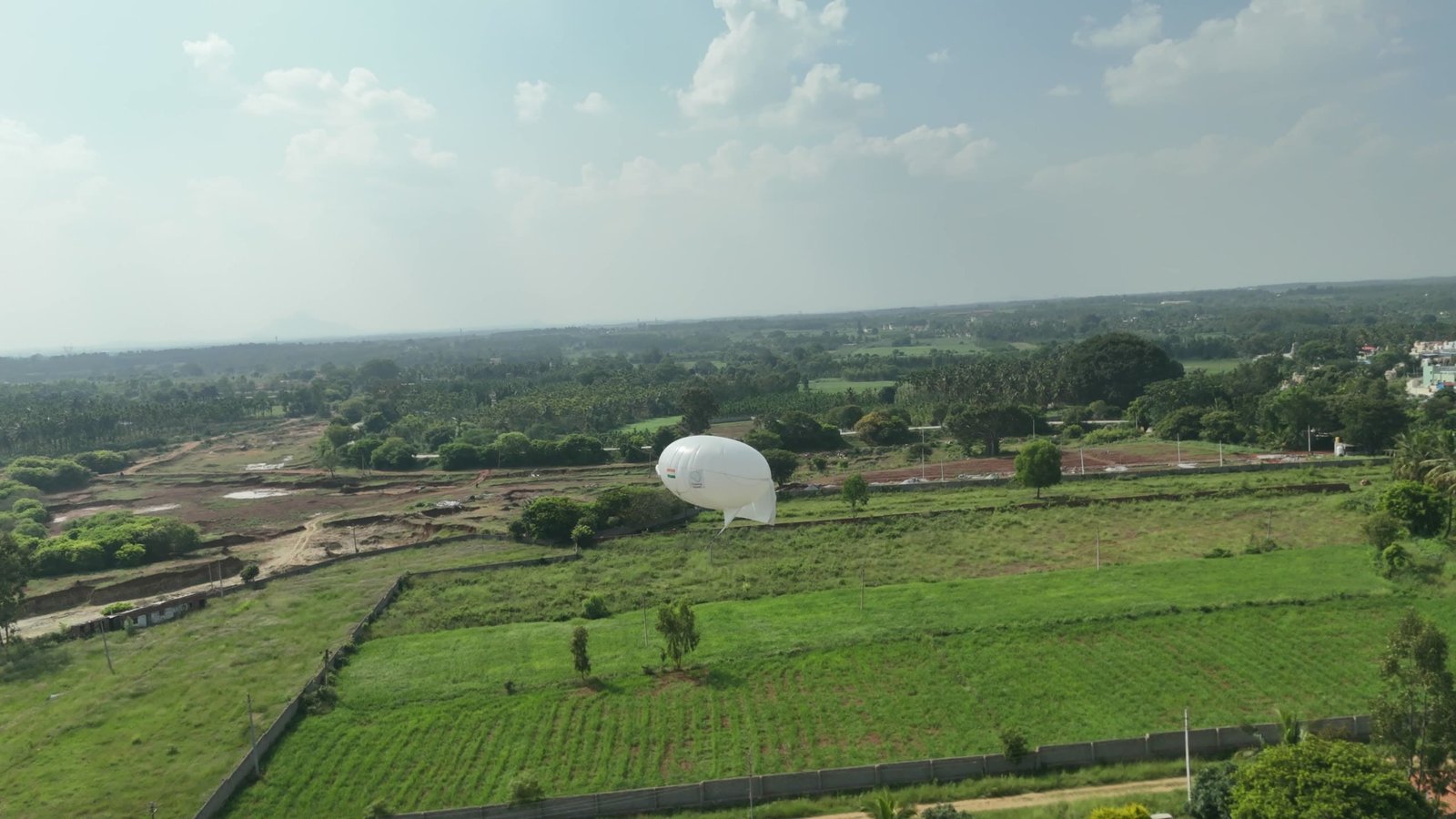
Thinking Balloon is the work of Thinking Near Space Private Limited, founded by Rushabh Chalke and Saurabh Chalke and incubated at IISc, Bengaluru. Its first envelopes flew in 2025, and the autonomous demonstrator now in field testing is the step that turns a balloon into a system. India has over 15,000 kilometres of land borders and over 11,000 kilometres of coastline to watch, and persistent aerial coverage has traditionally been costly to deploy. The company publishes each stage’s results, with the conditions they were measured under, on its blog.
“The world needs autonomy that’s cheap, easy to manufacture and assemble, and easy to scale,” says Rushabh Chalke, co-founder and chief executive of Thinking Balloon. “Today, getting a sensor or a radio high above a site means a mast that stops short, a drone that has to come down within hours, or a large aerostat that needs a large crew. We are building the next generation of aerial infrastructure that makes persistent aerial surveillance and coverage affordable through autonomous operation.”
From a balloon that climbs on its own to a network of towers in the sky that never need to land, Thinking Balloon is turning one of the oldest ideas in flight into one of India’s most practical new pieces of defence and industrial infrastructure.
Keep reading: Unjammable at 18,000 Feet: Inside insideFPV’s Advik, the Kamikaze Drone That Held Its Link in Ladakh · One Airframe, Every Mission: Inside IZI’s VANA, the Bhopal Drone Now Flying for DRDO · More Aerospace & Defense stories
Like stories like this? Add Exceptional Technology as a preferred source on Google to see more of our reporting in your search results and Discover feed.