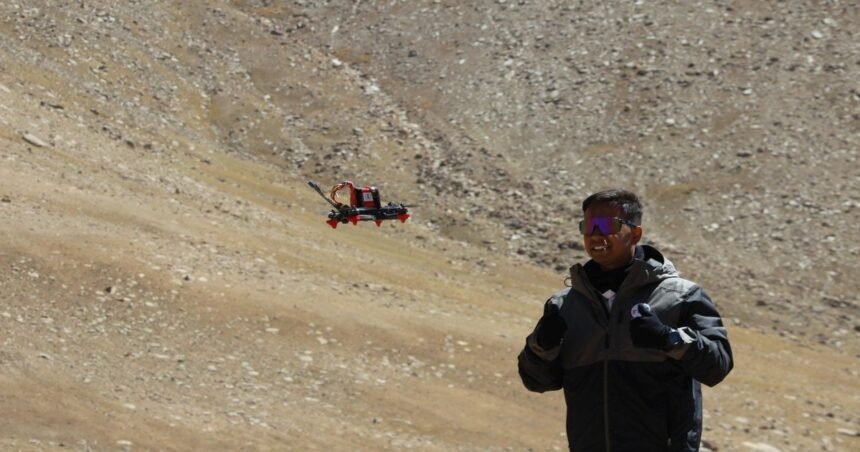
Image credit: insideFPV official photograph of the Advik kamikaze drone in flight at Wari La, Ladakh.
On a modern battlefield, the smallest drones face the biggest invisible enemy: the jammer. When electronic warfare floods the sky, a first-person-view drone can lose the link to its operator in seconds — and with it, the mission. InsideFPV, a defence technology company from Surat in Gujarat, has just shown that a small, low-cost Indian drone can keep flying straight through it. The company’s Advik kamikaze FPV drone held its control link under active electronic warfare at around 18,000 feet in Ladakh, and the systems have now been delivered to the Indian Army.
The jammer’s problem
Electronic warfare has become the defining challenge for small attack drones. In Ukraine, both sides have lost FPV drones to communication jamming in large numbers: once a jammer disrupts the link between a drone and its operator, controlling the drone — and completing the mission — becomes impossible. The answer most manufacturers reach for is heavier, more expensive hardware. InsideFPV went the other way.
A link built in-house
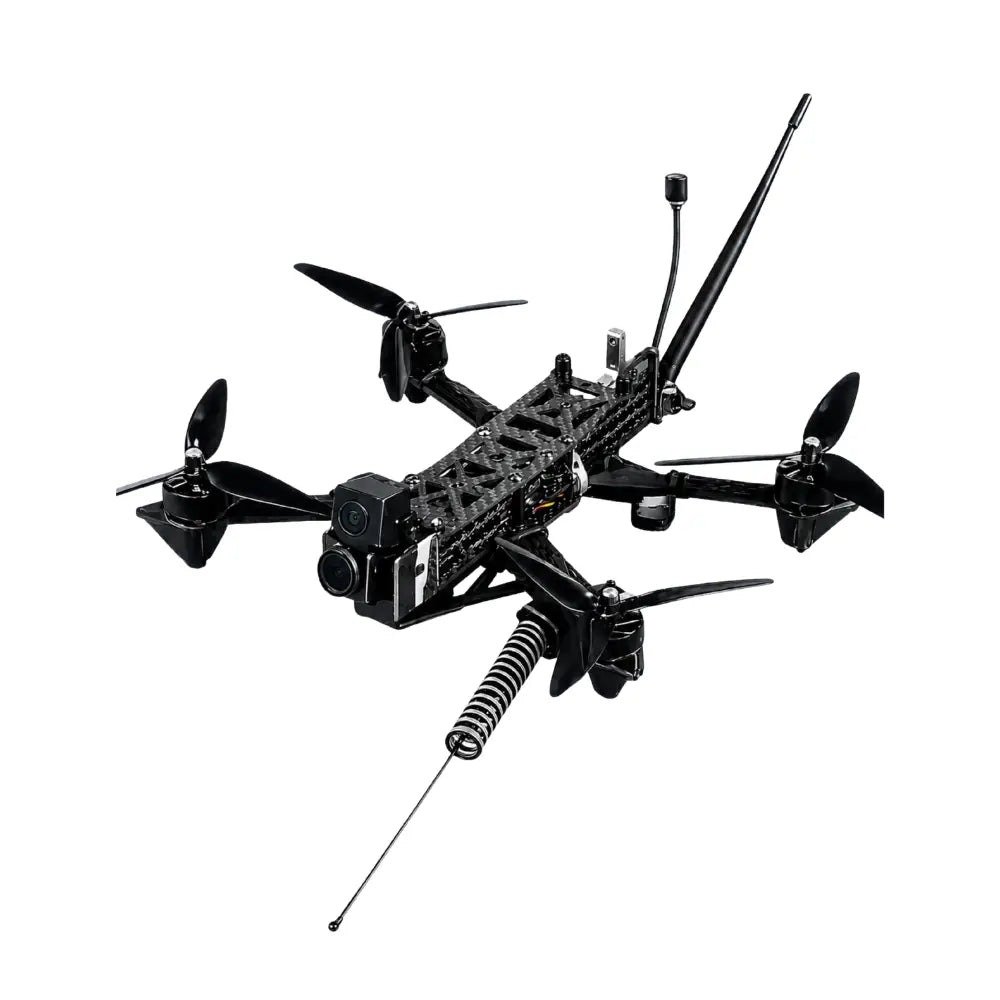
The heart of Advik is a radio-frequency communication switching link the company designed and built itself, paired with a custom antenna rack system that combines multiple RF systems into one package. The company says the added weight and power consumption were kept low enough to avoid interfering with the drone’s camera and flight electronics — and that the drone has maintained its control link through every active jamming trial it has flown so far. During the Ladakh trials, Advik flew with electronic warfare systems such as the Advanced Drone Defence System switched on, and kept flying.
InsideFPV’s chief technology officer, Deyvant Bhardwaj, puts the design philosophy simply: “Most people assume anti-jamming means a heavier, costlier drone. We wanted the opposite. We have been developing tactical low cost drones since 2020 when nobody took that seriously. These drones are compact, cheap enough to lose, and we haven’t seen a jammer stop it yet.”
Why Ladakh
Ladakh was chosen deliberately, because it tests the communication link and the airframe at the same time. At around 18,000 feet, thin air saps propeller efficiency and aerodynamic performance, while freezing temperatures punish batteries — conditions that make high-altitude flight demanding for even the largest aircraft, let alone a small quadcopter. As Bhardwaj says, “If it works up there, it works anywhere on our borders.”
More Read

A fleet built for the front line
Advik is the tactical spearhead of a wider fleet insideFPV has been building since the company was founded in 2020. The kamikaze line comes in 7-inch, 10-inch and 15-inch sizes, with the 10-inch model — the versatile middleweight — flying for 29 minutes unloaded and 10 minutes fully loaded with a 3 kg payload, at a price the company puts under ₹3 lakh. The company says the Kamikaze line flies at up to 150 kmph with dual day-and-night cameras. Alongside Advik, the company builds Trikaal and Elevate surveillance drones, the Vidyut training drone and the Rakshak interceptor, all designed and manufactured in India.
From Wari La to Drass
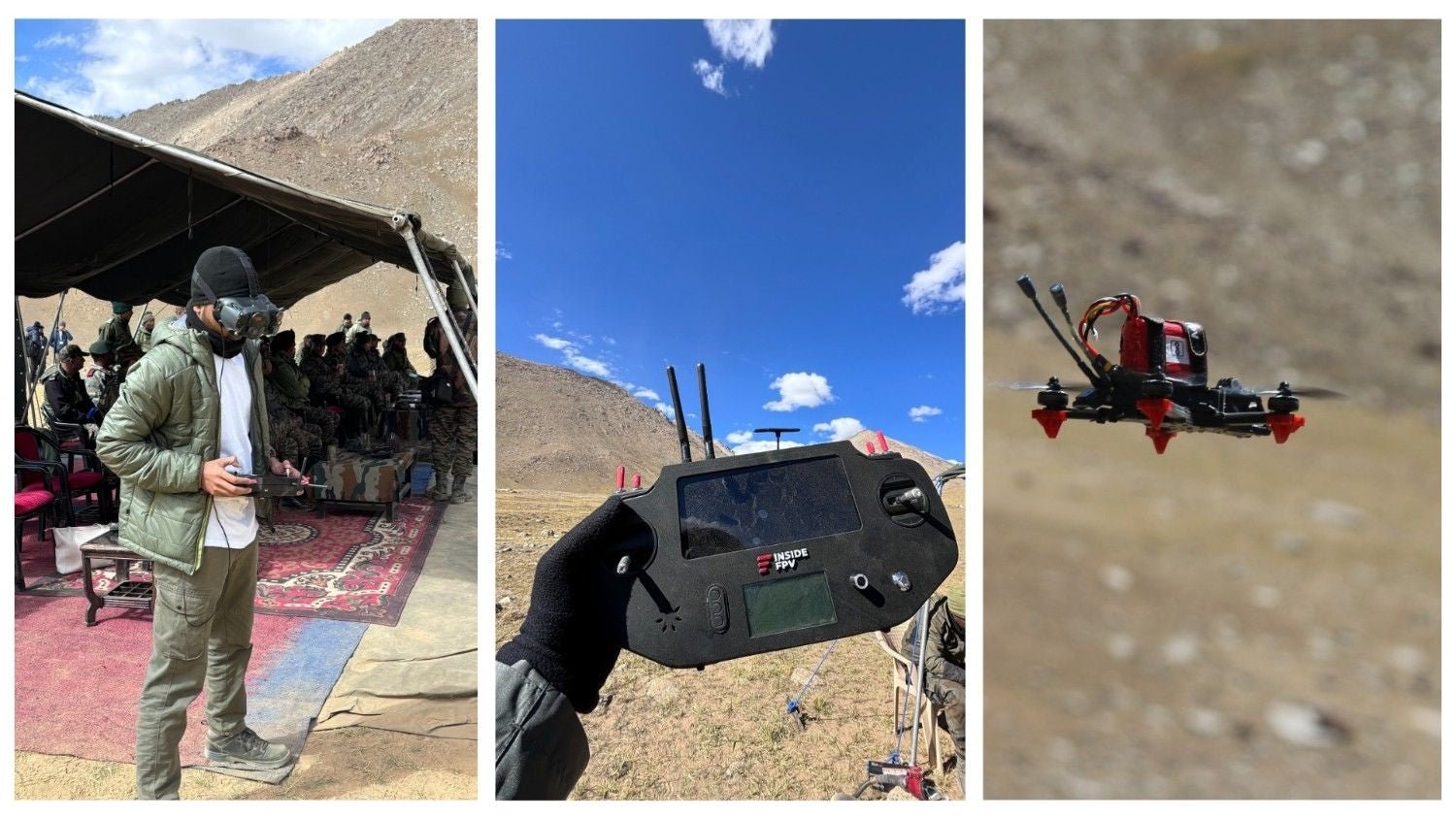
The Ladakh trial is the latest chapter in a relationship with the high Himalayas that began at HIM-Drone-a-thon 2, the Indian Army and FICCI event held at Wari La Pass in September 2024. There, insideFPV’s drone flew at 18,225 feet and finished the course in 2 minutes 36 seconds, taking first place with a three-member team. In February 2026, the company trained around 160 Indian Army personnel in FPV kamikaze drone operations at Drass, Ladakh, with chief executive Arth Chowdhary demonstrating the systems on the ground.
The bigger picture is scale. Modern conflict is increasingly decided by numbers as much as by technology, and Major General Vikash Sharma (Retd.) believes India needs around one lakh low-cost kamikaze drones for precision strikes — built at a volume that brings the cost per drone down. That is only possible, he says, if they are designed and produced in India. InsideFPV’s Advik, proven at 18,000 feet with its link intact and now in the hands of the Army, is exactly that kind of drone: small, affordable, Indian-built — and very hard to stop.
Keep reading: One Airframe, Every Mission: Inside IZI’s VANA, the Bhopal Drone Now Flying for DRDO · Two New Farm Drones and a Factory to Build Them: Inside Dhaksha’s Tamil Nadu Drone Push · More Aerospace & Defense stories
Like stories like this? Add Exceptional Technology as a preferred source on Google to see more of our reporting in your search results and Discover feed.