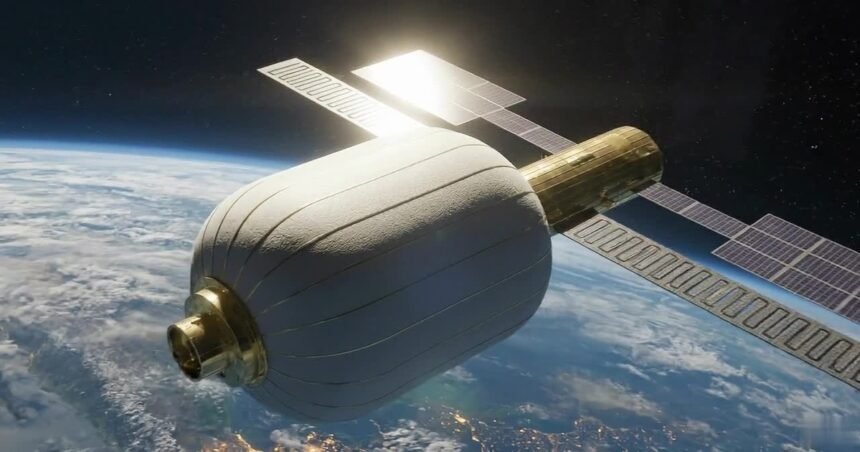
A space station is usually the heaviest thing you can launch — tonnes of rigid metal, packed into a rocket fairing with barely a centimetre to spare. A Bengaluru startup called Akashalabdhi is building a different answer: a habitat that launches folded up like a tent and inflates once it reaches orbit. Its AntarikshHAB is India’s first inflatable space habitat, and on 3 November 2026 it took its biggest step yet — a 250-litre test structure flew to 30 kilometres on a high-altitude balloon and came back down in one piece.
A home that launches folded
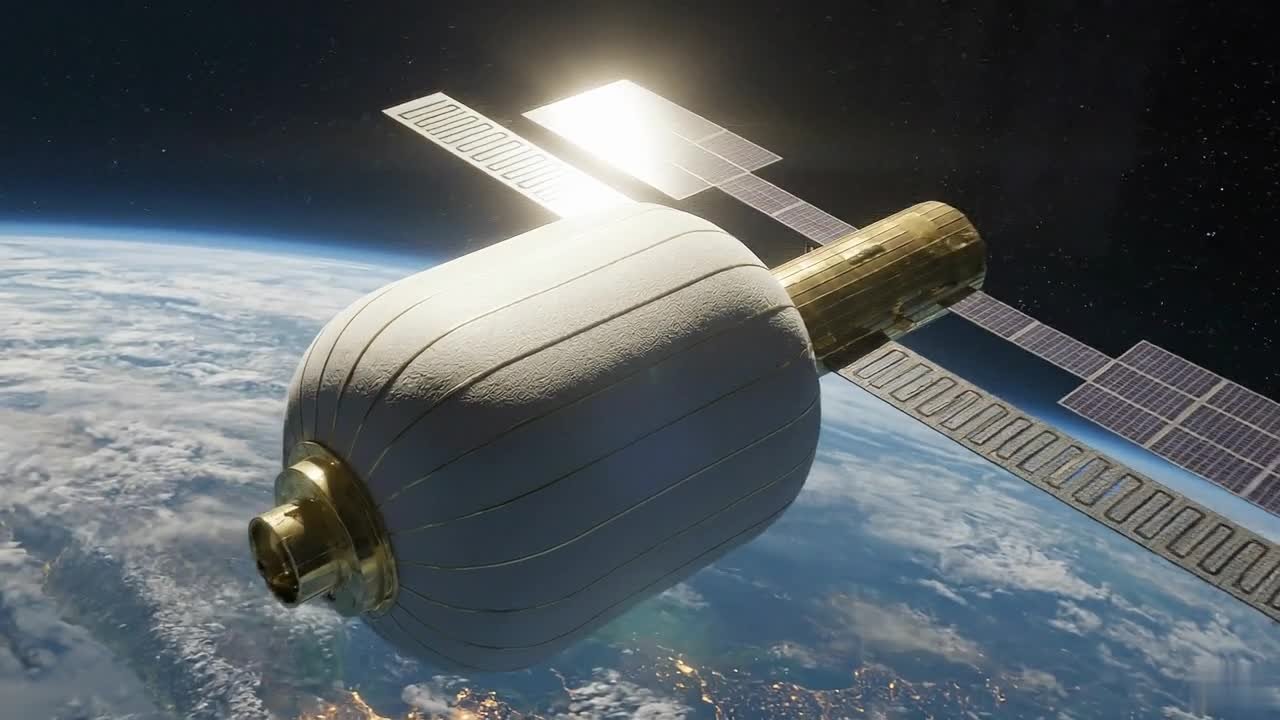
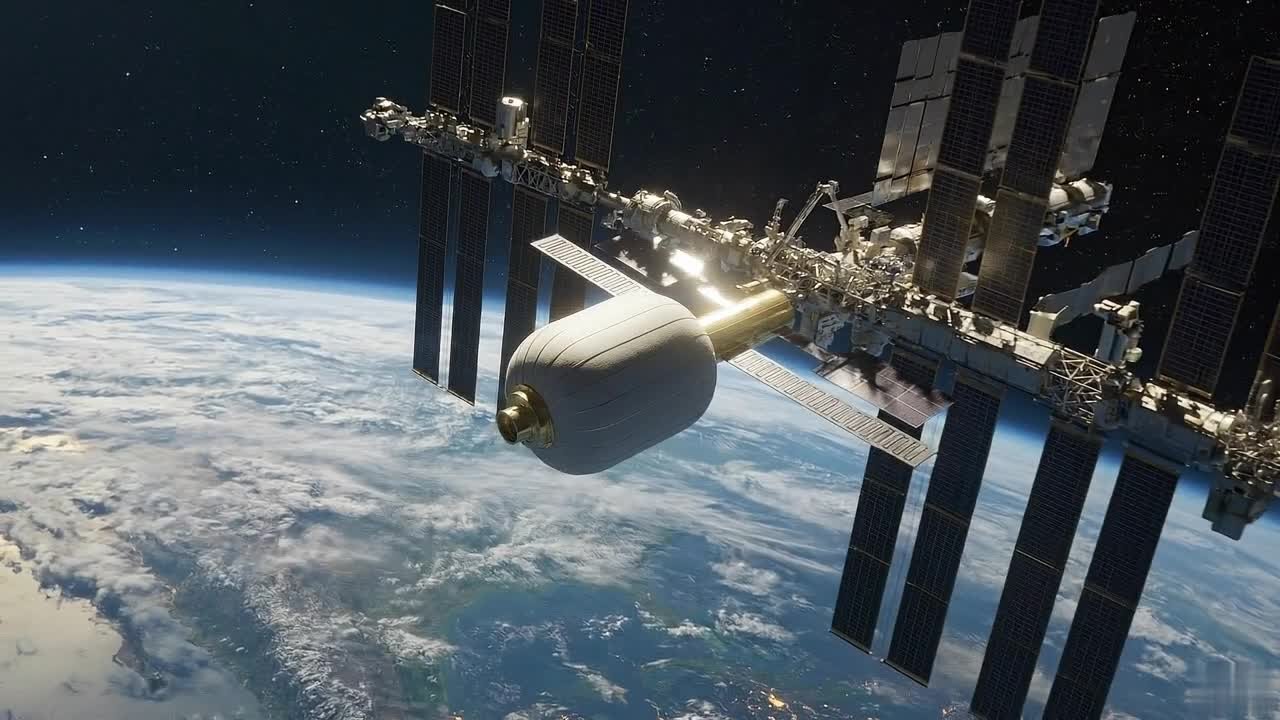
AntarikshHAB is built around a simple idea: the living space of a space station does not have to travel in its final shape. The habitat launches in a compact, folded form and inflates once it reaches orbit, so a rocket that could only carry a small rigid module can deliver a far larger home. The first module offers 70 cubic metres of habitable volume, and the design is modular, so larger configurations can be assembled in orbit. The company says the module is designed for a crew of up to 16.
The shell is a multi-layer flexible structure, and the company says it is built to protect its crew against orbital debris and radiation. Beyond habitation, the same expandable design is meant to serve microgravity experiments, satellite maintenance, orbital logistics storage and commercial space stations — and the company says it could one day support exploration on the lunar surface.
Tested to TRL-6 in Switzerland
Before a habitat like this can fly, every layer of it has to be proven. Akashalabdhi ran its test campaign to Technology Readiness Level 6 in Switzerland, with partners linked to the European Space Agency. The campaign put the multi-layer flexible structures through pressure and leak-before-burst testing, thermal cycling, accelerated material ageing, and impact testing to simulate micrometeoroid and orbital debris strikes, along with repeated validation of the restraint and inflation mechanisms.
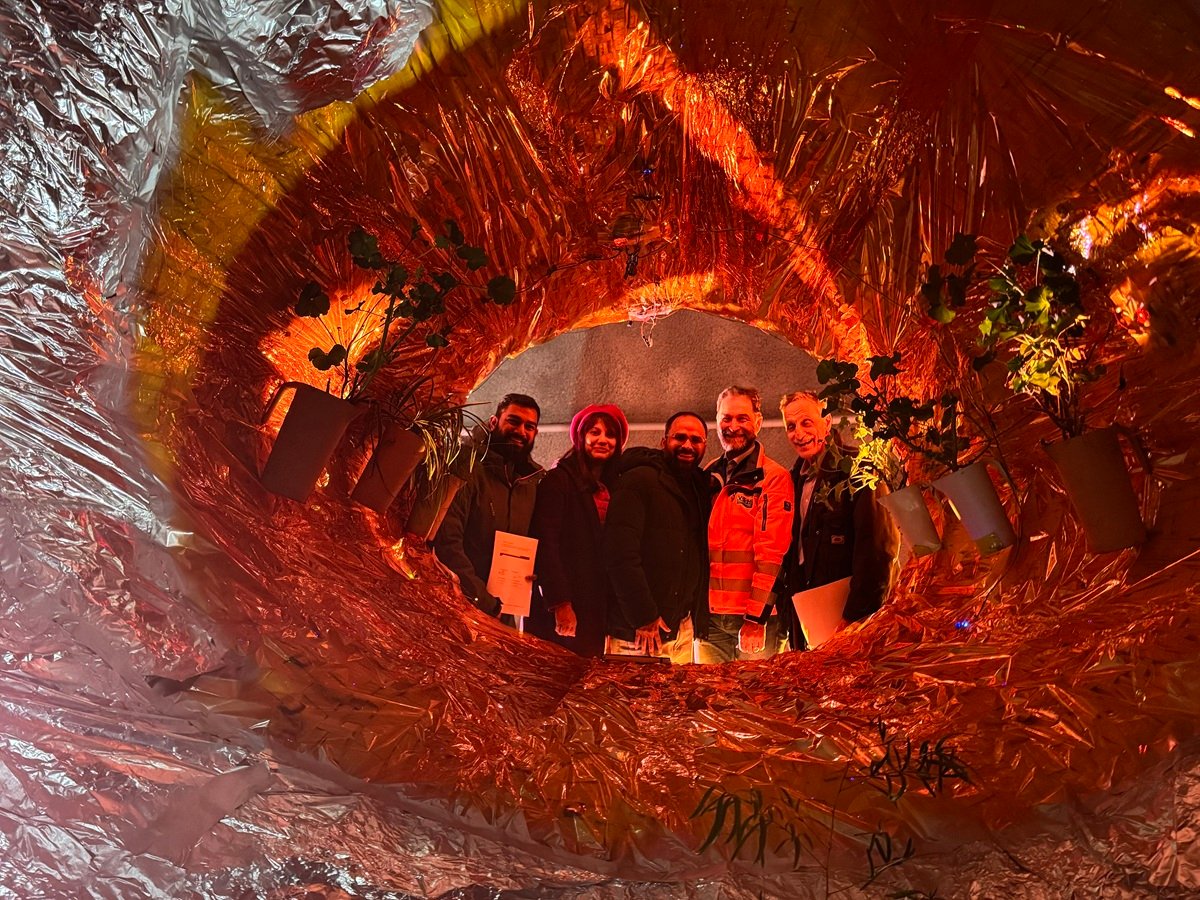
Much of the work happened at an underground laboratory at Versuchsstollen Hagerbach, operated by the Amberg Group, where the natural rock overburden creates a realistic setting for studying radiation shielding, structural integrity and long-duration habitat performance. Swiss partners including ETH Zurich, EMPA and the Paul Scherrer Institute contributed materials science and radiation studies, while on the Indian side IISc, IIT Roorkee and IIT Delhi contributed expertise in space structures, materials, systems engineering and human-centric design.
Thirty kilometres up — and back in one piece
The balloon flight on 3 November 2026 was the programme’s first high-altitude test. Flown through the Tata Institute of Fundamental Research’s National Balloon Facility in Hyderabad, the 25-kilogram mission carried a 250-litre rigidizable inflatable structure to approximately 30 kilometres, along with two research payloads: the Microbial Regolith Experiment, developed by Professor Aloke Kumar’s lab at IISc, which investigates microbial processes that could bind lunar and Martian soil into construction materials, and an experimental perovskite solar-cell payload from Switzerland-based Perovskia Solar.
More Read

The flight was designed to test how an expandable structure behaves when it is deployed from a compactly packaged configuration, inflated, and then rigidized so it keeps its shape without depending on internal pressure. The module came through the landing better than the team expected: as chief executive Siddharth Jena told The Times of India, it absorbed the impact without the damage they had anticipated — a promising sign for future missions that will recover experimental hardware from space. Along the way, the flight also put the onboard electronics, power systems, sensors, autonomous controls and telemetry through their paces at 1–2% of sea-level atmospheric pressure and temperatures down to around minus 45 to 50 degrees Celsius.
The road to orbit
The next milestone is already set: an orbital mission planned for March, using Skyroot’s Vikram-2 rocket. The mission is expected to carry a payload of around 70 kilograms, including two of the company’s material-development experiments to be conducted in microgravity, along with a data-centre payload — the engineering data from the balloon flight feeding straight into the design.
Akashalabdhi was founded in 2023 by mechanical engineer Siddharth Jena, its founder and chief executive, and is incubated at the Foundation for Science, Innovation and Development at IISc and at TIDES, IIT Roorkee. The company was selected for the AWS Space Accelerator programme, one of 24 Indian startups chosen from 180 applicants, and raised $1.2 million in pre-seed funding in September 2025 from investors including Uday Chatterjee, Romesh Sobti, LVX, 1Crowd and Riceberg Ventures. Alongside its space infrastructure work, the company also builds defence-grade systems, and showcased its technologies to global military leaders at Tarang Shakti 2024.
From a folded package to a 70-cubic-metre home in orbit, AntarikshHAB is a neat picture of where Indian spacetech is heading: not just launching rockets, but building the places people will live and work in once they get there. The balloon has flown, the habitat has held, and the next stop is orbit.
Keep reading: Two Hundred Kilos Over the Himalayas: Inside Scandron’s CargoMax Heavy-Lift Drones · A Tower in the Sky That Flies Itself: Inside Thinking Balloon’s Autonomous Aerostat · More Aerospace & Defense stories
Like stories like this? Add Exceptional Technology as a preferred source on Google to see more of our reporting in your search results and Discover feed.