
Every day, thousands of freight wagons roll across India carrying coal, grain, steel and cement — and every one of them needs to be checked for cracks, wear and damage before a small fault becomes a derailment. A startup from Patna called Sarva Suvidhaen is giving Indian Railways a sharper pair of eyes for that job: WagonEye, an artificial intelligence and computer vision platform that spots defects in the body and undergear of freight and passenger wagons, so problems are caught while the train is still moving.
Sarva Suvidhaen was founded by Atul Anand and Srishti, two professionals from Bihar who decided during the lockdown that the country’s biggest public systems deserved the same quality of technology as its biggest companies. Atul, the company’s chief technology officer, studied at a Hindi-medium government school in Bihar, then at Patna Science College and NIT Trichy, and spent more than twelve years building software at companies including Oracle and Bharat Electronics. Srishti brought the business and operations experience from roles at Randstad and Cognizant. Working from home in Patna, they began looking closely at how Indian Railways actually runs — and where better data could make it run smarter.
WagonEye: computer vision on the wagon
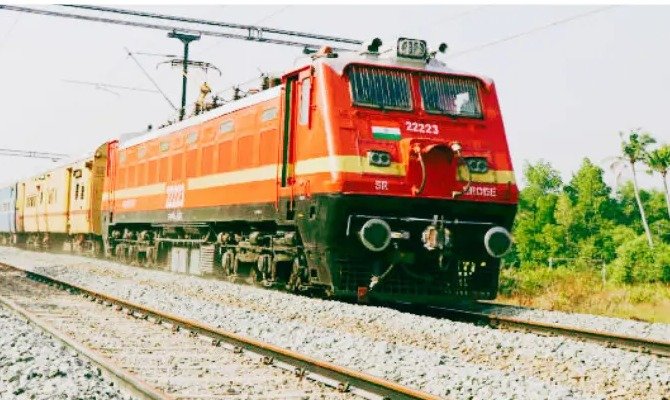
The centrepiece is WagonEye. The platform uses AI and computer vision to identify potential defects in the body and undergear of freight and passenger train wagons — the kind of inspection that has traditionally depended on manual checks in yards and sidings. In a network as vast as Indian Railways, the company says, catching a potential problem early matters for both safety and operations, and WagonEye is built to do that checking continuously, wagon after wagon.

RailOps and SwachhDNR: the field, digitised
WagonEye is one part of a wider toolkit. RailOps is a digital operations platform that lets railway teams record and monitor field activities, replacing scattered paper reporting with a single live picture of what is happening on the ground. SwachhDNR, a web and mobile platform, tracks and assesses employee performance — and it is already deployed in the Danapur division, which includes Patna Junction, as well as the Sealdah and Jhansi divisions. The company’s portfolio also includes RailMadad complaint analytics, an IoT system that records alarm-chain-pulling incidents with location and timing, and an automated water-level monitoring system for trains.
Bootstrapped in Bihar, growing on merit
Sarva Suvidhaen started on the founders’ own savings, then won Rs 10 lakh from Startup Bihar and incubation support from IIT Patna and the Software Technology Parks of India, along with Rs 1 crore in Google Cloud credits to build its AI and IoT infrastructure. The company says it has received around Rs 32 lakh in government assistance in total, and raised Rs 60 lakh in external equity from two investors. The business is a mix of one-time development and integration fees with monthly or annual subscriptions and maintenance contracts — and it is already profitable. Turnover was around Rs 48 lakh in 2024–25 with a profit of about Rs 9 lakh, and rose to roughly Rs 1.16 crore in 2025–26 with a profit of around Rs 20 lakh.
From three divisions to every zone
The ambition now is scale. The company wants to take its solutions across all zones of Indian Railways, and then into logistics, healthcare and smart cities — with more investment going into edge AI, computer vision and predictive maintenance. As Atul puts it, the goal is to become a partner in AI, IoT and automation for the country’s critical infrastructure — a journey that began in Bihar, but is built for all of India. It is a neat picture of what India’s startup map now looks like: world-class deep tech, built far from the usual hubs, solving problems millions of Indians feel every single day.
More Read

Keep reading: Thinking at the Edge: Inside CYRAN AI’s Brain-Inspired Intelligence for Satellites, Drones and Factories · The Pune Robots Cleaning Floors in 9 Countries: Inside Peppermint Robotics’ Autonomous Fleet · More Industrial Automation & Technology stories
Like stories like this? Add Exceptional Technology as a preferred source on Google to see more of our reporting in your search results and Discover feed.