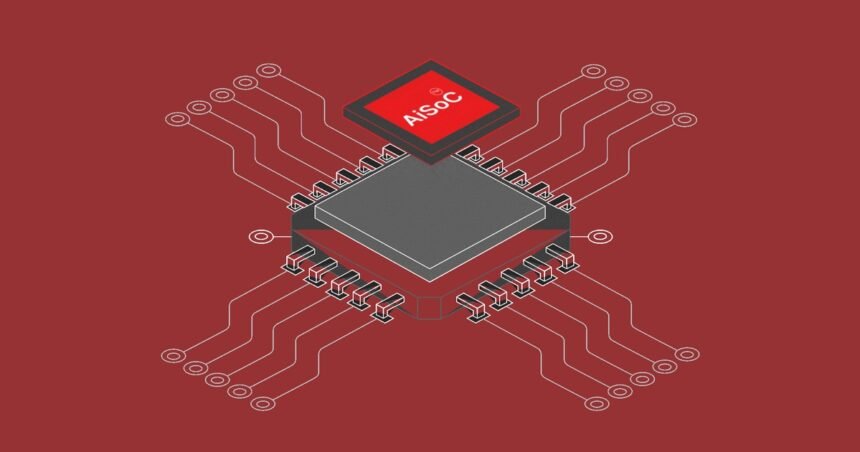
Open the charging case of a pair of premium wireless earbuds and you will find a small chip quietly managing every milliamp — deciding how fast to charge, how warm the battery is allowed to get, and how much life is left in the cell. In India, that chip has almost always been designed somewhere else. A fifteen-person startup in Bengaluru called HrdWyr is changing that, one piece of silicon at a time — and its first customer is boAt, India’s biggest audio wearables brand.
HrdWyr was founded in 2023 by Ramamurthy “Siva” Sivakumar and Guruswamy Ganesh, semiconductor veterans whose careers span Intel, AMD, Motorola and SanDisk. Their conviction is simple: artificial intelligence should be designed into a chip from the very first sketch, not bolted on afterwards as an accelerator sitting next to a conventional processor. The company calls its approach AI-native, and it has spent three years turning that idea into real, taped-out silicon.
One chip where three used to sit
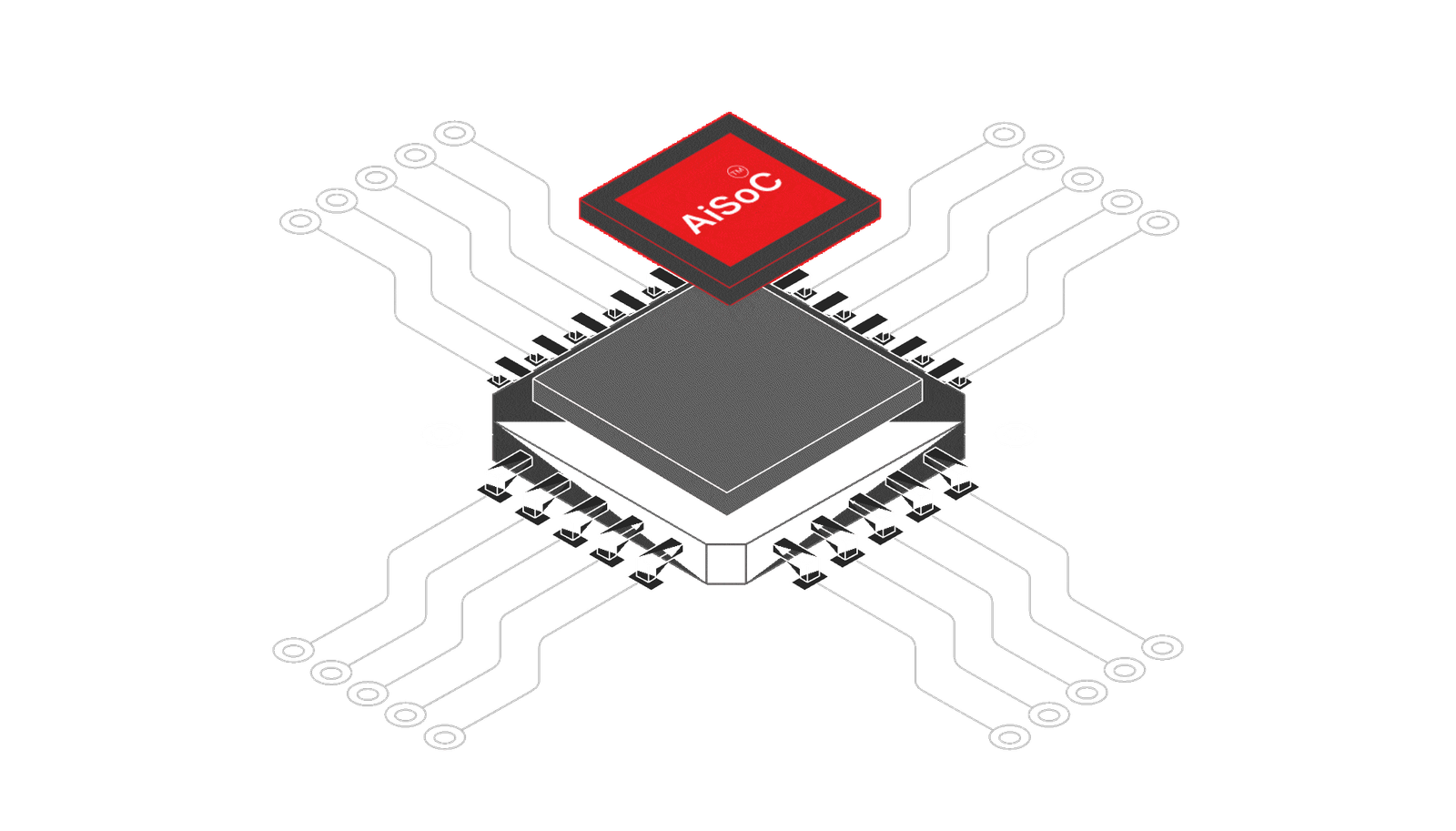
HrdWyr’s first differentiator is system integration. Instead of separate battery charger ICs, battery fuel gauges and microcontrollers, its chip combines all of them into a single mixed-signal system-on-chip, with extensive digital circuitry and substantial analog circuitry on the same piece of silicon. For the engineers building products around it, the company says that tighter integration means lower control-loop latency, less processor load, less data moving around the board, and lower power consumption.
The second differentiator is the AI engine itself. HrdWyr’s architecture keeps deterministic functions on predictable hardware paths, while AI handles adaptation, optimisation and diagnostics — learning how a battery ages, how temperature and load shift through a day, and how each user actually charges. The company says reinforcement learning manages the long-term trade-offs, like charging speed against battery life, inside a verified safety envelope, while deterministic control keeps handling the safety-critical work. The framework behind it is called True Edge Autonomy, an agentic AI stack built on reinforcement learning, and the same approach is designed to stretch from power management into motor control and security.
The first proving ground fits in your pocket
The first product family is called Indus, and its opening act is the Indus 1011, an MCU-class system-on-chip built for the charging cases of true wireless stereo headsets. It is, the companies describe it, India’s first domestically designed and packaged chip for wearables: designed entirely in India by HrdWyr, with assembly, packaging and testing handled in India by Tata Electronics. The chip brings intelligent battery management to the case itself, and the company says it can lift charging efficiency by 20–30%.
boAt is the launch partner, the first Indian audio wearables brand to back a domestic startup at the chipset stage, and the Indus 1011 is set to debut in the company’s premium true wireless charging cases, starting with the Nirvana range. boAt has said it plans to put the chip into a quarter of its product portfolio. The first chip has completed tape-out and is now in the board development stage, with packaged silicon from Tata Electronics on its way to reference boards. A second member of the Indus family, aimed at brushless DC motor control, is already under development, and a second-generation chip with a Bluetooth stack is in prototyping.
More Read

From earbuds to the physical world
The traction has already drawn serious backing: HrdWyr closed a $13 million Series A round in May 2026, led by Ideaspring Capital with Singularity AMC, Avatar Growth Capital and Persistent Systems. About half of the company’s customer engagements are in India and half overseas, and it is positioning its chips against the general-purpose platforms of established suppliers such as Texas Instruments, NXP, Renesas, Qualcomm and Nordic Semiconductor — not by out-generalising them, but by being purpose-built for the job at hand.
That job is getting bigger fast. The company’s sights are set on the shift from screen-based, data-centre-driven AI to physical AI — machines that sense, decide and respond locally, from drones and humanoid robots to manufacturing systems and security cameras. “If we are not ultimately competing globally with our own products, then we are simply creating value for somebody else,” Sivakumar says. He would much rather see forty companies like HrdWyr emerge in India than have HrdWyr remain the only one. For a fifteen-person team in Bengaluru, the first chip in a boAt charging case is the opening move — the board it is building on is nothing less than India’s own semiconductor product story.
Keep reading: The AI Eyes Watching Over India’s Freight Wagons: Inside Sarva Suvidhaen’s WagonEye · Thinking at the Edge: Inside CYRAN AI’s Brain-Inspired Intelligence for Satellites, Drones and Factories · More Industrial Automation & Technology stories
Like stories like this? Add Exceptional Technology as a preferred source on Google to see more of our reporting in your search results and Discover feed.