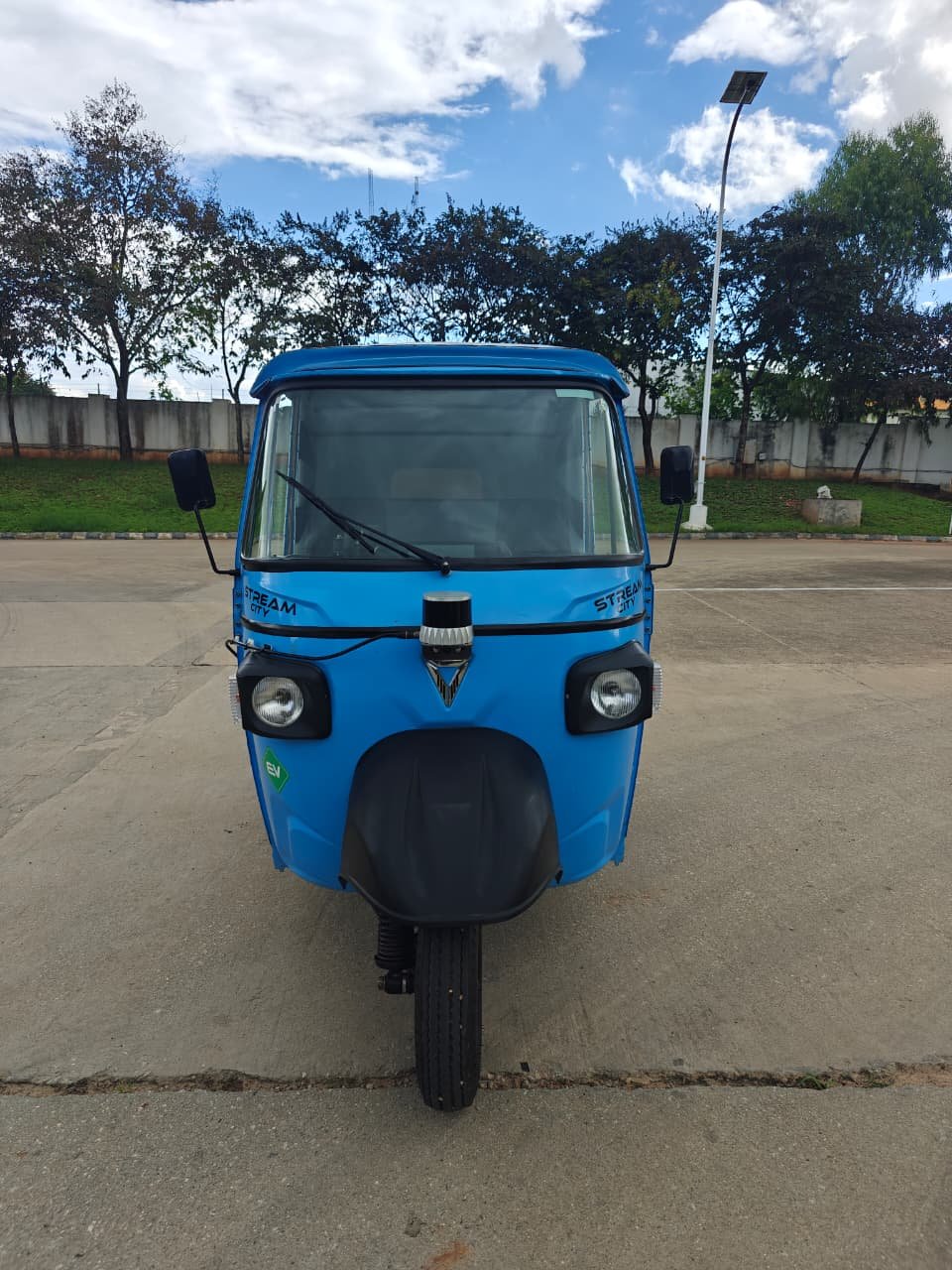
The auto-rickshaw is the hardest-working vehicle on Indian roads — it threads through traffic that would stop a bus, turns around in a lane barely wider than itself, and carries everyone from schoolchildren to sacks of grain. Now, in a Delhi-NCR factory, it has learned to drive itself.
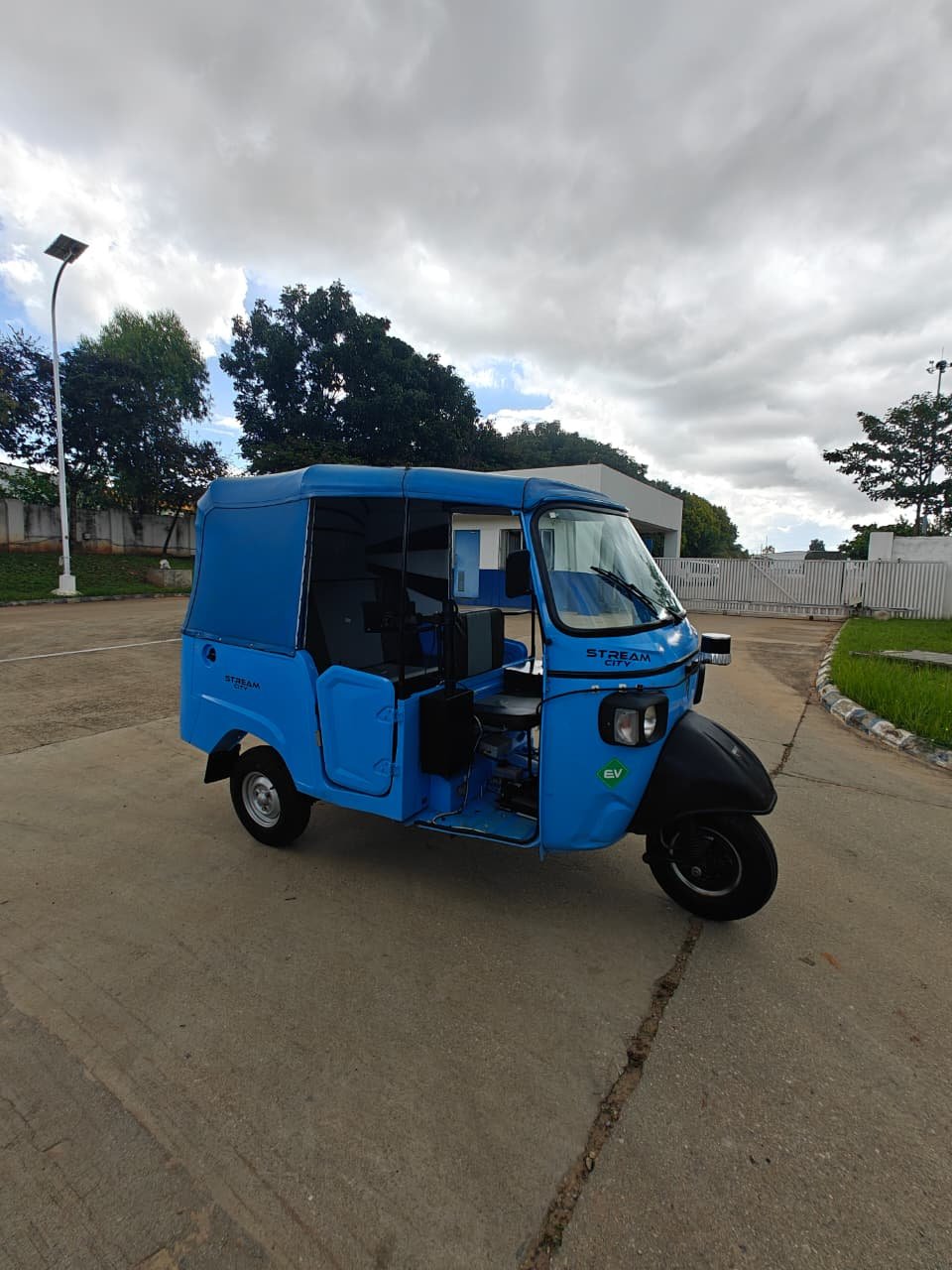
Swayamgati — Sanskrit for “self-movement” — is Omega Seiki Mobility’s answer to a question the whole auto industry has been circling: what does self-driving look like when it has to be affordable? The company launched the passenger version in September 2025 at ₹4 lakh, calling it the world’s first production-ready autonomous electric three-wheeler, and followed it in December with Swayamgati Cargo at ₹4.15 lakh, aimed at factories, campuses and logistics hubs.
The engineering is deliberately practical. Swayamgati pairs Omega Seiki’s own electric three-wheeler platform with an AI-driven retrofit autonomy system: LiDAR, GPS and multi-sensor navigation, AI-based obstacle detection that spots objects up to six metres away, geofenced route mapping and remote fleet management. Routes are mapped in advance and customised for each client’s site, so the vehicle knows its circuit before it ever carries a passenger. A 10.3 kWh battery gives it up to 120 km of range on a single charge — a full working day of short hops around a campus or an industrial park.
The company proved the system before selling it. In Phase 1 testing, Swayamgati completed a 3 km autonomous route with seven stops, handling real-time obstacle detection and passenger movement entirely without human intervention. With that pilot validated, Phase 2 — commercial rollout in controlled environments — is now under way, with the vehicle aimed at airports, smart campuses, industrial parks, SEZs, gated communities and dense urban zones. The company says it plans to deploy 1,500 autonomous cargo and passenger units over the next 24 months.
The cargo version takes the same platform into logistics. Unveiled at the Quench Energising India Summit 2025 at Ador Powertron’s Pimpri Chinchwad complex, Swayamgati Cargo is built for the repetitive, predictable routes that eat up human driving hours: moving material between factory buildings, ferrying baggage and cargo around airports, shuttling goods across e-commerce fulfilment centres and warehouses. Bookings opened on 1 December 2025, with deliveries beginning the same quarter.
The company behind it has been building electric three-wheelers for years. Omega Seiki Mobility, part of the Anglian Omega Group, is led by founder and chairman Dr Uday Narang, and manufactures from two plants in Faridabad and one in Chakan, Pune, with an assembly plant in Dubai’s Jafza free zone and more than 200 service centres across India. “The launch of Swayamgati is not just a product introduction — it’s a bold step into the future of Indian transportation,” Narang said at the launch.
More Read

Self-driving technology has mostly arrived in India as a luxury — expensive cars on closed test tracks. Swayamgati flips that script: autonomy priced like an auto-rickshaw, built for the campuses, factories and airports where India actually moves. If the 1,500-unit rollout lands as planned, the most ordinary vehicle on Indian roads may also become the most futuristic.
Keep reading: No Maps, No LiDAR, No Driver: Inside Swaayatt Robots, the Bhopal Startup Teaching Cars to Drive Themselves on India’s Roads · The Heart of the Machine: Inside Naxatra Labs, the Ahmedabad Startup Building India’s EV Motors From Scratch · More Automotive & Mobility stories
Like stories like this? Add Exceptional Technology as a preferred source on Google to see more of our reporting in your search results and Discover feed.