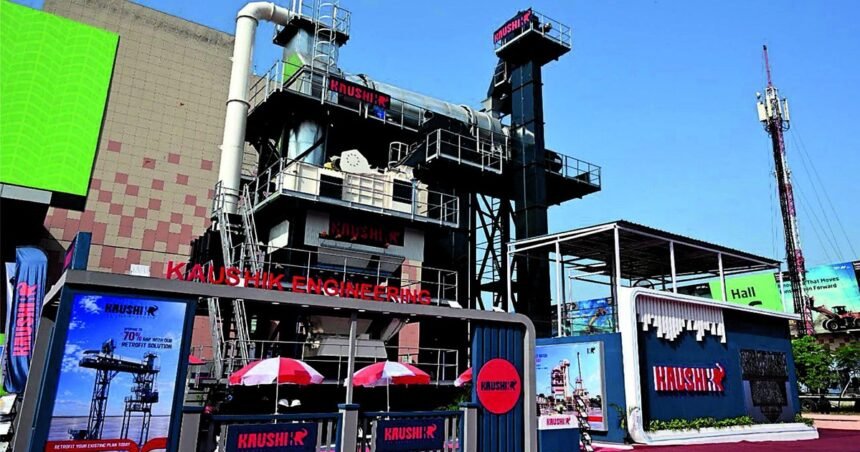
Every kilometre of highway India rebuilds leaves behind a mountain of torn-up road — milled asphalt, stone aggregate and old bitumen, usually dumped or downcycled. In Sanand, Gujarat, Kaushik Engineering Works has built a machine that turns that pile back into a highway. The company’s new asphalt batchmix plant, unveiled at Bauma Conexpo India 2026, can fold up to 70% reclaimed asphalt pavement — RAP — into every fresh batch of mix, and the company says it is the first Indian equipment maker to design and build a plant that goes that far.
RAP is the ground-up surface of an old road: stone aggregate still coated in aged bitumen. Reusing it sounds simple, but the engineering is not. The reclaimed material has to be heated and blended into the new mix without scorching the old binder or throwing the recipe off — and the more RAP in the mix, the harder that balance gets. Kaushik’s answer is a plant engineered around high-recycling production, with the heating and handling built to keep the recycled binder intact and the output consistent, batch after batch.
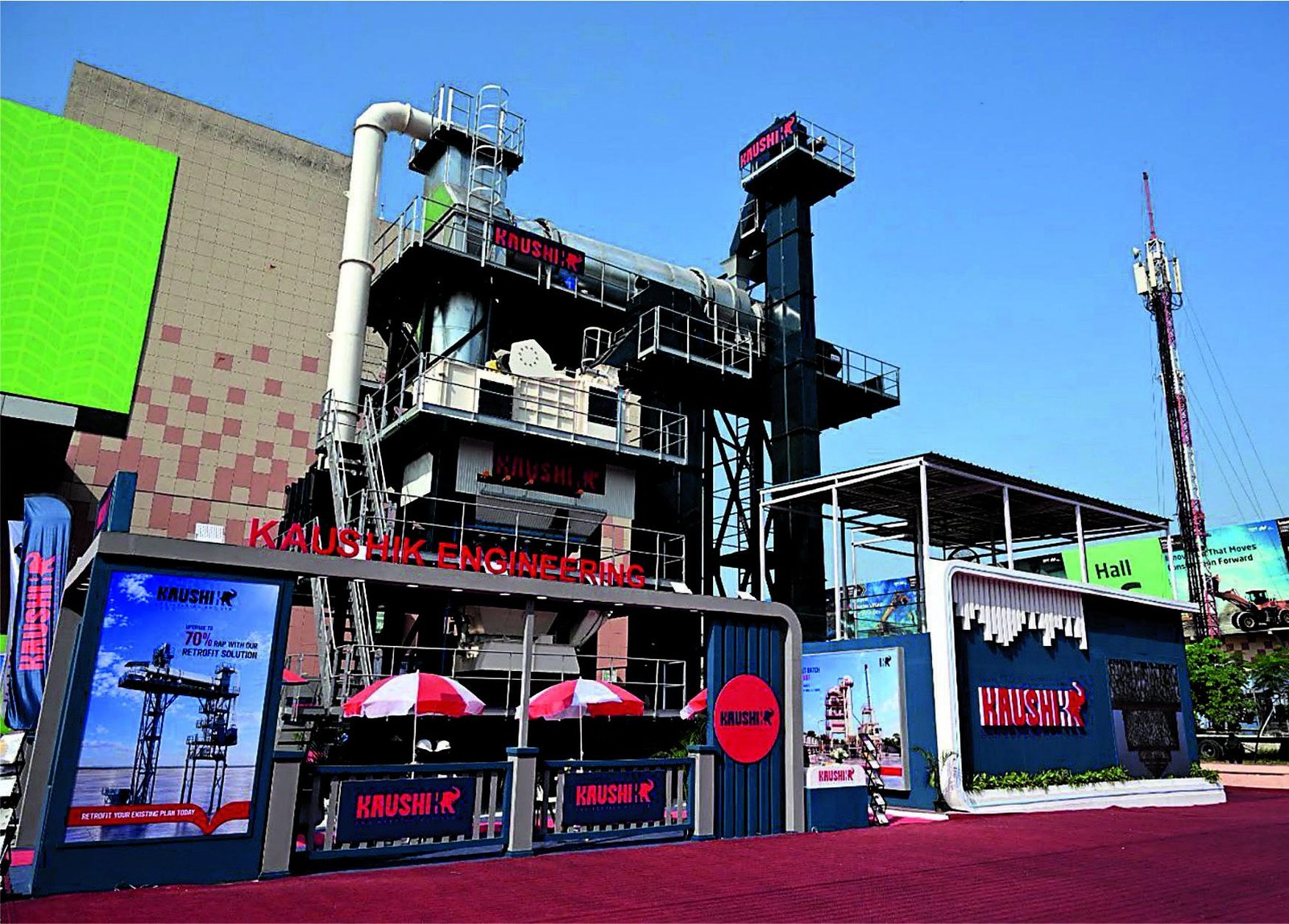
The payoff is measured in what a road project no longer needs to dig up or burn. Every tonne of RAP in the mix is a tonne of virgin aggregate and fresh bitumen a contractor does not have to buy, haul and heat — and, the company says, lower fuel consumption in production too. For a country laying and relaying highways at India’s pace, that turns the waste stream of one project into the raw material of the next.
The company has also built the same thinking into a retrofit kit, so contractors can upgrade a suitable existing batchmix plant to run much higher RAP percentages without replacing the whole machine — a practical route for an industry that already owns thousands of plants.
Kaushik Engineering Works has been building road-making machines in Ahmedabad since 1999, when mechanical engineer Niraj Shah set up the company. Today the family-owned firm has put 1,238 plants into service across more than 35 countries, supplies NHAI and state governments, and its machines work on Bharatmala Phase I and II corridor projects. Everything is made at its 13,500-square-metre Sanand facility, with CNC machinery and in-house R&D — drum mix plants from 40 to 200 tonnes per hour, batch mix plants from 60 to 240, plus wet mix macadam plants, concrete batching plants and bitumen systems.
The 70% plant is the next step in a line the company has been climbing for years. Its first batch mix plant came in 2012, followed by a technical collaboration with Turkey’s Cesan A.S. in 2013; a new generation of plants followed with advanced burner controls, variable-frequency drives and SCADA-based remote operation — and, the company says, the ability to handle up to 50% RAP. The new plant pushes that ceiling to 70%. “Developing a 70% RAP-enabled batchmix plant in India is an important milestone for us,” says Aarjav Shah, the company’s sales director, “and we believe this technology can significantly change the way recycled asphalt is utilised in road construction.”
More Read

India’s road boom has always been measured in kilometres laid. Kaushik’s plant adds a second measure: how much of the old road comes back as the new one. Seventy percent is a strong place to start.
Keep reading: No Digging, No Waiting: Inside C-DISC’s PEN Foundation, the Kerala Startup Building Foundations Like Tree Roots · One Factory, 7,000 Suppliers: Inside Zetwerk, the Bengaluru Platform Building the World’s Products · More Manufacturing & Engineering stories
Like stories like this? Add Exceptional Technology as a preferred source on Google to see more of our reporting in your search results and Discover feed.