


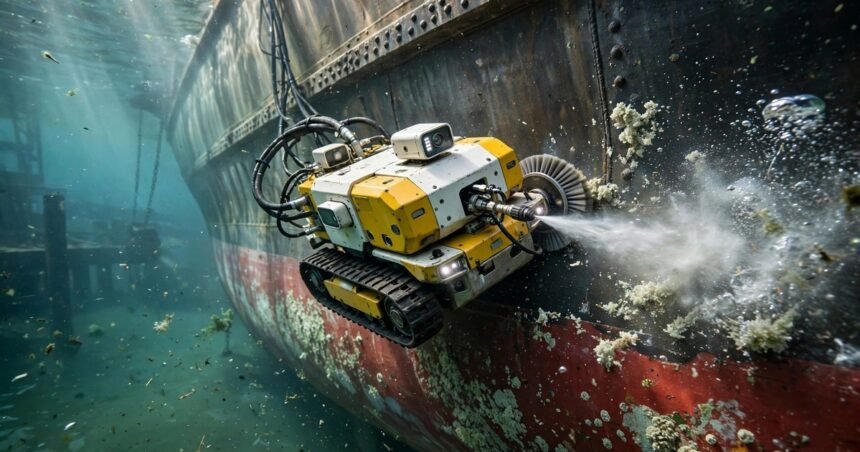
Under the waterline of a cargo ship, the steel is never clean for long. Within weeks of leaving port, algae, barnacles and seaweed take hold, roughening the hull, dragging the ship back and forcing its engines to burn more fuel for every nautical mile. For as long as shipping has existed, the answer has been the same: send divers down, or haul the ship out of the water and into dry dock. In Chennai, a young robotics startup is building a third answer — a robot that climbs the hull itself and scrubs it clean while the ship keeps working.
Mafkin Robotics was founded in 2023 by Sarthak Vaishnav, a mechanical engineering graduate of VIT, and the company is building an autonomous robotic fleet for the maintenance of maritime megastructures — ship hulls, cargo holds and oil storage tanks. Its robots clean, inspect, analyse and report, and the company says they can do the job up to 60% faster than traditional methods, with no diver in the water and no dry dock required.
The idea began, as the best ones often do, with a family story. During the pandemic, Sarthak’s uncle, a captain of oil tankers in the merchant navy, was stuck waiting for his ship to return to India after maintenance delays in Canada. The conversation that followed opened Sarthak’s eyes to how slow, expensive and risky underwater ship maintenance really is — and how little of it had changed in decades.
By then he had already spent a year building autonomous mobile robots for warehouse automation, and time freelancing on defence drones, electric vehicles and brain-wave technology. He spent the pandemic years in Bengaluru researching technologies that could solve problems unique to India, and the more he looked at ship maintenance, the more the opportunity sharpened. He spoke to scientists at NIOT Chennai and to diving companies, and their feedback confirmed what he suspected: the industry’s pain was real, and nobody in India was building a robot to take it on.
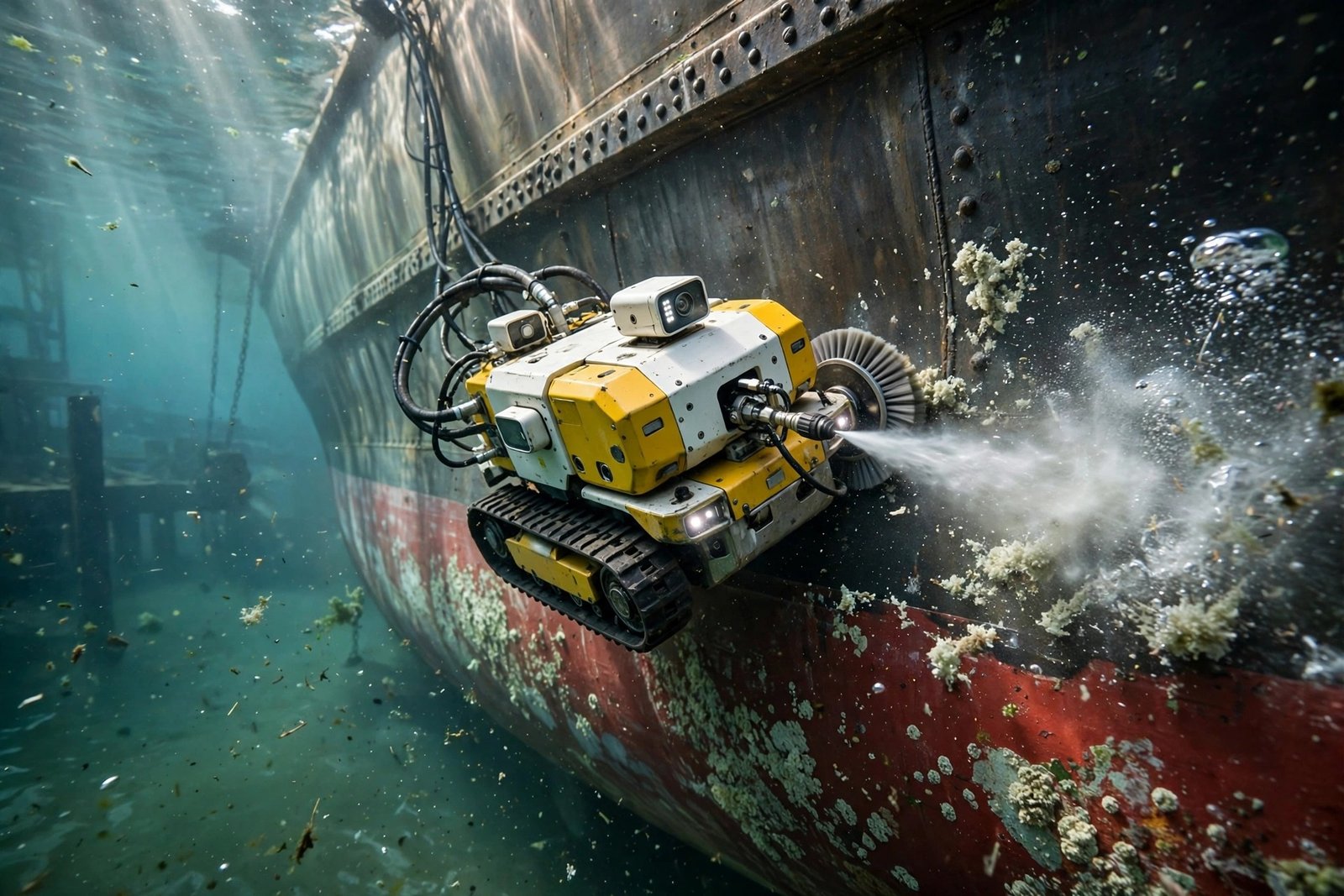
The company has built two robots for the job. Noah works underwater, removing biofouling and carrying out non-destructive testing and class inspection — ultrasonic thickness gauging, corrosion mapping and coating-failure detection — on vessel hulls. Angad is a vertical crawler built for high-pressure cleaning and inspection of confined spaces above the waterline, where access is hardest and setup time matters most.
Both are magnetic crawlers that grip the steel of the hull and travel across it, carrying rotating brushes, high-pressure water jets and advanced inspection gauges. The company says its robots use sensors and AI to identify and remove even the most stubborn marine growth, and to do it gently enough to protect the ship’s anti-fouling coating — the paint layer that keeps growth at bay between cleanings. Protecting that coating matters: a damaged coating means faster fouling, more frequent cleaning and a costly recoat sooner than planned.
More Read

Mafkin offers the robots as a service rather than selling them outright. There are three ways a shipowner can use them: fully autonomous cleaning, with GPS-guided robots scrubbing the hull while the vessel is underway; semi-autonomous cleaning, with trained technicians remotely operating the robots in hard-to-reach areas; and dry-dock cleaning, where the vessel is lifted out of the water for a full hull service. The contract model means operators lease the robotic service instead of making a large upfront investment — and the company says the robots keep learning from every deployment, improving with each hull they clean.
The numbers behind the pitch are striking. The company says its robots clean ship hulls 60% faster than traditional methods, and that the service can cut operational downtime and labour costs by up to 60%. Cleaner hulls mean less drag, and the company says that can save shipping companies up to 20% on fuel costs — with the founder noting that regular maintenance alone can cut a vessel’s fuel consumption by nearly 15%. In an industry where fuel is the single largest operating cost, that is the kind of saving that gets a shipowner’s attention.
The technology is already being proven where it counts. Mafkin has demonstrated its vertical crawler Angad with Larsen & Toubro at the Kattupalli shipyard and with Cochin Shipyard, and the company is part of Cochin Shipyard’s Ushus startup programme. It is incubated at VIT in Chennai, has received government grants, and was named among Inc42’s 30 Startups to Watch in March 2026 — all while remaining bootstrapped, with a team of seven.
The plan now is to build a nationwide network of operational hubs across India’s major maritime hotspots, starting with Jawaharlal Nehru Port, Chennai Port and Kochi Port. The market the company is chasing — ship hull cleaning and maritime maintenance services — is projected to reach $2.6 billion by 2030, and Mafkin wants to be the Indian name that shipowners think of first.
It is a small team with a large ambition: to make India a global leader in marine robotics, one clean hull at a time. The divers stay safely on deck, the ships stay in service, and the robots do the hard, wet, dangerous work underneath — exactly the kind of job machines were made for.
Keep reading: Only Water in Its Wake: Inside Cochin Shipyard’s FCV Pilot-01, India’s First Hydrogen Fuel Cell Ferry · Mission Ready, Built in India: Inside iNDiC, the Bengaluru Brand Building India’s Own Diving Gear · More Shipbuilding & Maritime stories
Like stories like this? Add Exceptional Technology as a preferred source on Google to see more of our reporting in your search results and Discover feed.







