


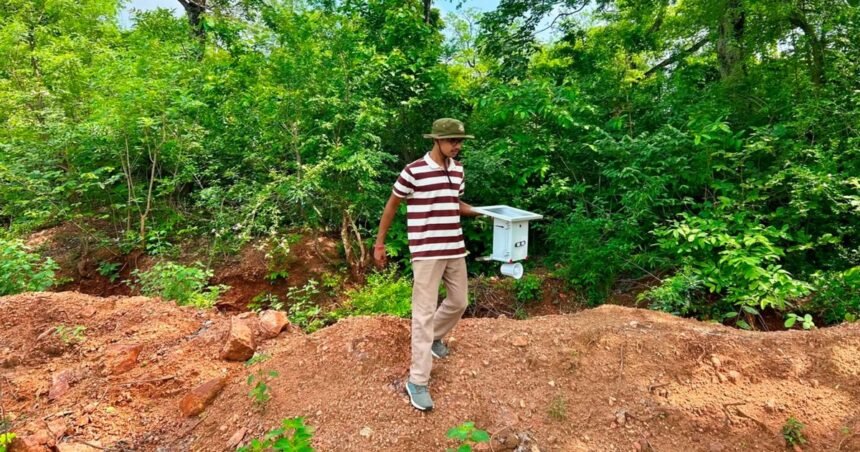
In Rasabeda, a village of around 35 families tucked into the hills of Jharkhand, the night used to belong to the animals. By day, troops of monkeys stripped the fields. By night, elephants moved silently through the dark, and by dawn months of work could be flattened into mud. Farmers took turns keeping watch, shouting and throwing stones, and still lost whole harvests. In January this year, a single elephant killed 20 people in the state’s West Singhbhum district over ten days. For the families living along Jharkhand’s elephant corridors, the fear was not abstract — it was the walk home after dark.
The answer came from a teenager in Ranchi. Avi Mohan Kumar Shuklaa had just finished Class 12 when he visited Rasabeda in 2024 as part of IIM Ranchi’s Young Changemakers programme and heard what crop raids were doing to the village. His grandfather had told him about a neighbour who lost crops worth nearly one lakh rupees to a herd of elephants in a single night. Avi had already built a humanoid robot in his school lab and taken part in Stanford’s Code in Place programme; he decided this problem could not wait. Working late into the night in his bedroom, teaching himself from datasheets and tutorials, he had a first prototype by September 2025 — a microcontroller, a vibration sensor and a buzzer — and a field-ready device by October. He called it InnoBox.
InnoBox listens before it shouts. Its first layer is a seismic sensor that picks up the ground vibrations of heavy footsteps from tens of metres away. A radar layer then confirms that the moving object is large and slow, filtering out the small animals and rustling that set off simpler alarms. A third layer, an AI camera running on an ESP32-S3 microcontroller, identifies the species — elephant, monkey or other wildlife — with over 80 per cent accuracy. Only when all three layers agree does the box respond: a 120-decibel siren and a strobe light drive the animal away, while the device photographs the visitor, records the location and time, and sends an alert to forest officials through a web dashboard and straight to mobile phones. Avi says the whole response happens in under 120 milliseconds.
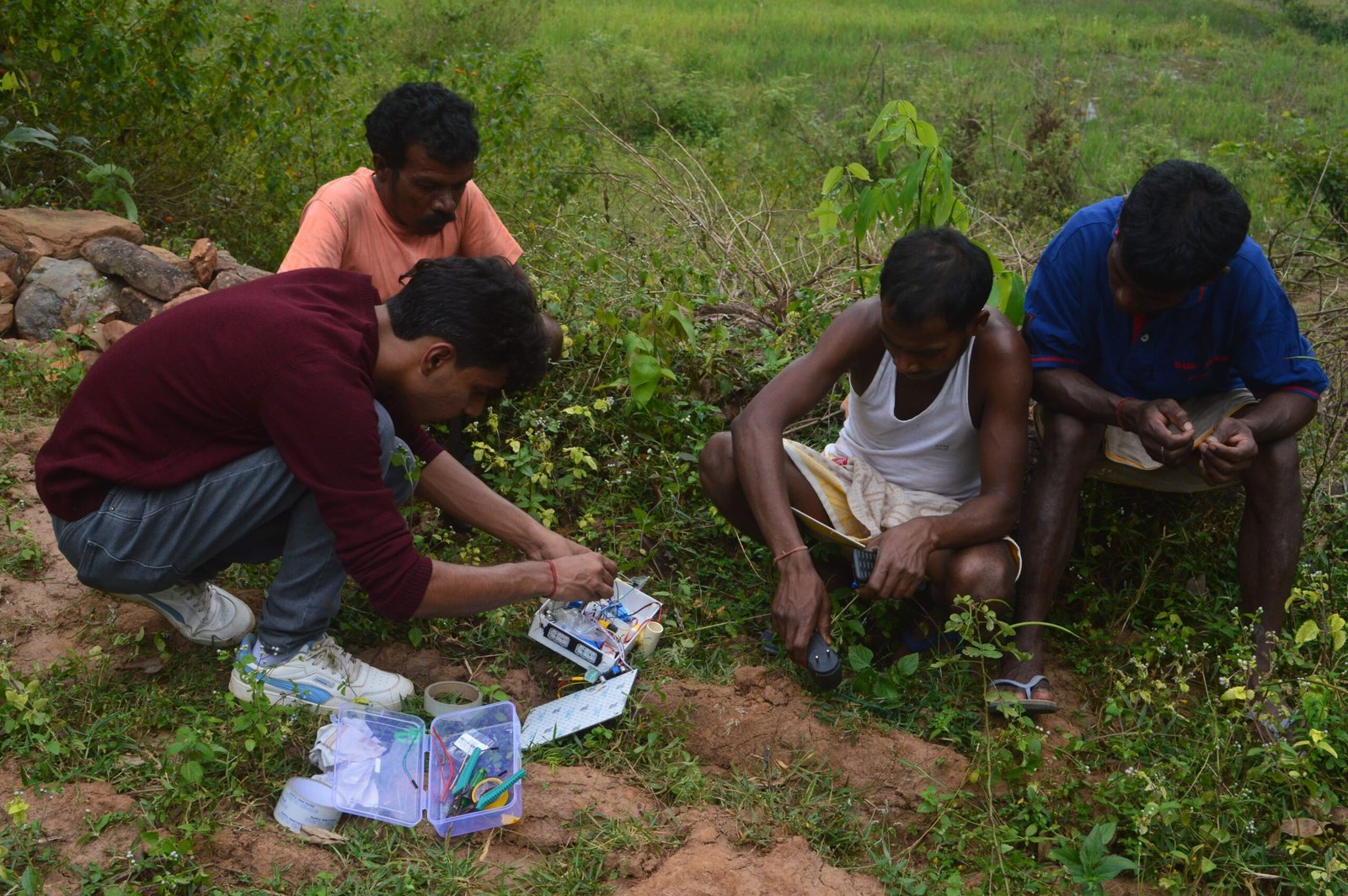
The box is built to live in the forest on its own. A 10-watt solar panel and a rechargeable battery keep it running in places with no electricity at all — Avi says it can work for up to 18 months without intervention. And it is built to be affordable where it matters most: around Rs 7,000 to build in bulk, with a selling price of roughly Rs 10,000. That is a different world from electric fencing, which can cost two to three lakh rupees per kilometre, or commercial AI camera setups that run into several lakhs. The plan is for government contracts to cover most of the cost, with farmers or local organisations covering the rest.
In Rasabeda, the change arrived quickly. When the device went off during its first days in the fields, a troop of 15 to 20 monkeys scattered at once. Farmers who had stayed awake for nights on end started sleeping again. More than 35 families in the village now use InnoBox, and the losses they used to count in tens of thousands of rupees have stopped coming. “I sleep better now, and I do not have to guard the fields myself anymore,” one farmer, Cheata, told The Better India.
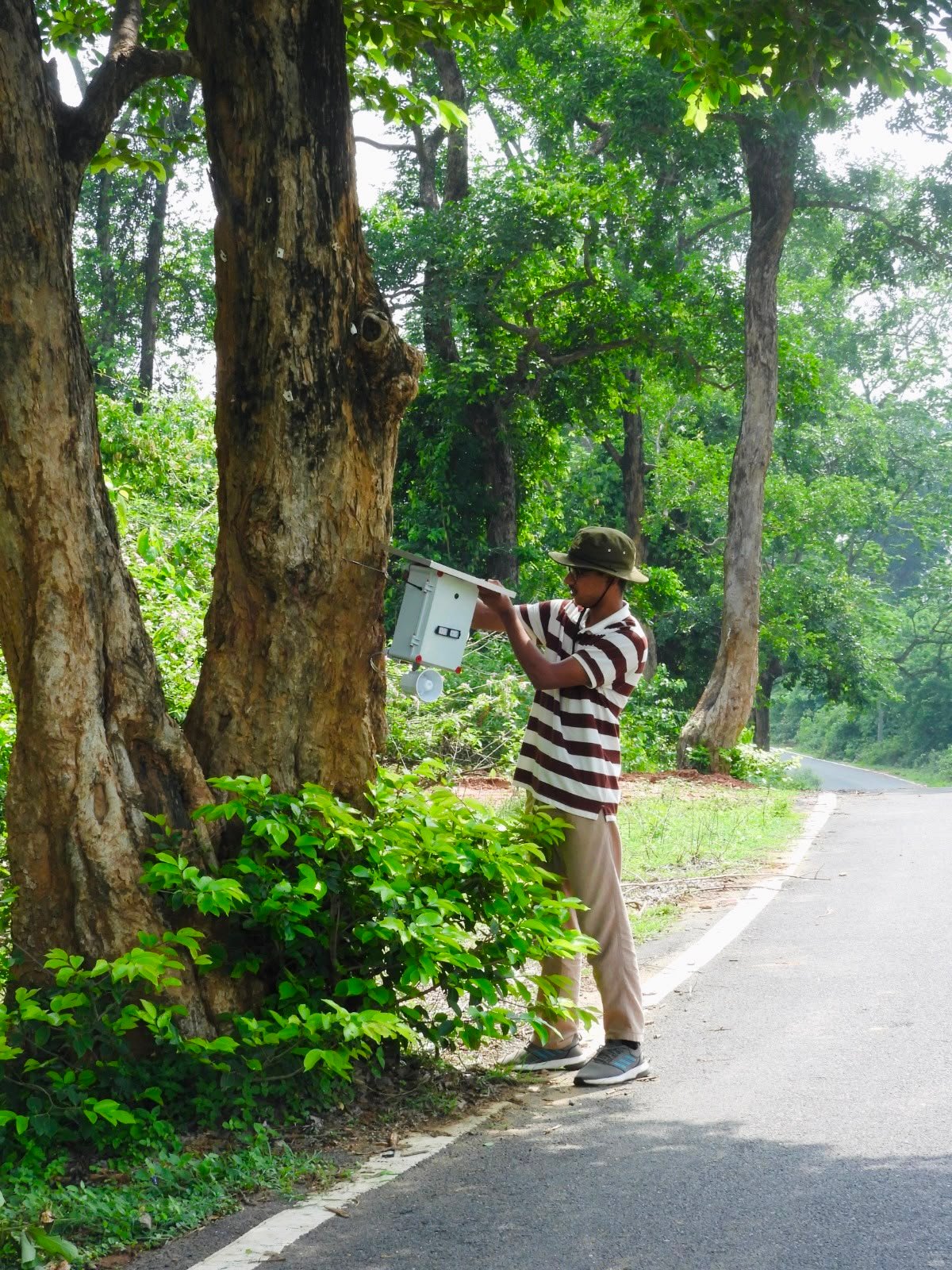
The Forest Department noticed. After Avi presented the system to the Principal Chief Conservator of Forests, the department sanctioned one lakh rupees for research and development and asked him to build ten devices for pilot testing. Since June he has been working at Palamu Tiger Reserve as a temporary tech fellow, collecting seismic data from elephant footsteps and radar signatures to train and refine the machine-learning model, with trials running on trained elephants at the reserve. Alongside the warning system he has built the reserve a QR-code tree-tracking system and a web dashboard for field tasks and geo-tagged incident reports. He had secured admission to study computer engineering at a university in Hong Kong, but chose to stay in Jharkhand and keep building. His next goal is to cover whole elephant corridors, with several devices in every village along the route, so that no family has to stand guard in the dark again.
More Read

Keep reading: The Digital Brain Running India’s Indoor Farms: Inside 4Climate’s Greenhouse Automation · Ninety Seconds, Six Nutrients: Inside ScaNxt’s Bhu-Parikshak, the Handheld Lab Reading India’s Soil · More Food Processing & Agri-Tech stories
Like stories like this? Add Exceptional Technology as a preferred source on Google to see more of our reporting in your search results and Discover feed.







