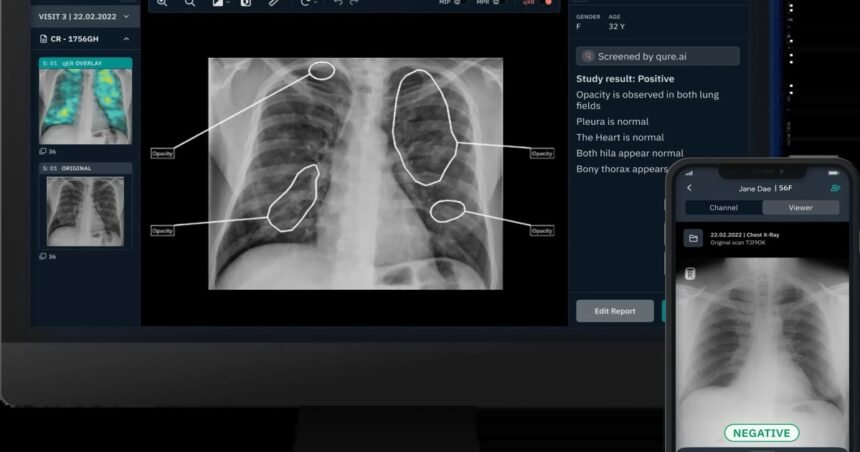
Every day, in clinics and hospitals around the world, chest X-rays pile up faster than radiologists can read them. In many places there is no radiologist at all, and a patient with tuberculosis or an early lung tumour can wait weeks for an answer that changes everything. A Mumbai company decided the answer should take twenty seconds.
Qure.ai was founded in 2016 by Prashant Warier and Pooja Rao with a simple mission: use artificial intelligence to make healthcare more accessible and affordable. Within two years it had become the first AI company to be featured in The Lancet, and today its flagship product, qXR, is one of the most widely deployed medical AI systems on the planet — reading chest X-rays in more than 100 countries, across 3,100 sites, and reaching 45 million people, the company says.

The idea is disarmingly straightforward. A chest X-ray is the most common imaging test in medicine, and also one of the most backlogged. qXR reads the scan in under twenty seconds, looking for findings across the lungs, pleura, mediastinum, heart, diaphragm and bones, and drafts a pre-filled report for the radiologist to review. Trained on 9 million scans, the system has now processed more than 10.7 million of them, the company says, and it can tell, with 99% negative predictive value, which X-rays are unremarkable — clearing the routine cases so human experts can focus on the ones that matter. Hospitals using it have cut reporting turnaround time by 40%, according to the company.
That speed matters most where the need is greatest. Tuberculosis still claims well over a million lives every year, according to the World Health Organization, and the first step to treating it is finding it — fast, and in places without specialists. qXR is one of only three computer-aided detection solutions the WHO has evaluated for TB screening, and the company says its AI now supports national TB programmes in countries including Kenya, Mozambique and the Philippines. Because the software works with existing X-ray machines, even decades-old ones, a small clinic can screen patients on the spot and refer the right ones the same day.
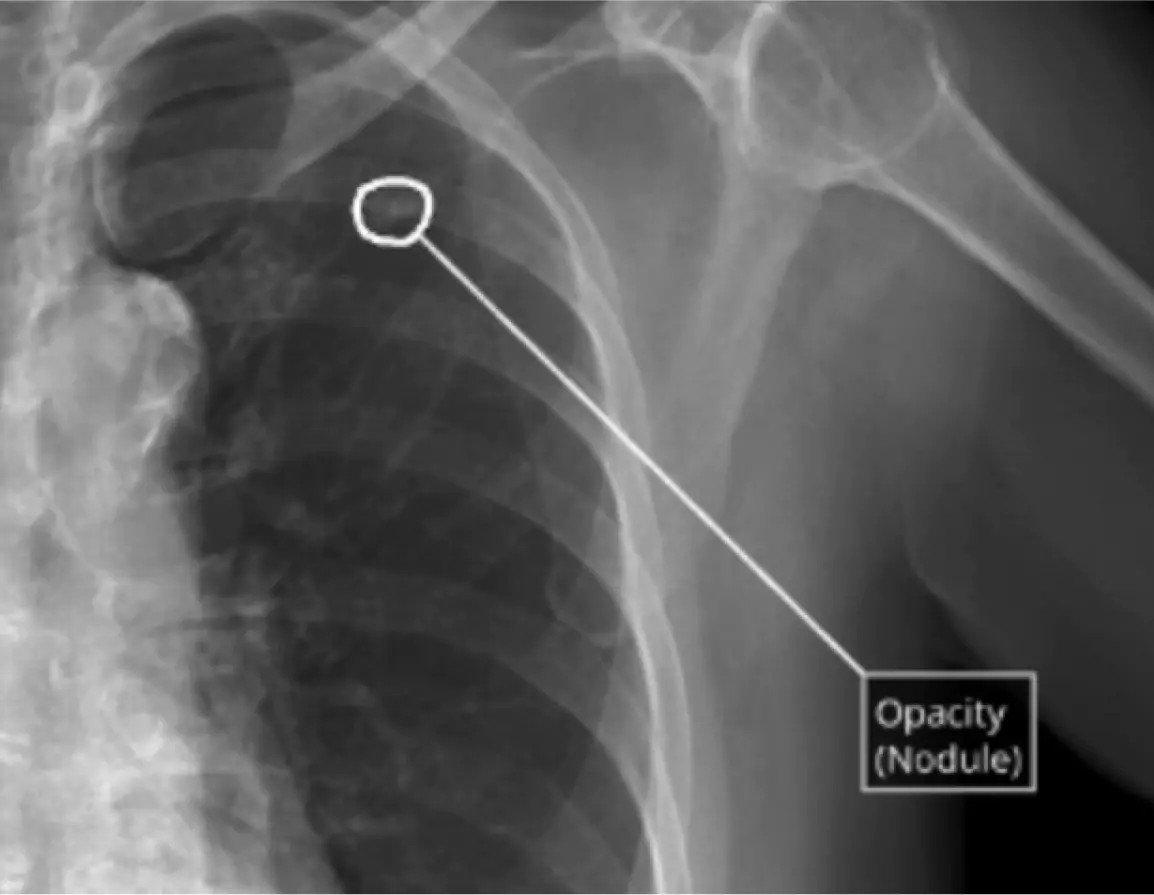
But the company never set out to build a single-disease tool. The same chest X-ray can carry the first signs of lung cancer, heart failure or chronic obstructive pulmonary disease, and qXR looks for those too. In Scotland, NHS Greater Glasgow and Clyde is using Qure.ai’s AI to speed up chest X-ray reporting so patients can move faster to further imaging and treatment. With AstraZeneca, the company is screening for lung cancer in India, and with Medtronic it is helping Indian hospitals move stroke patients to treatment faster. The regulatory record has kept pace: the company says it now holds 36 FDA-cleared findings across its products, with CE marking for more than 60 indications.

Qure.ai’s newest chapter reaches beyond the reading room altogether. Aira, its AI-powered care-delivery platform, launched at the World Health Assembly in 2025 and in September 2026 became one of the world’s first clinical decision support systems to win Class IIb CE certification under Europe’s Medical Device Regulation. Aira turns conversations, handwritten notes and registers into structured records, guides frontline health workers through protocol-aligned consultations, and flags the patients who need attention — working offline, in local languages, on the devices clinics already have. In its first year it reached ten pilot sites across Nigeria, Kenya, Mozambique, Solomon Islands and Bangladesh, and in Mozambique it is built into AlôVida, the health ministry’s national platform. The company is now working with health ministries on population-scale rollouts, and a Gates Foundation grant is funding AI-powered point-of-care ultrasound to push diagnosis further toward the patient.
More Read

The growth has been funded the old-fashioned way: by results. Qure.ai raised a $65 million Series D in September 2024, led by Lightspeed and 360 ONE Asset, taking its total funding to about $123 million — and the company says it is approaching profitability. From a Mumbai lab in 2016, it now has offices in New York and London and a stated goal of reaching one billion patients. Forty-five million down, the company says, the next chapter is about getting the AI out of the hospital entirely — into the hands of the health worker at the last mile, where twenty seconds can be the difference between a disease found and a disease missed.
Keep reading: A Hand That Feels: Inside Robo Bionics, the Mumbai Startup Building Bionic Hands India Can Afford · The Answer in Two Hours: Inside CrisprBits, the Bengaluru Startup Turning CRISPR Into Faster Diagnostics · More Chemicals, Materials & Life Sciences stories
Like stories like this? Add Exceptional Technology as a preferred source on Google to see more of our reporting in your search results and Discover feed.